
 how-to
How Live Comic Auctions Work: A 2026 Collector's Guide
Table of Contents
- How Live Comic Auctions Work: The Basics
- Buyer's Premium Explained: What You Actually Pay
- What Is a Proxy Bid and How Does It Work?
- Comic Auction Bidding Strategies for Beginners
- Preparing Comics for Auction: Grading, Slabbing, and Condition Reports
- Technical Setup and Post-Auction Logistics
- Frequently Asked Questions
Last Updated: September 14, 2026
How Live Comic Auctions Work: The Basics
Live comic auctions are real-time sales events where collectors bid against each other for comic books, often streamed on platforms like Whatnot, with bidding happening in seconds rather than days. Unlike traditional online marketplaces where you set a price and wait, live auctions create urgency and competition that can drive prices well above what you'd pay elsewhere.
The format rewards preparation and punishes impulse. Below, we'll break down exactly how the mechanics work so you can bid with confidence instead of regret.
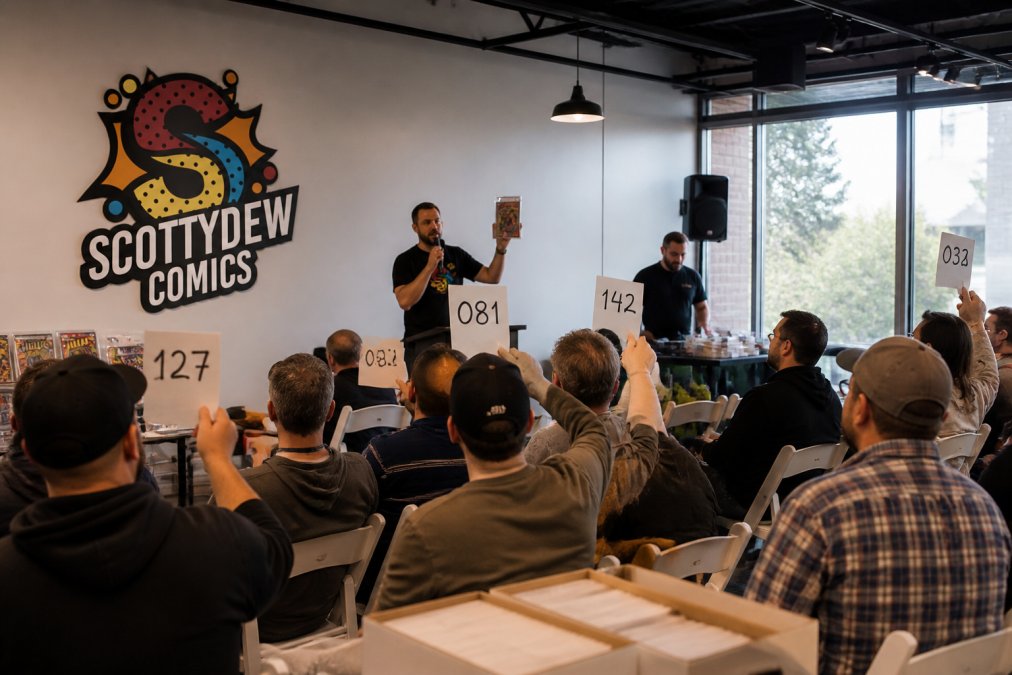
The first thing to understand is that live auctions blend two worlds: the excitement of a physical auction house and the convenience of online shopping. You're not just buying a comic; you're participating in an event.
Internet Bidding vs. Live Floor Bidding
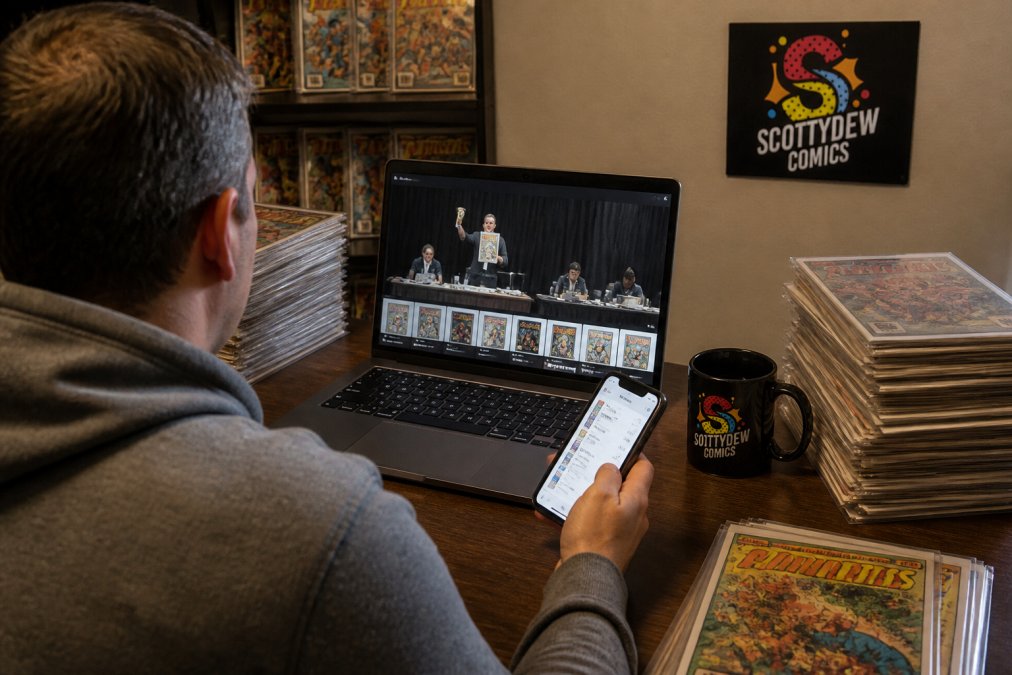
Internet bidding lets you participate remotely through a bidding platform, while live floor bidding happens in person at an auction house. Most comic collectors today use internet bidding because it removes geographic barriers. You can bid on a rare key issue from your couch while competing against collectors across the country.
The trade-off is that you lose the ability to inspect books in person. That's why condition reports and high-resolution photos matter so much in online formats.
The Auction Consignment Process
Consignment is how sellers get their comics into an auction. The process typically works like this:
- Submit your comics to the auction house with photos and descriptions
- Receive an estimate based on recent market comps and condition
- Negotiate terms including commission fees and reserve price
- Sign a consignment agreement outlining the auction house's cut
- Wait for the auction date and hope the bidding war starts
Buyer's Premium Explained: What You Actually Pay
The buyer's premium is a percentage added to the hammer price that goes to the auction house, not the seller. It is the single most misunderstood line on a live auction invoice, because the number you hear called out during the stream is almost never the number you pay.
If you win a comic at a $100 hammer price with a 20% buyer's premium, the premium is $20, making your subtotal $120. Then sales tax and shipping are calculated on top. In many states, sales tax applies to the hammer price plus the buyer's premium, so a 20% premium effectively raises your taxable base by 20% as well.
How Premiums Are Actually Structured
Auction houses rarely use one flat rate. A common pattern is a tiered structure that drops as the hammer price rises:
| Hammer Price Tier | Typical Buyer's Premium |
|---|---|
| Up to $1,000 | 20-25% |
| $1,001-$5,000 | 15-20% |
| Above $5,000 | 10-15% |
Some houses also apply a per-lot minimum premium, for example, a floor of $5 or $10 even on a $20 comic, which disproportionately hurts low-dollar wins. Others charge a separate "internet bidding fee" of 1-3% on top of the standard premium when you bid through a third-party platform rather than the house's own site.
The All-In Cost Formula
Before you raise a paddle, run this calculation:
All-in cost = (Hammer price + Buyer's premium) + Sales tax + Shipping + Insurance
Seller's Commission vs. Buyer's Premium
These are two different fees taken from two different parties. The seller pays a seller's commission. The buyer pays the buyer's premium. The auction house earns from both sides. When you are buying, only the buyer's premium affects you, but knowing the seller's side helps you understand why houses push certain lots and set reserves where they do.
What to Confirm Before You Bid
- The exact buyer's premium percentage and whether it is tiered
- Whether a per-lot minimum premium applies
- Whether an internet or platform fee is added on top
- Whether sales tax is charged on the premium as well as the hammer price
- The house's shipping and insurance policy for slabbed books
Auction house terms pages list these, but they are usually buried. Pull them up before the session, not after you win.
What Is a Proxy Bid and How Does It Work?
A proxy bid is an automatic bidding system where you set your maximum price and the platform bids on your behalf up to that limit. If someone bids $50 and your proxy max is $75, the system automatically bids $55 for you. This continues until either you win or someone exceeds your maximum.
The advantage is that you don't have to watch every second of the auction. The disadvantage is that you might win at a higher price than necessary if multiple proxy bids are competing.
According to eBay's bidding guidance, proxy bidding ensures you never pay more than your stated maximum, but it also means you can't adjust on the fly if the auction heats up.
Comic Auction Bidding Strategies for Beginners
Winning at live comic auctions requires discipline, not luck. The collectors who consistently get good deals are the ones who set limits and stick to them.
Setting a Budget and Avoiding the Bidding War Trap
The bidding war trap is real. When two collectors both want the same graded comic, rationality goes out the window. Suddenly you're paying 40% above market value because you refused to let someone else win.
Here's how to avoid it:
- Research market comps before the auction using recent sales data
- Set a hard maximum including buyer's premium and shipping
- Walk away if bidding exceeds your limit no matter how much you want it
- Never bid emotionally on a book just because it's rare or nostalgic
Preparing Comics for Auction: Grading, Slabbing, and Condition Reports
If you're selling, preparation determines your final price. Graded comics consistently outperform raw books because buyers trust the certification.
Grading is the process of evaluating a comic's condition on a standardized scale. Slabbing means encapsulating a graded comic in a hard plastic case with a certification label. Condition reports document flaws, page quality, and restoration history.
The major grading services provide authentication and certification that buyers rely on. A slabbed comic with a high grade from a reputable grader will attract more bidders than the same book raw, even if the actual condition is identical.
CGC's grading standards outlines the 10-point scale from 0.5 (Poor) to 10.0 (Gem Mint). Understanding this scale helps both buyers and sellers communicate condition accurately.
Technical Setup and Post-Auction Logistics
Most guides stop at "have a good internet connection." That is not enough when a lot closes in three seconds and a dropped bid costs you a key issue. This section covers the two things competitors skip: how to keep your bids registering in real time, and what actually happens after the hammer falls.
Real-Time Risk Mitigation: Beating the Speed-Bidding Trap
Live streams are engineered for urgency. The countdown timer, the chat hype, the auctioneer's cadence, all of it compresses your decision window. The result is a well-documented pattern: bidders pay more in live formats than they would in a timed online auction for the same book.
Three concrete defenses:
- Set a hard all-in ceiling before the stream and write it down. Not a mental number, a physical one. The act of writing it forces you to include premium, tax, and shipping.
- Use the platform's max-bid or proxy feature instead of manual tapping. Manual bidding during a fast lot invites panic raises. A pre-set max caps your exposure automatically.
- Mute the chat during lots you are not bidding on. Chat hype is a documented driver of overbidding; removing it removes the trigger.
Technical Setup That Prevents Missed Bids
A bid that does not register is a loss, even if you "would have" won. Before the session:
- Wired ethernet if possible; if WiFi, sit close to the router and close bandwidth-heavy apps
- Account created, identity verified, and payment method saved, verification can take hours on some platforms
- Push notifications and email alerts enabled for lots on your watchlist
- A backup device (phone or tablet) already logged in, in case your primary freezes
- Shipping address and payment confirmed before the first lot opens
- Browser updated and pop-up blockers disabled for the auction domain
Latency matters most in the final seconds. If your connection has a noticeable delay, your bid may arrive after the lot closes. Test your setup on a low-value lot early in the session before you chase anything expensive.
Post-Auction Logistics: Payment, Shipping, and Insurance
After you win, the invoice arrives, usually within 24 hours, sometimes automatically at the end of the session. It will list the hammer price, buyer's premium, tax, and shipping. Payment windows are typically 3-7 days; missing one can void the sale and trigger a non-paying bidder flag on your account.
For shipping:
- Insure anything over a few hundred dollars. Slabbed books are heavy and rigid; damage in transit is real.
- Require signature confirmation on high-value slabs so the package is not left on a porch.
- Photograph the package before opening if the box shows damage. This is your evidence if you need to file a claim.
- Know the carrier's claim window. Most require claims within a set number of days of delivery, and the clock starts at the delivery scan, not when you open the box.
Handling Disputes When the Item Does Not Match the Stream
This is the gap almost no guide covers. If the comic arrives in a condition that does not match what was described on the stream, undisclosed restoration, a different grade, damage not shown on camera, you have options, but the window is short.
- Document immediately. Photograph the book, the slab label, and the packaging before you do anything else.
- Compare against the stream description. If the auction was recorded, pull the timestamp where the book was described. Platforms like Whatnot retain past streams, and that recording is your strongest evidence.
- Contact the seller through the platform's messaging system, not off-platform. Off-platform communication weakens your dispute.
- Escalate to the platform's buyer protection if the seller does not resolve it. Most major live-commerce platforms have a buyer protection window, often measured in days, not weeks, so do not wait.
- For graded books, verify the certification. Look up the slab's certification number directly on the grading company's website to confirm the grade and that the label is genuine. A mismatched or unverifiable cert is a red flag worth escalating immediately.
Frequently Asked Questions
How does a live comic auction differ from a fixed-price listing?
A fixed-price listing sets one price the seller will accept. A live comic auction lets bidders compete in real time, so the final hammer price depends on demand that day. Live auctions also add a buyer's premium on top of the winning bid, plus shipping and insurance. Fixed-price listings show the full cost upfront, while live auctions require you to track bid increments and closing times carefully to avoid surprises.
What is the buyer's premium in comic auctions?
The buyer's premium is a fee the auction house adds to your winning bid, calculated as a percentage of the hammer price. If you win a lot with a buyer's premium, you will owe the hammer price plus the premium before shipping. Always confirm the premium rate before bidding, since it varies by auction house and can push your total well past your intended budget.
How can I protect myself from overbidding in a live auction?
Set a hard maximum before the session starts, based on recent market comps for that exact grade and issue. Write it down and do not move it. Use proxy bidding so the platform bids for you up to your limit, which removes the emotional pull of a live stream. Also factor in the buyer's premium, shipping costs, and insurance so your true ceiling reflects the full delivered cost, not just the hammer price.
What happens if I win a comic in a live auction?
After the closing time passes and you hold the highest bid, the auction house sends an invoice covering the hammer price, buyer's premium, and any applicable taxes. You then arrange payment and shipping, and confirm insurance coverage for slabbed or high-value books. Review the condition report and certification details once the comic arrives, and check the return policy beforehand in case the item does not match its description.