
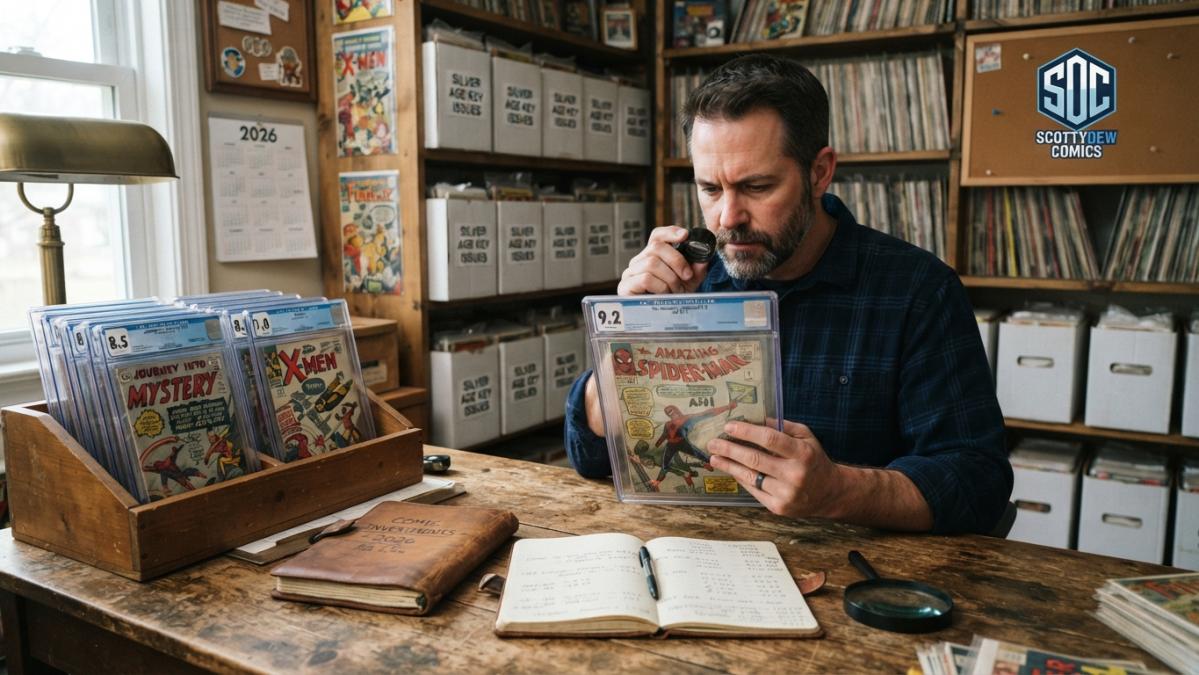
 ultimate-guide
Investing in Silver Age Comics: A 2026 Guide
Table of Contents
- What Makes Silver Age Comics an Investment Asset Class
- How to Grade Comic Books for Investment Value
- Best Silver Age Keys Under $500 to Start Your Portfolio
- Market Volatility, Pop Culture Cycles, and Long-Term Growth Potential
- Long-Term Comic Book Storage Best Practices
- Tax Implications and Building Your Investment Portfolio
- Frequently Asked Questions
Last Updated: October 1, 2026
What Makes Silver Age Comics an Investment Asset Class
Investing in silver age comics has evolved from a niche hobby into a legitimate alternative asset class that rivals traditional collectibles. The Silver Age, spanning 1956 to 1969, represents the period when comics transformed from simple children's entertainment into culturally significant works featuring complex characters, sophisticated storytelling, and artistic innovation that collectors and investors now recognize as foundational to modern pop culture.
What separates investment-grade comics from casual reading copies is their potential for appreciation, scarcity, and the measurable demand from both nostalgic fans and serious portfolio builders. Unlike stocks or bonds, comic book investments offer tangible ownership of cultural artifacts. Collectors approaching this market strategically, focusing on key issues, proper grading, and long-term holding periods, consistently outperform those making impulse purchases based on nostalgia alone.
The market for graded comics has matured significantly. Professional grading services like CGC and CBCS have standardized valuation, created transparent price discovery through auction results, and enabled investors to treat comics as measurable assets rather than subjective collectibles. First appearances, origin stories, and issues with historical significance command premium prices because their scarcity and cultural importance create sustained demand across market cycles.
How to Grade Comic Books for Investment Value
Comic book grading determines investment potential more than any other factor. The grade directly correlates to market value, liquidity, and long-term appreciation potential. A low-grade copy of a key issue might sell for $50, while the same comic in high-grade condition could fetch $500 or more, the difference between a speculative holding and a blue chip asset.
Professional grading involves evaluating multiple condition factors: spine wear, page quality, color vibrancy, cover creases, and restoration history. Graders assign numeric scores on a 0.5 to 10 scale, with 9.8 representing near-perfect condition and anything below 6.0 considered low-grade. The grading scale itself is standardized across the industry, meaning a 7.5 from CGC carries the same meaning as a 7.5 from CBCS, consistency that enables price comparison and portfolio tracking.
Understanding the grading scale is essential before investing. A comic graded 8.0 or higher is considered high-grade and typically commands premium pricing. Issues graded 6.0 to 7.9 occupy the mid-range where serious investors often find value. Low-grade copies (below 6.0) require a different investment strategy, focusing on scarcity and first-appearance status rather than condition premiums.
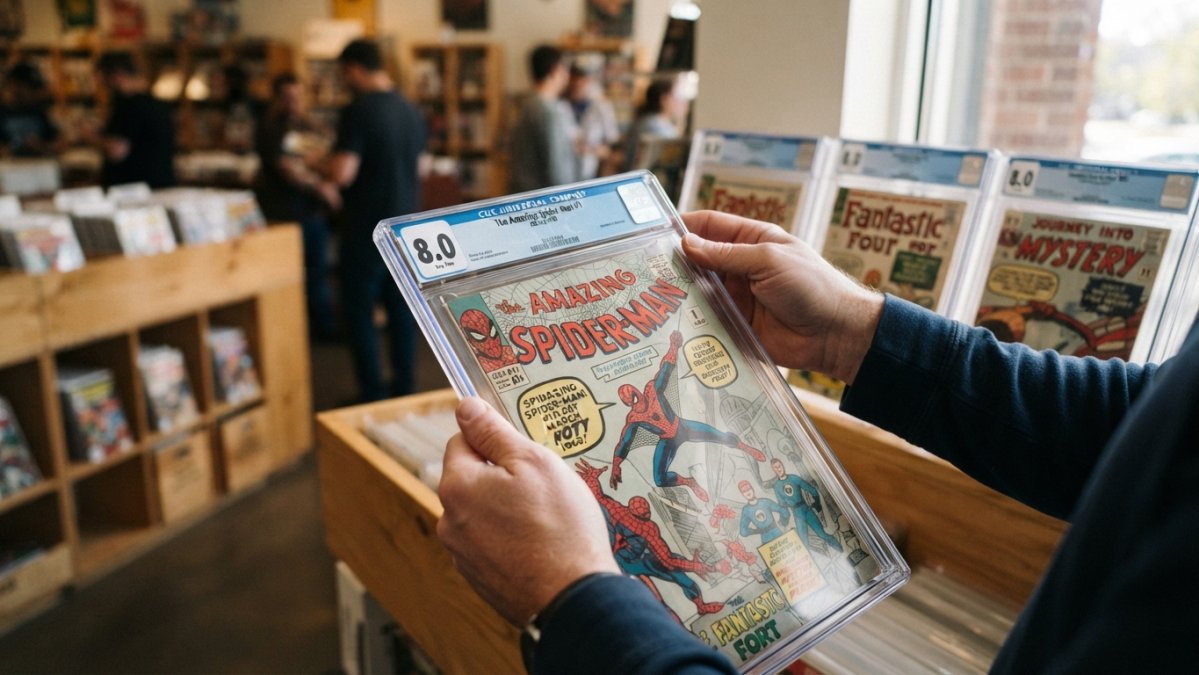
Understanding the CGC and CBCS Grading Scale
CGC (Certified Guaranty Company) and CBCS (Certified Collectible Book Service) are the two dominant third-party graders in the market. Both services use the same 0.5-10 numeric scale, though they maintain separate census records and slab designs. CGC historically dominated the market but CBCS has gained significant traction, particularly among collectors who prefer their slab design or appreciate their competitive pricing.
The grading scale breaks down into clear tiers. A 9.8 or 9.9 is nearly perfect, minimal handling, pristine colors, sharp corners. A 9.0-9.7 represents high-grade investment material with only minor imperfections visible under close inspection. The 8.0-8.9 range is where most serious collectors focus, offering strong condition at more accessible price points. Anything below 8.0 requires justification beyond condition, typically a rare first appearance or historically significant issue.
Spotting Restoration and Authentication Red Flags
Restoration detection separates experienced investors from amateurs. Restored comics, those with professionally cleaned, re-colored, or reinforced pages, typically sell at steep discounts to unrestored copies, sometimes 50-70% less depending on the restoration type. Professional graders note restoration on the slab, but spotting signs yourself prevents overpaying in private sales or from dealers unfamiliar with grading standards.
Common restoration techniques include color touch (repainting faded colors), page cleaning, spine reinforcement, and tear sealing. Color touch is the most common and most deceptive, it can appear identical to original coloring under casual inspection but becomes obvious under UV light or magnification. Spine reinforcement often leaves visible tape lines or adhesive residue on the back cover. Tear sealing fills gaps with adhesive, creating visible seams that differ from original paper texture.
Authentication matters equally. Counterfeit high-value issues exist, particularly for rare first appearances from the 1960s. Verify through the CGC or CBCS census database before purchasing unslabbed books. A comic book census shows every graded copy of an issue, its grade, and submission date, if a particular copy doesn't appear in the census despite claims of professional grading, it's either misrepresented or ungraded.
Best Silver Age Keys Under $500 to Start Your Portfolio
Building an investment portfolio with limited capital requires targeting key issues, comics with first appearances, origin stories, or historical significance, rather than chasing high grades of common books. A $500 budget allows entry into legitimate investment-grade comics if you prioritize scarcity and cultural importance over condition.
The most accessible entry points are low-grade copies of major first appearances. A low-grade Amazing Fantasy #15 (first Spider-Man appearance, 1962) in 3.0-4.0 condition might be available in the $300-400 range. While not pristine, the comic's significance ensures sustained demand and appreciation potential. Similar opportunities exist for Incredible Hulk #1 (1962) and Journey into Mystery #83 (first Thor, 1962), all foundational Silver Age keys that remain liquid and valuable regardless of condition.
Supporting your portfolio with mid-grade copies of secondary keys provides diversification. Tales of Suspense #39 (first Iron Man, 1963) in 5.0-6.0 condition typically ranges $250-400, depending on current market conditions. Fantastic Four #1 (1961) in similar grades occupies a similar price band. These aren't the absolute rarest issues, but their cultural relevance and scarcity create consistent demand.
First Appearances and Origin Stories That Hold Value
First appearances drive the Silver Age investment market. The debut of Spider-Man, the Hulk, Iron Man, the X-Men, and Daredevil all occurred during this era, creating a finite supply of historically important comics. Origin stories carry similar weight, the first appearance of a character's villain, love interest, or significant plot device often appreciates alongside the character's debut.
What separates investable first appearances from speculative purchases is cultural staying power. Spider-Man remains culturally dominant through films, television, merchandise, and ongoing relevance in pop culture. His first appearance will retain value across market cycles because demand remains constant. Conversely, lesser-known characters with single-appearance comics from the 1960s may never appreciate significantly because cultural interest remains niche.
Research pop culture cycles before committing capital.
Low-Grade vs. High-Grade Strategy for Budget Investors
Low-grade investing prioritizes first-appearance status and scarcity over condition premiums. A 3.0-grade Amazing Fantasy #15 costs significantly less than a 6.0 copy but retains the same first-appearance significance. For budget investors, this strategy maximizes portfolio diversity, your $500 can acquire three or four low-grade keys instead of one high-grade common book.
Market Volatility, Pop Culture Cycles, and Long-Term Growth Potential
The comic book market experiences volatility tied to pop culture cycles, economic conditions, and collector sentiment shifts. A major film announcement can drive 20-30% price increases in relevant character first appearances within weeks. Conversely, market corrections following speculation bubbles can depress prices across all categories for months.
Long-Term Comic Book Storage Best Practices
Protecting your investment requires proper storage that prevents deterioration over decades. Comics stored in poor conditions can lose 50% or more of their value regardless of initial grade. Proper storage is non-negotiable for investment-grade comics.
Tax Implications and Building Your Investment Portfolio
Comic book investments carry tax consequences that many collectors overlook. Capital gains taxes apply when you sell comics at profit. The holding period determines whether gains qualify as long-term (held over one year, taxed at preferential rates) or short-term (taxed as ordinary income at higher rates). A comic purchased for $200 and sold for $500 within six months generates $300 in short-term gains taxed at your marginal income tax rate, potentially 37% federally plus state taxes.
Frequently Asked Questions
What are the most valuable Silver Age comics to invest in?
First appearances of major characters and key issues from 1956-1969 command premium prices. Amazing Fantasy #15 (Spider-Man debut), Incredible Hulk #1, and X-Men #1 are blue chip investments. High-grade copies appreciate significantly, but even low-grade versions of true key issues outperform casual collectibles. Focus on books with established pedigree and strong census records tracked by CGC and CBCS.
How does the CGC grading scale impact Silver Age comic values?
Grading directly determines market value and liquidity. A Silver Age key issue in 9.0 grade can sell for 5-10 times the price of the same book in 4.0 condition. CGC and CBCS slabbing provides third-party authentication, which reduces buyer risk and increases collector confidence. Graded comics trade more easily and command premium prices in the market.
Are low-grade Silver Age comics worth the investment?
Yes, if they're genuine key issues. Low-grade first appearances and origin stories offer entry points for budget-conscious investors and can appreciate over time as pop culture cycles renew interest. The trade-off is slower appreciation and lower market liquidity compared to high-grade copies. Pair low-grade keys with selective high-grade purchases to balance portfolio risk.
Is investing in comic books a reliable long-term strategy?
Comics function as an alternative asset class with documented long-term growth potential, though they're subject to market volatility and speculation cycles. Blue chip Silver Age keys with strong census records and authentication show more stability than speculative purchases. Diversify across multiple key issues, grades, and characters to manage risk. Post-pandemic market corrections demonstrate the importance of selective buying over chasing trends.
What should I know about storing and displaying valuable comic books?
Slabbed comics in CGC or CBCS holders provide built-in protection and authentication. For unslabbed books, use acid-free bags and boards, store flat or upright in cool, dry conditions, and maintain 35-50% humidity. Display solutions like the Wham! Stand showcase your collection while protecting slabs from dust and UV damage. Proper long-term storage preserves condition and investment value.
What tax implications should I consider as a comic book investor?
Comic books held longer than one year may qualify for long-term capital gains treatment, typically taxed at lower rates than short-term gains. Sales proceeds are reportable income. Consult a tax professional about your specific situation, especially if you're building a significant portfolio or selling regularly. Documentation of purchase price, sale price, and grading records is essential for tax reporting.