 how-to
Best Ways to Store Floppy Comics: A Collector's Guide
Table of Contents
- Why Proper Storage Matters for Floppy Comics
- How to Bag and Board Comic Books for Protection
- Best Comic Book Storage Boxes and Containers
- How to Organize Comic Books by Series and Category
- Long-Term Comic Book Storage: Environment and Location
- Storing Valuable, Signed, and Graded Comics
- Safe Packing, Lifting, and Transport for Collections
- Maintenance and Inspection Schedule
- Frequently Asked Questions
Last Updated: October 17, 2026
Why Proper Storage Matters for Floppy Comics
How you store floppy comics determines whether they survive the next decade or crumble.
Collectors who ignore storage lose thousands in value: a mint key issue stored carelessly becomes a reader copy within five years.
Proper storage requires three things: the right containers, protection from environmental damage, and a cool, dry location.
How to Bag and Board Comic Books for Protection
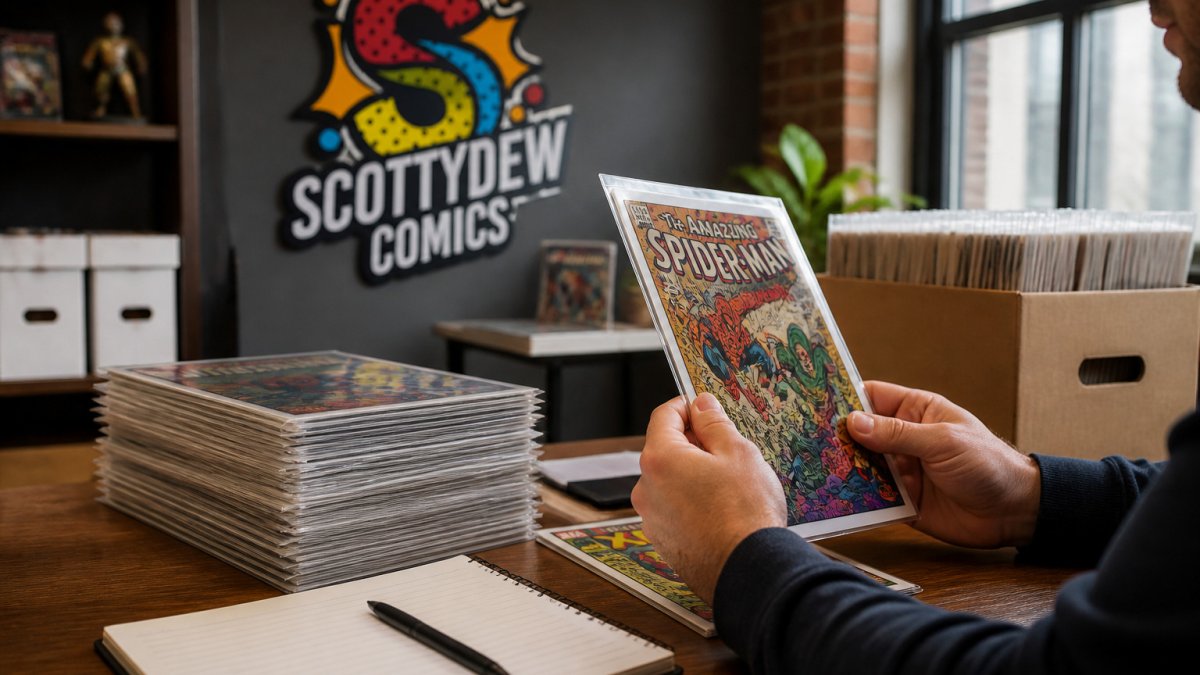
Bagging and boarding is the foundation of floppy comic storage, protecting each issue from dust, fingerprints, abrasion, and the acids in your own hands.
The goal is simple: a snug, chemically stable envelope with rigid support behind the spine. The details are where collections get saved or ruined.
Bag Materials: What the Plastic Is Actually Made Of
Bags are not interchangeable. The plastic type determines how long the bag stays clear, whether it off-gasses, and whether it protects or damages the comic.
- Polyethylene (PE): The most common and least expensive bag. Soft, slightly cloudy, and prone to yellowing and wrinkling. Fine for reader copies and short-term storage, but not archival.
- Polypropylene (PP): Clearer and stiffer than polyethylene, with better resistance to yellowing. A common middle ground for collectors who want decent clarity without archival pricing, though conservators don't consider it truly archival.
- Polyester (often sold as Mylar): The archival standard. Chemically inert, optically clear, and does not yellow or embrittle on a realistic timescale. Pricier per bag, but the only material most preservation-minded collectors trust for keys, signed issues, and anything kept for decades.
A practical rule: polyester for anything you'd be upset to lose, polypropylene for the bulk of a working collection, polyethylene only for short-term or low-value storage.
Board Thickness and Why '24pt' Matters
Backing boards are measured in points (pt), where 1 point equals 0.001 inch. The number on the package is the board's thickness, not its size.
- 14pt-20pt: Thin, flexible, and cheap. Adequate for reader copies but prone to bowing in a tightly packed box.
- 24pt: The common collector standard. Rigid enough to keep a comic flat in a full short box and resist corner curling.
- 28pt-32pt+: Heavy archival boards for keys, signed issues, and long-term storage. They add bulk, so a short box holds fewer comics, but they resist warping far better.
Boards should be acid-free and lignin-free. Buffered boards neutralize acids migrating out of the paper and are the safe default for modern floppy comics; unbuffered boards are sometimes preferred for certain photo-based or very old covers.
Sizing: Match the Bag and Board to the Comic
Standard modern comics measure roughly 6.625" x 10.1875", and bags and boards are sized to that footprint. Fit matters more than most beginners expect.
- Standard/Current: Fits modern comics (roughly 1980s to present). The default for most collections.
- Silver/Golden Age: Larger bags and boards for older, taller, wider comics. A Silver Age book in a Current bag will be cramped; a Current book in a Silver Age bag will slide and bend.
- Magazine/Annual: For thicker or taller issues, annuals, and magazine-format books.
A correctly sized bag leaves a small margin at the top and sides, enough to slide the comic in without forcing it, not so much that it shifts when turned sideways.
Step-by-Step Bagging and Boarding Process
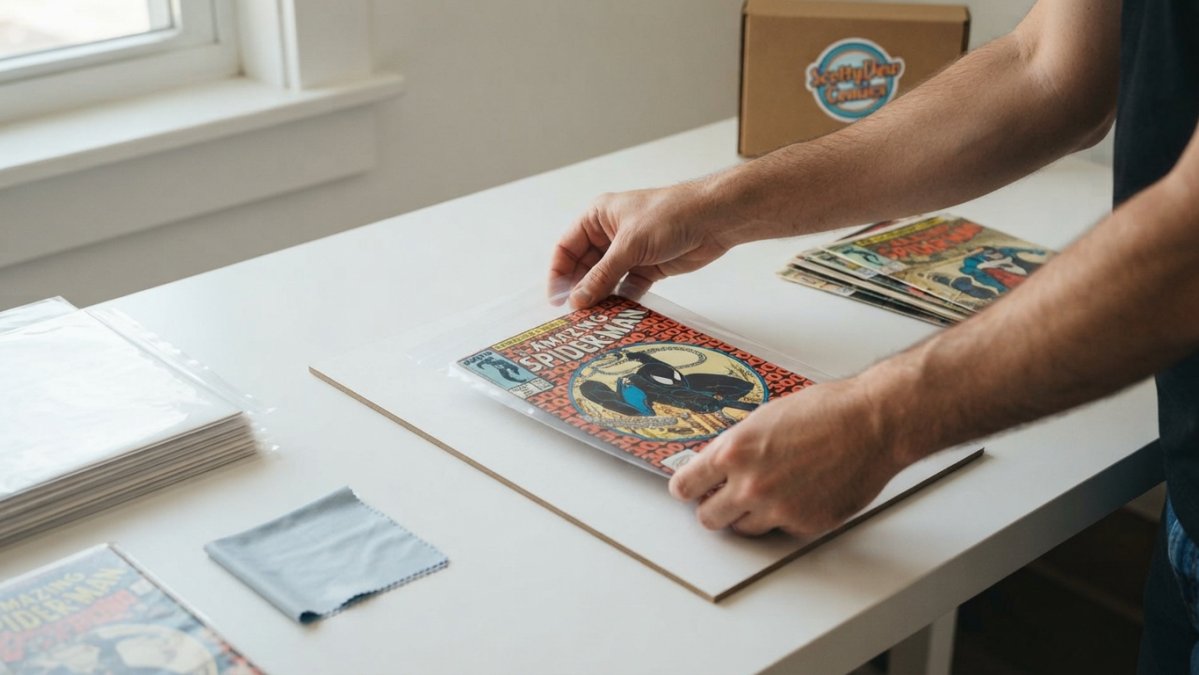
- Clean and dry your hands. Wash with soap and water, dry fully, and avoid lotions. Cotton or nitrile gloves are optional but helpful for keys.
- Work on a clean, flat surface. A dedicated mat or fresh sheet of clean paper prevents grit from scratching covers.
- Insert the board into the bag first. Slide it to the bottom, with the coated or smoother side facing the comic if the board is single-sided.
- Slide the comic in behind the board. Hold the bag open with one hand and guide the comic in with the other. Never force it, if it catches, the bag is too small.
- Center the comic. Leave an even margin at the top and sides. The spine should rest against the board.
- Seal the flap. Press the adhesive flap down firmly. If there's no flap, fold the top over and tape it with archival tape, never masking or packing tape, which yellows and leaves residue.
- Check the fit. Turn the bag sideways. The comic should not slide freely. If it does, resize.
- Store upright immediately. Don't stack freshly bagged comics flat while working through a pile; stand them in a box as you go.
Expect 30-45 seconds per comic once you have a rhythm. A 500-issue collection is a multi-session project, rushed bagging is where bent corners happen.
When to Re-Bag
Bags are consumables: polyethylene yellows within a few years, polypropylene lasts longer, and polyester can go decades. Re-bag when you see yellowing, cloudiness, wrinkles pressing against the cover, or tackiness, and replace boards that have absorbed moisture, warped, or yellowed. Re-bag valuable issues on a fixed cycle rather than waiting for visible damage.
Best Comic Book Storage Boxes and Containers
The right box holds your bagged comics safely. Wrong boxes collapse, warp, or attract pests.
Short Boxes vs. Long Boxes: Which Works for You
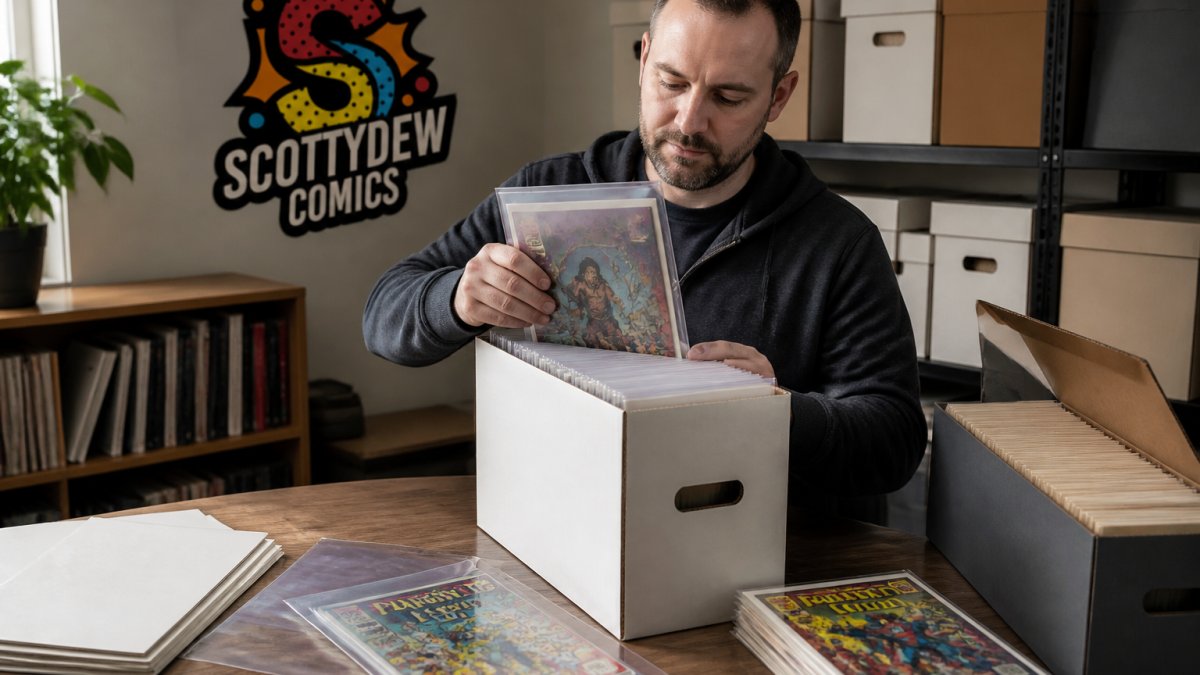
Short boxes hold about 150-175 bagged floppy comics, measure roughly 10" x 6.75" x 8", and weigh 15-20 pounds full.
Long boxes hold 250-300 bagged floppy comics, run about 27" long, and weigh 30-35 pounds full.
Choose based on space and strength: short boxes for easy access, long boxes when floor space is tight and shelving is solid.
Plastic Bins and Filing Cabinets as Alternatives
Plastic bins stack easily and keep dust out, but thin plastic can warp in heat, so they're not ideal for long-term storage of valuable floppy comics.
Lateral filing cabinets hold bagged comics upright and accessible, but take up floor space and cost more than boxes.
Comic-specific cardboard boxes breathe slightly to prevent moisture buildup, are affordable, and stack efficiently.
How to Organize Comic Books by Series and Category
Organization makes your collection usable. You need to find a specific issue without opening every box.
Using Dividers to Separate and Identify Collections
Dividers break boxes into sections by series, publisher, or era. Label each one clearly.
Organization systems vary by collector preference:
- By series: All Spider-Man issues together, then all X-Men, etc.
- By publisher: Marvel section, DC section, Image section
- By era: Golden Age, Silver Age, Modern Age
Pick one system and stick with it. Consistency matters more than the choice, when you store floppy comics consistently, you always know where to look.
Arranging Comics Upright to Prevent Leaning and Bending
Never stack bagged comics flat, the ones at the bottom bend under the weight. Upright storage prevents this.
Stand comics upright like books on a shelf so they support each other and the weight distributes evenly across the box bottom.
If a box isn't full, use a divider at the end to stop comics leaning, which causes edge wear and cover damage over time.
Long-Term Comic Book Storage: Environment and Location
Where you store floppy comics matters as much as the bags and boxes. Paper is hygroscopic, and heat plus humidity swings age a collection fastest, a stable, moderate environment does more than any single supply purchase.
What Actually Damages Comics
- Moisture absorption swells paper fibers, cockles covers, and creates conditions for mold. Mold spores are nearly everywhere; they need sustained high humidity to colonize.
- Heat accelerates chemical reactions, including the acid hydrolysis and oxidation that yellow paper and embrittle it. Every sustained temperature increase speeds aging.
- Fluctuating humidity is often worse than a steady slightly-high reading, because repeated swelling and shrinking stresses paper and accelerates wear at the spine and staples.
Temperature and Humidity Targets
A widely used target for paper-based collections is roughly 60-70°F with relative humidity in the 30-50% band. The exact number matters less than stability: a collection held steadily at 68°F and 45% RH fares better than one swinging between 55°F and 85°F with humidity following the weather.
- Below about 30% RH: paper can become brittle and covers can curl; static also increases, which attracts dust.
- Above about 60% RH: mold risk rises sharply, especially in still air and cool corners.
- Above about 75°F sustained: aging reactions speed up noticeably.
How to Monitor: A Practical Routine
You don't need lab equipment. A basic digital thermo-hygrometer, commonly $15-$30 at hardware and home stores, shows temperature and relative humidity. Place one in each storage area, not just one for the whole house, because closets and interior rooms behave differently.
A workable monitoring routine:
- Read the meter monthly and note the numbers. A paper log or phone note is enough.
- Watch for trends, not single readings. A hot week is normal; a slow climb in humidity across a season is a signal.
- Act on thresholds. If RH sits above 60% for more than a few days, add a small dehumidifier or move the boxes. If it drops below 30% in winter, a room humidifier or a move to a more interior space helps.
- Check after weather events. After heavy rain, a plumbing leak, or a heat wave, read the meter and spot-check boxes for softness or odor.
- Keep air moving slightly. A small fan on low, or simply not packing boxes tight against walls, reduces microclimates where mold starts.
Choosing a Location: Trade-Offs by Space
- Interior closets: Usually the best default. Dark, buffered from outdoor temperature swings, and easy to monitor. Keep boxes off the floor on a shelf or pallet.
- Spare bedrooms and interior rooms: Good if you can keep blinds closed and the room conditioned. Avoid rooms with south- or west-facing windows that heat up.
- Basements: High risk. Even a 'dry' basement can spike in humidity in summer and is the first place to flood. If you must use one, use shelving well off the floor, a dehumidifier with a drain, and a water alarm.
Light, Air, and Pests
Store comics in darkness or dim, indirect light. If you display any, keep them out of direct sun and away from sustained fluorescent or LED spotlights, and rotate displayed items so no single comic takes years of light exposure.
Keep the storage area clean and free of food crumbs and cardboard debris that attract pests.
Tying Environment to the Inspection Schedule
Environment is not set-and-forget. The monthly meter reading and twice-yearly box inspection work together: the meter tells you whether conditions are drifting, and the box check tells you whether the environment is actually reaching the comics. If a meter reads fine but a box smells musty or a board feels soft, trust the box and investigate, microclimates inside a packed box can differ from the room.
Storing Valuable, Signed, and Graded Comics
Rare or graded comics need extra care. Slabbed (graded) comics are already protected by the slab itself.
Signed comics are vulnerable. The signature can fade or smudge if exposed to moisture or handled frequently.
High-value key issues deserve individual attention. Some collectors use small storage boxes for their most valuable floppy comics.
Safe Packing, Lifting, and Transport for Collections
Moving a collection requires planning. Heavy boxes cause injury if lifted wrong.
Never fill a short box completely full.
When lifting, bend your knees. Use your legs, not your back. Carry boxes close to your body.
Transport boxes in a climate-controlled vehicle.
Stack boxes in the vehicle with the heaviest on the bottom.
Maintenance and Inspection Schedule
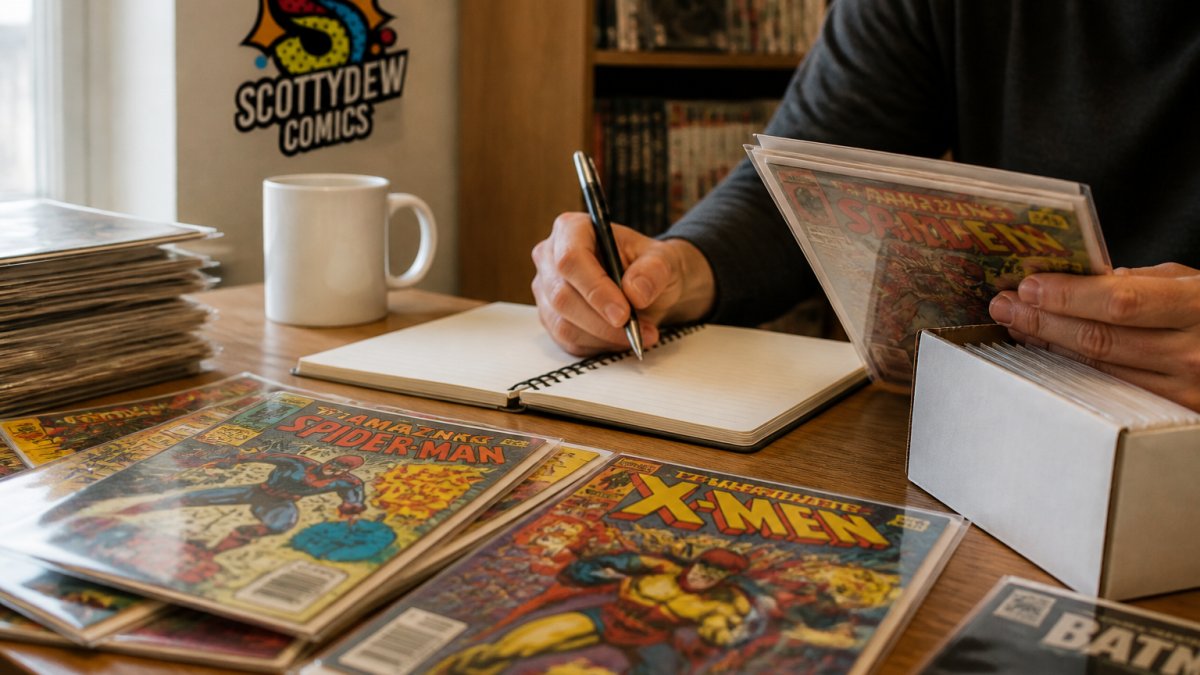
Check your collection twice a year. Open a few boxes and inspect the comics inside.
Look for signs of moisture: discoloration, soft spots, or odors.
Check dividers and boxes for damage.
Verify your storage location's humidity and temperature remain stable. If conditions change, adjust your storage approach.
| Storage Element | Check Frequency | What to Inspect | Action if Problem Found |
|---|---|---|---|
| Bags and Boards | Twice yearly | Tears, yellowing, brittleness | Replace damaged ones |
| Boxes | Twice yearly | Collapse, water damage, pests | Replace box, inspect comics |
| Environment | Monthly | Temperature and humidity | Relocate boxes if needed |
| Organization | Annually | Dividers, labeling, accessibility | Re-organize if needed |
Storing floppy comics properly isn't expensive or complicated.
Frequently Asked Questions
Should floppy comics be stored in bags and boards?
Yes, bagging and boarding floppy comics is essential for long-term preservation. Archival-quality bags protect against dust, moisture, and physical damage, while backing boards prevent bending and warping. This combination is the industry standard for serious collectors looking to maintain mint condition and protect investment-grade issues.
What's the best way to store floppy comics upright or flat?
Store floppy comics upright in storage boxes whenever possible. Upright storage prevents bending, creasing, and warping that occurs when comics are stacked flat. Use dividers to keep them from leaning against each other. Only store comics flat if you're organizing them temporarily or in display situations where they're visible and accessible.
How can I protect comics from humidity and light?
Store comics in a cool, dry location with humidity between 30-50% and temperatures around 65-70°F. Use a dehumidifier if needed and monitor humidity with a hygrometer. Keep comics away from direct sunlight, fluorescent lights, and heat sources. Interior closets, climate-controlled rooms, and shelving units away from windows are ideal storage locations.
How much space should be left in a comic storage box?
Fill boxes to about 75% capacity to prevent excessive pressure on the comics while maintaining structural integrity. Overstuffed boxes can cause bending and warping, while underfilled boxes may collapse under their own weight during stacking. Leave enough room that you can easily remove individual comics without forcing them out.