 how-to
Collecting Comics on a Budget: A Practical Guide
Table of Contents
- Set Your Monthly Comic Book Budget
- Find Cheap Comic Books Without Sacrificing Quality
- Buy Comic Book Lots to Maximize Savings
- Shop Smart: Conventions, Markets, and Comic Shops
- Assess Condition and Avoid Overpaying
- Store Your Collection on a Budget
- Focus Your Collection: Character, Series, or Publisher
- Account for Hidden Costs: Shipping, Fees, and Taxes
- Frequently Asked Questions
Last Updated: October 13, 2026
Set Your Monthly Comic Book Budget
The first step to collecting comics on a budget is deciding how much you can actually spend each month. This number becomes your foundation for everything else.
Start by looking at your regular expenses. How much extra money do you have after rent, food, and bills? Be honest. A realistic budget beats an ambitious one you can't maintain.
Build a Simple Budget Worksheet
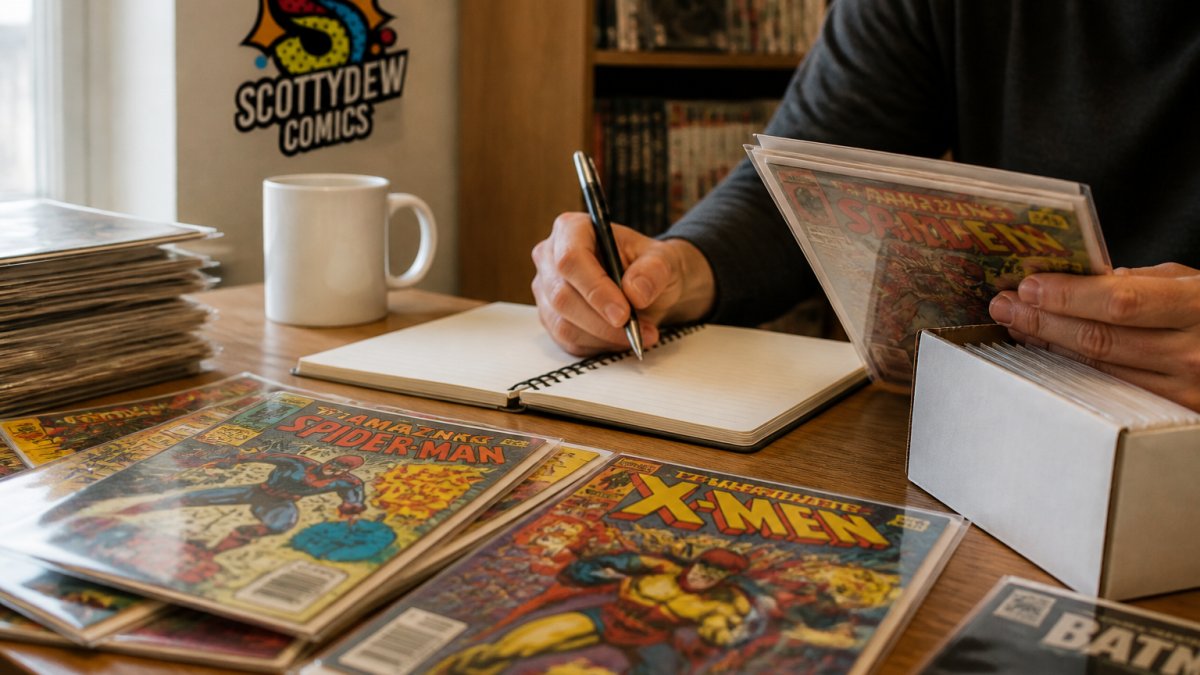
A budget only works if you can see it. Use a free spreadsheet or a notes app and create five columns: Date, Item, Format, Price, and Running Total.
Add two more fields if you buy online: Shipping and Tax. A $4 comic with $5 shipping and 8% tax actually costs about $9.72. Logging the true cost stops you from fooling yourself about how much you spent.
Sample Monthly Spending Plans
Different budgets call for different strategies. Here are three starting points you can adjust to your situation.
Lean plan, about $25 per month
- $10 on a single new release you actually want
- $10 on a stack of bargain-bin back issues
- $5 set aside in a 'big purchase' fund that rolls over month to month
Steady plan, about $50 per month
- $15 on new releases (two to three issues)
- $20 on a bulk lot or back-issue run
- $10 on a trade paperback or digital bundle
- $5 into the rollover fund
Flexible plan, about $100 per month
- $30 on new releases
- $40 on a targeted back-issue hunt for a specific run
- $20 on a convention or show fund you save toward
- $10 into the rollover fund
The rollover fund is the quiet workhorse. Skip a new release one month and that money carries forward, so a $60 key issue becomes reachable without blowing a single month's budget.
Track Spending Without Spreadsheet Fatigue
Most collectors find that a 30-second daily log beats a detailed weekly review they never do. Keep the log on your phone. Photograph receipts. If you buy mostly online, your order history is already a spending record, export it once a month and total it.
Set a hard stop. When the Running Total hits your monthly number, you're done buying until the next month. This single rule prevents the slow bleed that turns a $50 budget into a $150 month.
A budget you can't see is a budget you'll break. If you don't log purchases the day they happen, you'll underestimate your spend almost every month.
Pick a plan, log every purchase the same day, and let the rollover fund absorb the months you spend less. That's the whole system.
Find Cheap Comic Books Without Sacrificing Quality
Cheap doesn't mean damaged or worthless. You can find quality comics at low prices if you know where to look.
Bargain Bins and Discounted Stock
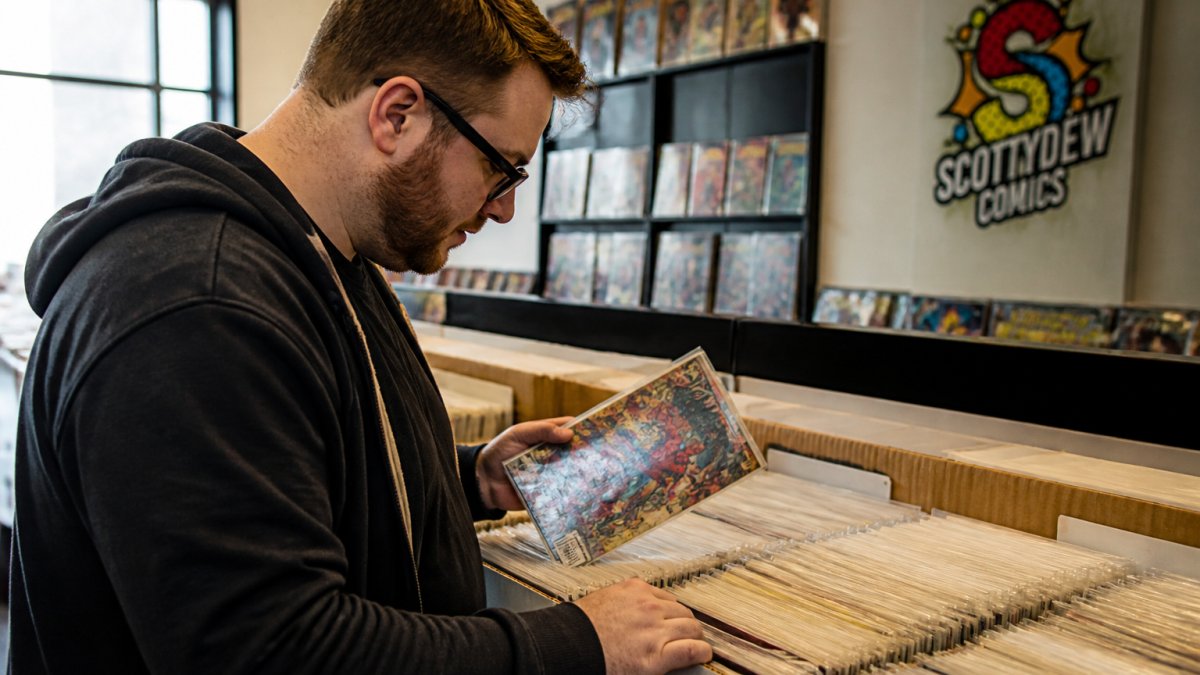
Bargain bins are treasure chests for budget collectors. Comic shops often pack older issues into bins priced at 50 cents to a few dollars each.
Visit your local comic shop regularly. Ask staff when they restock the bargain section. Some shops rotate inventory weekly. Others add new bins monthly.
Online retailers also offer discount sections. Look for sales on back issues that are a few months old.
Back Issues and Older Series
Back issues are comics from previous months or years. They cost less than current releases. A comic from six months ago might be half the cover price.
Focus on series that ended or went on hiatus. Completed runs are easier to collect affordably.
Look for series with multiple printings. If a comic had three printings, the third printing costs less than the first. The story is identical.
Digital Comics as a Lower-Cost Option
Digital comics cost less than print versions. Many publishers offer digital issues for $2 to $4 compared to $4 to $5 for printed copies.
Digital works best if you enjoy reading on a tablet or computer. You own the license to read, but you don't own a physical book.
Some services offer unlimited access to back catalogs for a monthly subscription. This approach costs less per issue if you read heavily.
Mixing print and digital lets you read more comics for less money. Use digital for series you want to follow, and print for issues you want to keep and display.
Buy Comic Book Lots to Maximize Savings
Comic book lots are bundles of multiple issues sold together.
The catch is you don't always get to pick individual comics. Lots include a mix. Some issues might be duplicates.
But if you're flexible about what you read, lots save real money. Buy lots from sellers with good ratings.
Online auctions and marketplaces often have lots. Comic shops sometimes bundle slow movers into deals.
Shop Smart: Conventions, Markets, and Comic Shops
Comic conventions and markets bring collectors and vendors together. Prices here vary wildly.
Arrive early. The best bargains sell fast. Bring a list of comics you want.
Talk to vendors. Many will negotiate on price, especially if you buy multiple comics.
Local comic shops are your regular hunting ground. Build relationships with staff.
At Scottydew Comics, we host themed shows and live auctions where you can find curated collections.
Assess Condition and Avoid Overpaying
Comic condition affects value. A mint copy costs more than a read copy.
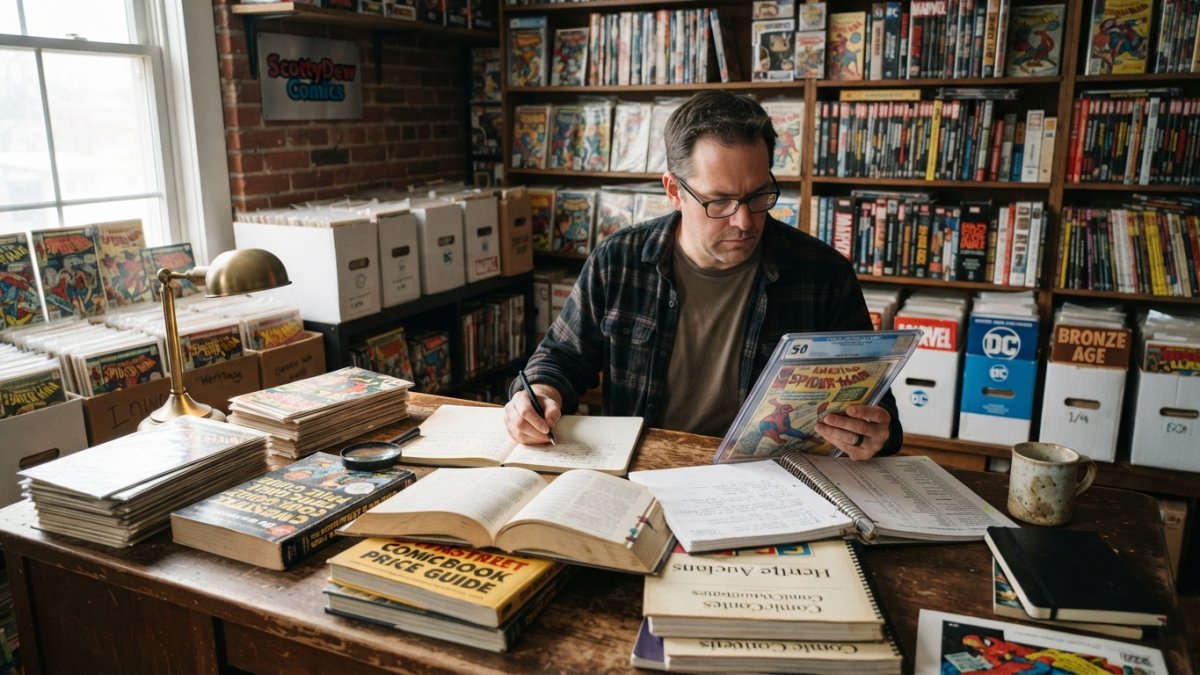
Learn the grading scale. Near mint books show almost no wear. Fine books have minor creases.
For reading, very good to fine condition is perfect.
Check for these issues before buying:
- Water damage or staining
- Missing pages or sections
- Loose or detached covers
- Heavy creases or bends
- Fading or discoloration
Ask sellers about condition. Honest dealers describe problems upfront.
Compare prices across multiple sources. The same comic might sell for different prices at different shops.
Store Your Collection on a Budget
Storage matters. Poor storage ruins comics. Good storage costs money. Budget storage is possible, but only if you understand what actually damages a book.
What Actually Damages Comics
Four things do most of the harm:
- Light, UV rays fade covers and yellow pages. Direct sunlight is the worst offender.
- Humidity and moisture, damp air causes foxing, mold, and wavy pages. Basements and unheated garages are the usual culprits.
- Heat, attics and garages that swing from 40°F to 100°F warp covers and weaken glue.
- Acid and pressure, cheap cardboard, rubber bands, and tight stacking all leave marks over time.
If you control those four, you've solved most of the problem.
The Budget Storage Stack
You don't need purpose-built furniture. You need the right materials in the right order.
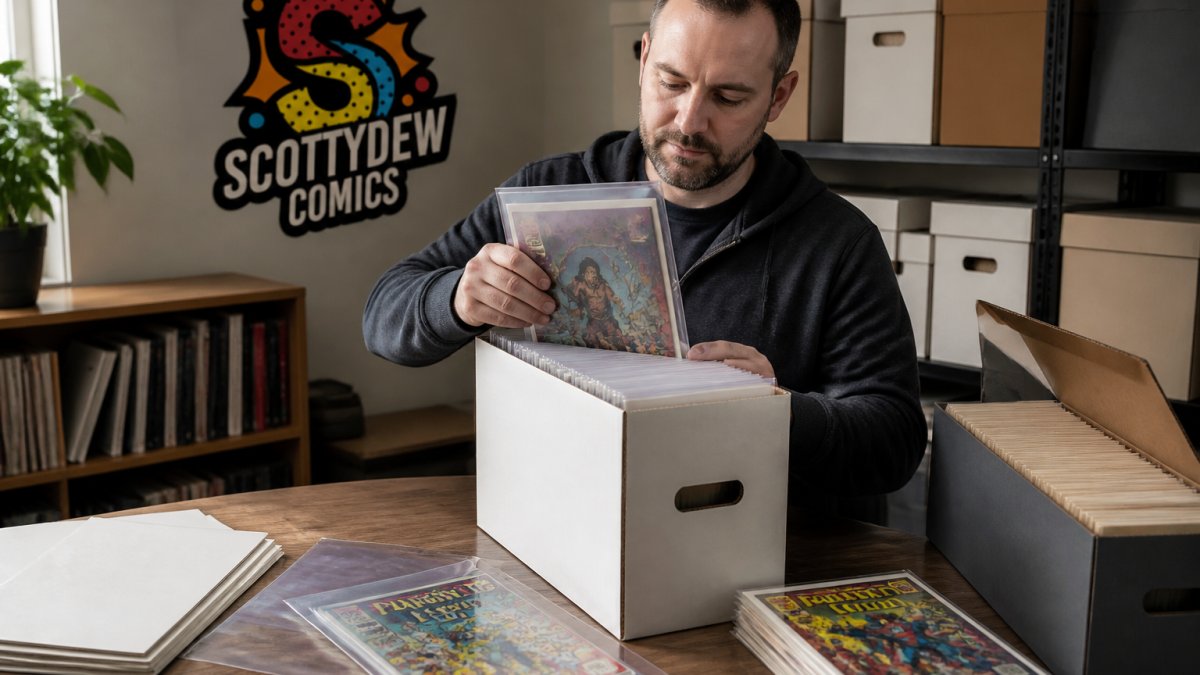
- Bag and board every book you care about. Poly bags and acid-free backing boards cost a few cents each in bulk. They keep books rigid, block dust, and stop covers from rubbing. Skip the bag and a $3 back issue can become a $0.50 reader in a year.
- Box them upright. Standard comic storage boxes hold roughly 150-200 bagged and boarded books. Store them upright, not stacked flat, and never spine-down. Flat stacking crushes the bottom books and bends spines.
- Pick the right room. A climate-controlled closet or interior shelf beats a garage or attic every time. Aim for a stable, moderate temperature and low humidity. A cheap hygrometer tells you if a room is safe.
- Block the light. Keep boxes closed and out of direct sun. For displayed books, UV-filtering plastic or a shaded shelf slows fading dramatically.
Cheap Storage Options Compared
| Storage Method | Typical Cost | Best For | Watch Out For |
|---|---|---|---|
| Poly bags + acid-free boards | Pennies each in bulk | Every book you keep | Replace yellowed or brittle bags over time |
| Standard comic boxes | $5-$15 each | Long-term storage | Keep off concrete floors |
| Hardware-store shelving | $30-$100 | Display and access | Add UV-filtering plastic near windows |
| Magazine holders | $3-$8 each | Small collections | Not rigid enough for valuable books |
| Repurposed drawers or bins | Free-$20 | Overflow and duplicates | Must be clean, dry, and acid-free |
Display Without Damage
If you want books on a shelf or wall, rotate them. A book left in direct light for months will fade even behind plastic. Rotate displayed books every few weeks and keep the rest boxed in the dark.
For featured pieces, a dedicated display stand keeps a slab or key issue upright and off the shelf edge. The Wham! Stand from Scottydew Comics is built for exactly that, showcasing a favorite slab or collectible in a small space without laying it flat.
Never store comics in a damp basement, a hot attic, or against an exterior wall. Moisture and temperature swings cause more damage than any single handling mistake.
Bag and board everything you keep, box it upright in a stable room, and block the light. That routine costs very little and protects books that would otherwise be ruined within a year.
Focus Your Collection: Character, Series, or Publisher
Focused collecting costs less than buying everything. Pick a character, series, or publisher.
Character collecting works well. Pick Spider-Man, Batman, or Wonder Woman. Hunt for all their appearances.
Series collecting means following one comic from issue one forward. You complete the story.
Publisher collecting means buying from one company.
Focused collecting saves money because you skip comics outside your interest. You know exactly what you want.
Keep a want list of specific comics you're hunting. Share it with friends and fellow collectors. They'll alert you when they spot your books at good prices.
Account for Hidden Costs: Shipping, Fees, and Taxes
Shipping adds up fast. A $5 comic with $5 shipping costs twice as much.
Online marketplaces charge seller fees. These get passed to buyers through higher prices.
Sales tax applies to most comic purchases. This varies by location but typically adds 7-10% to your bill.
Grading and slabbing cost money if you pursue that route.
When comparing prices, always include these hidden costs.
Frequently Asked Questions
How much should I spend on comics each month?
Your monthly comic book budget depends on your income and collecting goals. Many collectors allocate between $25 and $100 per month for new releases and back issues. Start with what feels comfortable, even $20 monthly builds a meaningful collection over time. Track your spending for the first few months to see where your money goes, then adjust based on what you actually enjoy buying. The key is consistency: a steady $40 monthly budget accumulates faster than sporadic $200 splurges.
Are comic book lots a good way to save money?
Yes, buying comic book lots can save 30-50% compared to purchasing single issues individually, especially for back issues and older runs. Lots work best when they contain series you genuinely want to read or collect. Before buying, check the issue numbers, condition descriptions, and whether key issues are included. Avoid lots with excessive damage or incomplete series unless the price reflects that. Online auctions and local comic shops often feature bundles that offer better value than buying one at a time.
How do I keep comic books in good condition without spending a lot?
Store comics upright in boxes or on shelves away from direct sunlight, heat, and moisture. Use inexpensive acid-free bags and boards (available in bulk online) to protect individual issues, these cost pennies per comic. Keep humidity between 40-50% to prevent mold and paper deterioration. Avoid stacking heavy items on top of your collection. For long-term storage, cardboard boxes designed for comics are affordable and effective. Regular inspection catches damage early, preventing costly restoration later.
Where can I find the best deals on comics?
Bargain bins at comic shops, local conventions, and online auction platforms offer significant discounts on back issues and overstock. Check digital retailers for sales on older titles. Comic book lots from estate sales or collector groups often provide bulk savings. Join local collector clubs or online communities to hear about group buys and private sales. Compare prices across multiple sources before buying, the same issue can vary by $5-10 depending on where you shop.
Collecting comics on a budget is about smart choices, not sacrifice. Set a realistic monthly budget and stick to it. Hunt for bargains at conventions, markets, and comic shops. Buy strategically and assess condition carefully. At Scottydew Comics, we make budget-friendly collecting easier through our live auctions, curated bundles, and community events. Join our 5,300+ member community today to discover rare treasures and connect with fellow collectors who share your passion for comics.