 how-to
How to Spot Fake Graded Comic Slabs
Table of Contents
- Understanding Graded Comic Slabs and Authentication
- Visual Indicators of Authentic Slabs
- Physical Inspection: Case Materials and Construction
- How to Tell If a Comic Slab Has Been Opened
- CGC Serial Number Lookup and Verification
- Common Comic Book Grading Scams to Avoid
- Red Flags: What Signals a Counterfeit Slab
- Next Steps: Protecting Your Collection
- Frequently Asked Questions
Last Updated: September 18, 2026
Understanding Graded Comic Slabs and Authentication
Graded comic slabs are protective cases that encase authenticated and graded comic books. Third-party grading companies evaluate comics on condition, assign a grade from 0.5 to 10, and seal them in tamper-evident plastic cases. This process protects valuable comics and establishes provenance for collectors.
Fake graded comic slabs undermine the authentication system and cost collectors thousands. Learning to spot fakes protects your investment.
This guide covers visual inspection, physical verification, and authentication checks you can do right now.
Visual Indicators of Authentic Slabs
Real slabs use professional-grade printing with vibrant, consistent colors and crisp text. Fake slabs have blurry text, faded colors, or uneven printing. Hold the slab under bright light to spot these defects immediately.
Label and Font Consistency
Authentic labels use consistent fonts, even spacing, accurate colors, and smooth, high-quality material. Counterfeit labels have visible defects: off fonts, uneven spacing, dull colors, and thin material. Compare your slab to reference images from collector communities, even small differences signal a fake.
Hologram and Security Features
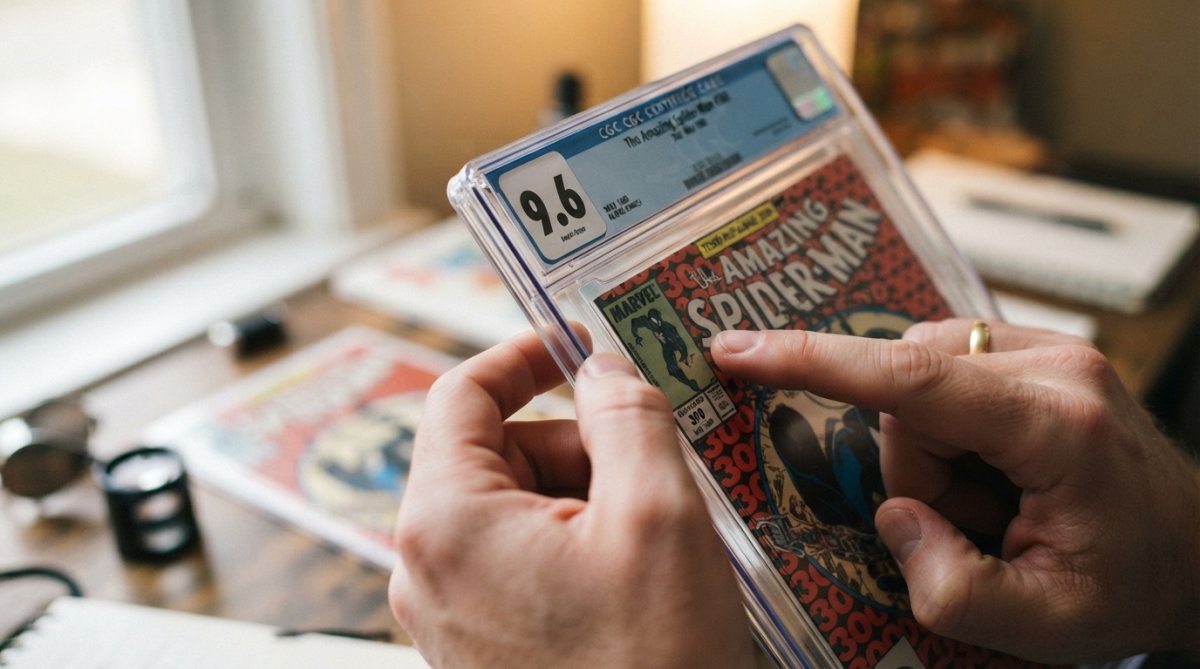
Authentic holograms are integrated into the label and show three-dimensional depth, color shifting, and micro-print details visible under magnification. Counterfeit holograms are flat, don't shift colors, and have blurry or missing micro-print. Inspect under UV light (365 nanometers), real holograms respond predictably; counterfeits don't.
Physical Inspection: Case Materials and Construction
The physical case itself reveals whether you're holding an authentic slab. Real cases use specific materials, construction methods, and quality standards that counterfeiters cannot easily replicate. Understanding these differences allows you to spot fakes through tactile and visual inspection alone.
Polycarbonate Quality and Clarity
Authentic slabs use high-grade polycarbonate that is crystal clear with zero yellowing or cloudiness. Counterfeits use lower-grade acrylic or recycled plastic with yellowing, haze, air bubbles, or surface scratches. Hold the slab to bright light, any cloudiness, color tint, or distortion signals a fake. Run your fingers across the surface; authentic cases feel smooth; counterfeits feel waxy or rough.
Seam Integrity and Ultrasonic Welding
Real slabs use ultrasonic welding to create perfectly aligned, completely sealed seams that cannot be opened without destroying the case. Counterfeits use adhesive, heat sealing, or mechanical fasteners, creating visible glue lines, uneven seams, or gaps. Inspect with 10x magnification: authentic seams are straight, flush, and sealed with no gaps; counterfeit seams are wavy, misaligned, or can be pried open.
Hologram Security Features and Micro-Print
Authentic slabs include security holograms as part of their tamper-evident design. These aren't simple stickers applied to the label, they're integrated into the label stock itself during printing, making them nearly impossible to counterfeit without specialized equipment.
Examine the hologram under magnification (at least 10x). Real security holograms have these characteristics:
- Three-dimensional depth: The hologram shows multiple distinct layers when you tilt it. You can see foreground and background elements at different depths.
- Color shifting: Colors change as you move the slab under light. A real hologram might show blue, green, and gold as you tilt it.
- Micro-print details: Fine text is visible under magnification. This text is often so small it's nearly invisible to the naked eye but becomes clear under 10x magnification. Counterfeiters cannot reproduce this level of detail.
- Placement consistency: The hologram sits in the exact same spot on every slab from that grading company. Compare your slab to reference images from the company's official website.
- No visible adhesive: The hologram is part of the label, not a sticker. There should be no adhesive residue or edges around the hologram.
Counterfeit holograms are usually flat or two-dimensional. They don't shift colors when tilted. The micro-print is blurry, missing entirely, or illegible under magnification. The placement looks random or off-center compared to authentic examples.
UV Light Test: Inspect the hologram under ultraviolet (UV) light. Real security holograms respond predictably to UV exposure, they may glow, change color, or reveal hidden elements. Counterfeits often don't respond to UV light at all, or the response is inconsistent.
Case Dimensions and Weight
Authentic slabs measure approximately 7 inches tall by 4.5 inches wide by 0.5 inches thick and weigh 3 to 4 ounces. Counterfeits often have incorrect dimensions (too thin, too thick, irregular shape) or wrong weight. Compare to authenticated examples from collector communities, noticeable differences signal a fake.
How to Tell If a Comic Slab Has Been Opened
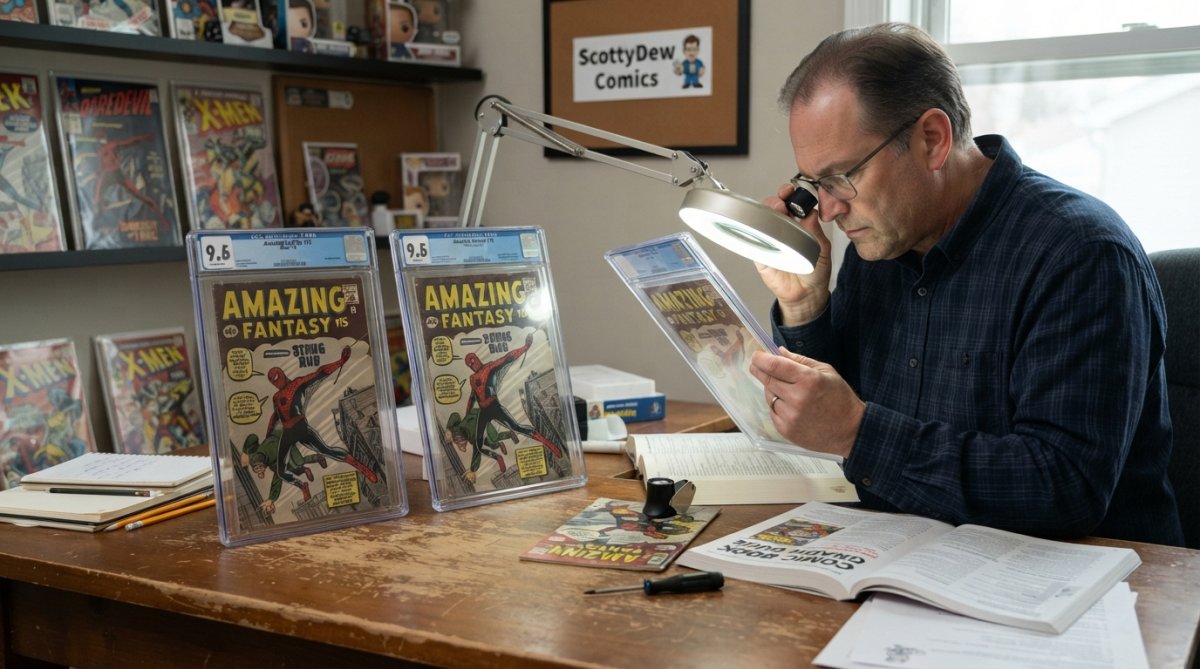
An opened slab has been compromised and loses all authentication value. Look for seam separation, label damage, plastic stress marks, misaligned case halves, or interior dust. Use a magnifying glass to inspect seams for signs of breaking and re-sealing, amateur attempts always leave visible marks.
CGC Serial Number Lookup and Verification
Every authentic slab has a unique serial number that connects directly to the grading company's official records. This is your most powerful authentication tool.
Finding and Recording the Serial Number
Locate the serial number on the label (typically at the bottom or side). Write it down exactly, including any letters or hyphens, transcribe by hand to avoid errors.
Performing the Database Lookup
Visit the official grading company website and use their free lookup tool. Enter the serial number exactly as it appears. The database returns the comic title, issue number, grade, grading date, and subgrades. Write down all details for comparison.
Cross-Referencing for Accuracy
Compare database results to the physical slab. Every field must match exactly: title, issue number, grade, and subgrades. If even one field differs, the slab is counterfeit or altered.
What to Do When the Serial Number Doesn't Verify
If the serial number returns no results, the slab is counterfeit. If results don't match the physical slab, either the comic was swapped, the label was altered, or you have the wrong number. In all cases, do not purchase.
Serial Number Reuse and Counterfeiter Tactics
Counterfeiters photograph authentic slabs, copy serial numbers onto fake labels, or alter numbers to create non-existent entries. Verify the serial number yourself on the official website and confirm the comic inside matches the database record. Never trust a seller's claims.
Common Comic Book Grading Scams to Avoid
Scammers create urgency, offer unusually low prices, refuse to provide serial numbers upfront, use vague descriptions, and discourage verification. Legitimate sellers allow time for checks, price fairly, provide serial numbers immediately, give complete details, and welcome inspection. Walk away from any seller who discourages verification.
Red Flags: What Signals a Counterfeit Slab
Red flags include: blurry text or faded colors, flat holograms that don't shift colors, loose or misaligned seams, cloudy or yellowed plastic, cheap-feeling labels, serial numbers that don't verify, incorrect dimensions, and damaged books inside. Trust your instincts, if something feels wrong, it probably is.
Next Steps: Protecting Your Collection
Start verifying every slab you buy by making serial number lookup your standard practice. Compare new slabs to authenticated examples and join collector communities that share reference images. When you shop at Scottydew Comics, you're buying from a community that values authenticity, our live auctions on Whatnot feature thoroughly vetted slabs. Our curated collectibles are authenticated and graded by legitimate third-party graders.
Frequently Asked Questions
How can I verify a CGC serial number?
Visit the official CGC Trading Cards website and use their serial number lookup tool. Enter the certification number from your slab's label to confirm the comic's grade, publication date, and title. If the number doesn't return results or shows different information than your label claims, the slab is likely counterfeit. Always use the official CGC database, never rely on third-party verification sites.
What are the common signs of a resealed comic slab?
Look for ultrasonic seal irregularities, misaligned inner sleeves, or gaps between the case halves. Authentic slabs have perfectly consistent seam lines with no visible separation. Check if the label sits flush against the plastic, resealed slabs often have labels that shift or bubble slightly. Examine the hologram placement; counterfeiters frequently position security features incorrectly.
What should I do if I suspect my comic slab is fake?
Stop handling the slab immediately to avoid further damage. Document photos of the label, serial number, and case construction. Contact the grading company directly using contact information from their official website, not from your slab's label. Report your findings and request guidance. If you purchased from an auction or seller, contact them with evidence. Never attempt to open the slab yourself.
Are there fake comic book grading companies?
Yes. Counterfeiters create fake grading companies with names similar to legitimate ones or entirely fictional credentials. Verify any grading company through the Better Business Bureau and check their official website independently. Be suspicious of slabs from unknown graders or companies without established collector reputation.
Protecting your comic collection means knowing exactly what you're buying. Counterfeits destroy value and damage trust in the hobby. By mastering these verification techniques, you become an expert collector who buys with confidence. Join the Scottydew Comics community today and connect with other collectors who care about authenticity. Our live auctions, themed shows, and curated collections give you access to verified, high-quality comics that deserve a place in your collection.