 listicle
Which Comic Book Display Is Worth the Money?
Quick Summary
A comic book display is worth the money when it shows your best books and protects them from handling, so choose one by cost per displayed book. Clear cases and stands cost under $25 for one key issue, while a small wall setup of three to five cases runs $25-$75. Keep displays out of direct sunlight, since light is the biggest long-term threat to covers.
- Divide total display spend by the number of books shown to compare true cost.
- A $40 ledge showing eight bagged-and-boarded books costs about $5 per book.
- Entry-level displays under $25 typically cover one clear case or adjustable stand.
- Place graded slabs on interior walls, away from windows and exterior walls.
- Support slabs from the bottom and back; avoid edge clamps that stress the seal.
Table of Contents
- Why Display Comics Instead of Boxing Them
- Comic Book Display Stands and Cases Under $50
- Comic Book Wall Display Ideas for Small Spaces
- How to Display Graded Comic Books Safely
- DIY Comic Book Display Projects You Can Build This Weekend
- Protecting Displayed Comics From Light and Handling
- Choosing Your First Display at Scottydew Comics
- Frequently Asked Questions
Why Display Comics Instead of Boxing Them
Last Updated: October 31, 2026
Scottydew Comics works with collectors every week, and the question we hear most is simple: is a display worth the money? For many collectors, a well-chosen display does more than store a book. It shows the cover, protects the book from handling, and turns a shelf of long boxes into something you actually enjoy looking at.
Boxes protect comics well, but they hide the art. A display stand, case, or wall mount brings your best books into view and makes rotation easy. The tradeoff is cost, dust, and light exposure, which is why the right choice depends on what you own and how much you plan to spend.
Comic Book Display Stands and Cases Under $50
The number that matters is not the sticker price of one stand, it is the cost to display the books you actually want to show. A single case or shelf can sound affordable until you need several of them. The table below breaks down what each budget tier generally covers.
| Budget tier | Typical spend | What it covers | Best for |
|---|---|---|---|
| Entry | Under $25 | One clear acrylic comic case or a single adjustable stand | One key issue on a desk or shelf |
| Small collection | $25-$75 | Three to five cases, or one floating ledge plus top loaders | A rotating wall selection of five to ten raw books |
| Larger wall | $75-$150 | Two ledges, a mix of stands, and UV-filtering bags and boards | A dedicated wall in a small room |
| Graded focus | $50-$120 | Two to four slab stands or a small graded case | A handful of graded keys |
Clear Cases and Acrylic Display Stands
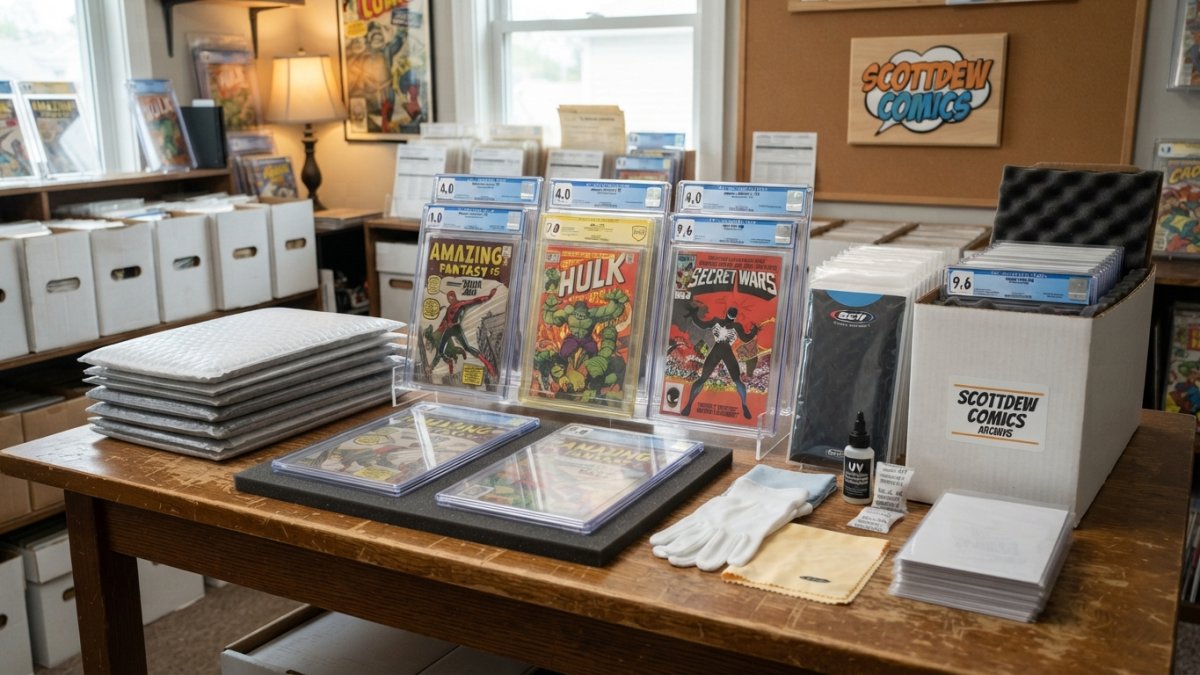
Clear cases are the simplest entry point. Clear cases are a common entry point, and pricing usually drops when you buy in larger quantities. Check current prices directly with Scottydew Comics or the product maker before you plan your budget.
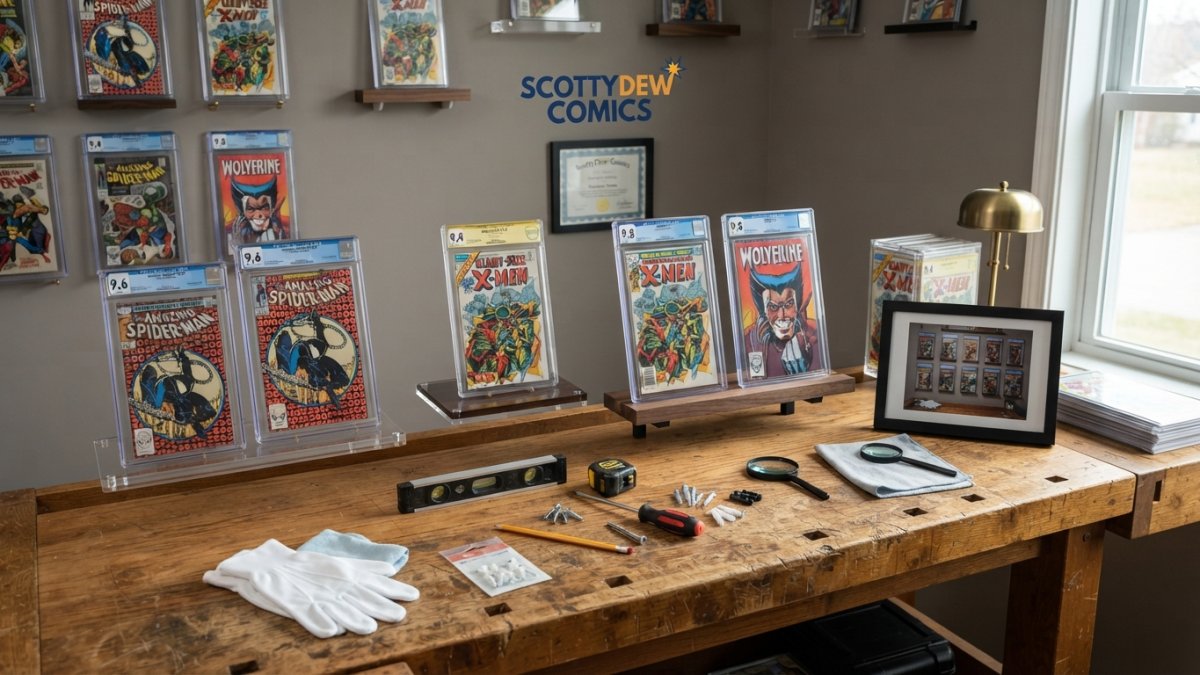
Acrylic stands work well for graded slabs and single books you want front and center. We recommend choosing a clear stand that fits your book's size with a little room to spare, so the slab sits level and does not rattle. A stand that is too wide lets the book slide; one that is too tight puts pressure on the slab edges.
Adjustable Stands for Graded and Raw Books
Adjustable stands handle mixed collections. Adjustable stands can help you handle a mixed collection by changing the angle and fitting different formats. Pricing for adjustable stands varies, so compare current listings before you buy, and compare the per-book cost, not just the per-stand cost, since a stand that only fits one format may cost more per book than one that fits several.
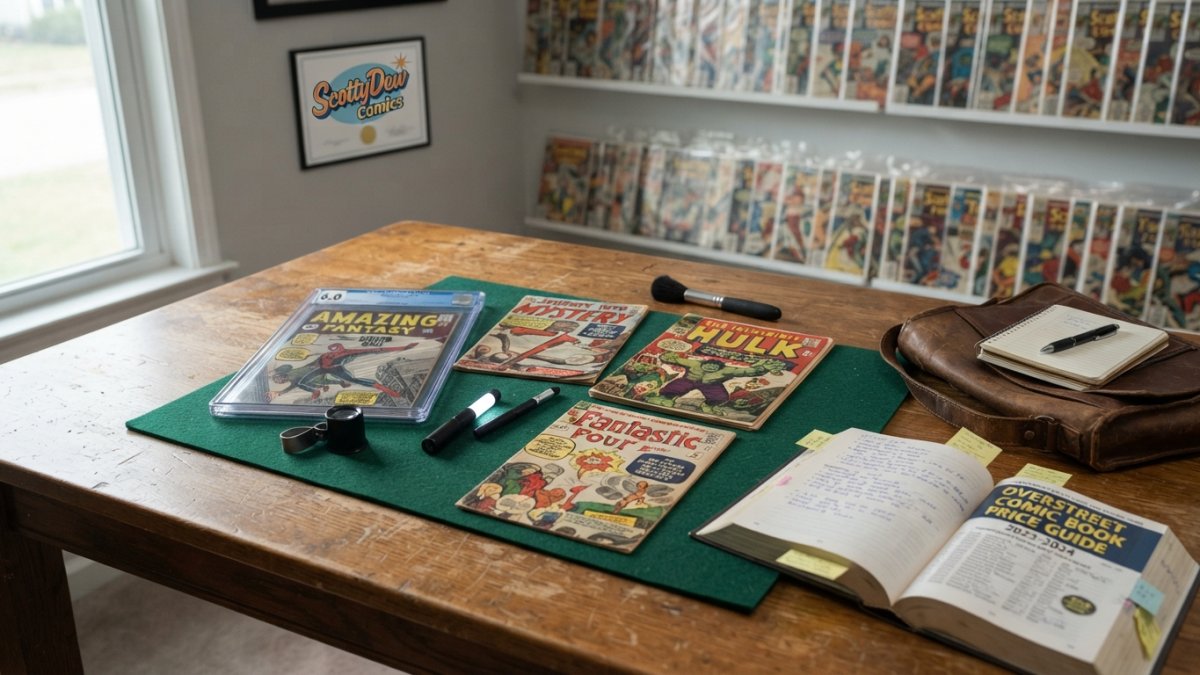
Raw books need a little extra care. Keep them out of direct sunlight, and use a backing board or sleeve if the stand contacts the cover.
What Drives the Price Up
Features such as UV-filtering acrylic, a locking or sealed enclosure, and a wall-rated mount can increase the cost of a display. If your books sit away from windows and you handle them rarely, you may not need these features. If a sunny wall is your only option, UV-filtering acrylic is a worthwhile feature to consider.
Comic Book Wall Display Ideas for Small Spaces
Limited space does not rule out a display. A few wall-mounted pieces can work well in an apartment instead of a full case.
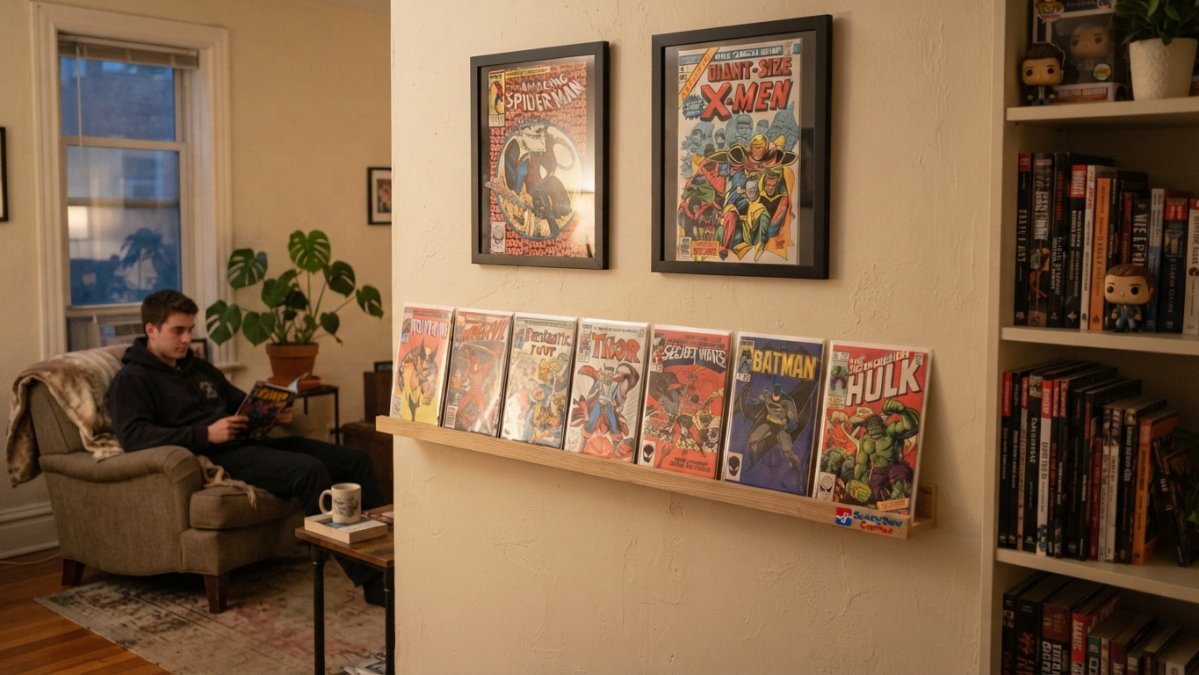
Floating ledges are a popular option. Picture-ledge shelves can be used to show bagged-and-boarded books or comics in top loaders. Choose a ledge with a small lip so books stay put, and keep the display to a rotating selection of five to ten books.
For renters, adhesive hooks offer a low-cost way to hang a display without drilling. Check the hook's weight rating against the total weight of your books before you hang anything heavy.
For a small room, wire closet shelving can create a custom display. It is a do-it-yourself approach that takes up little floor space and can be adjusted as your collection grows.
How to Display Graded Comic Books Safely
Graded slabs are sealed and valuable, so the display method matters. The main risks are more specific than sunlight alone, and each has a practical fix.
Light: The Slowest and Most Common Damage
Ultraviolet and visible light break down the inks and paper over months and years. Direct sun is the worst offender, but bright indoor lighting near a window can do the same damage on a longer timeline. The fix is placement first: put slabs on an interior wall away from windows, and rotate which books face the room. If a sunny spot is your only option, look for UV-filtering acrylic cases or add a UV-filtering film to the case front. No display material stops fading completely, it only slows it.
Humidity and Temperature
Paper and adhesives expand and contract with humidity, and a slab that cycles between damp and dry conditions can develop condensation inside the holder. Keep displays off exterior walls, away from bathrooms and kitchens, and out of rooms that swing widely in temperature, such as an unfinished attic or garage. Keeping displayed slabs in a room with steady, moderate conditions is generally advisable.
Mount Stress and the Holder Seal
The slab is a sealed holder, and the seal is the weakest point. A stand or mount that grips the slab by the edges or clamps the front can put pressure on that seal over time. Choose a stand that supports the slab from the bottom and back, with the book resting rather than being squeezed. Check the mount with a light load before placing your most valuable book on it, and never hang a slab from an adhesive hook rated for less than the slab's weight.
Adhesives and Direct Contact
Tape, adhesive hooks, and sticky mounts are convenient, but adhesives can off-gas and leave residue, and a failing adhesive can drop a slab. For graded books, prefer mechanical mounts, a shelf with a lip, a stand, or a case, over anything that sticks to the slab itself. If you must use an adhesive mount, attach it to the wall or shelf, never to the holder.
A Simple Safety Checklist
- Place slabs on interior walls, away from windows and exterior walls.
- Support the slab from the bottom and back; avoid edge clamps and front pressure.
- Keep the display steady in temperature and humidity.
- Use mechanical mounts rather than adhesives on the slab.
- Clean the outside of the slab with a soft, dry cloth, never with household cleaners.
- Rotate books so no single cover takes years of direct light.
DIY Comic Book Display Projects You Can Build This Weekend
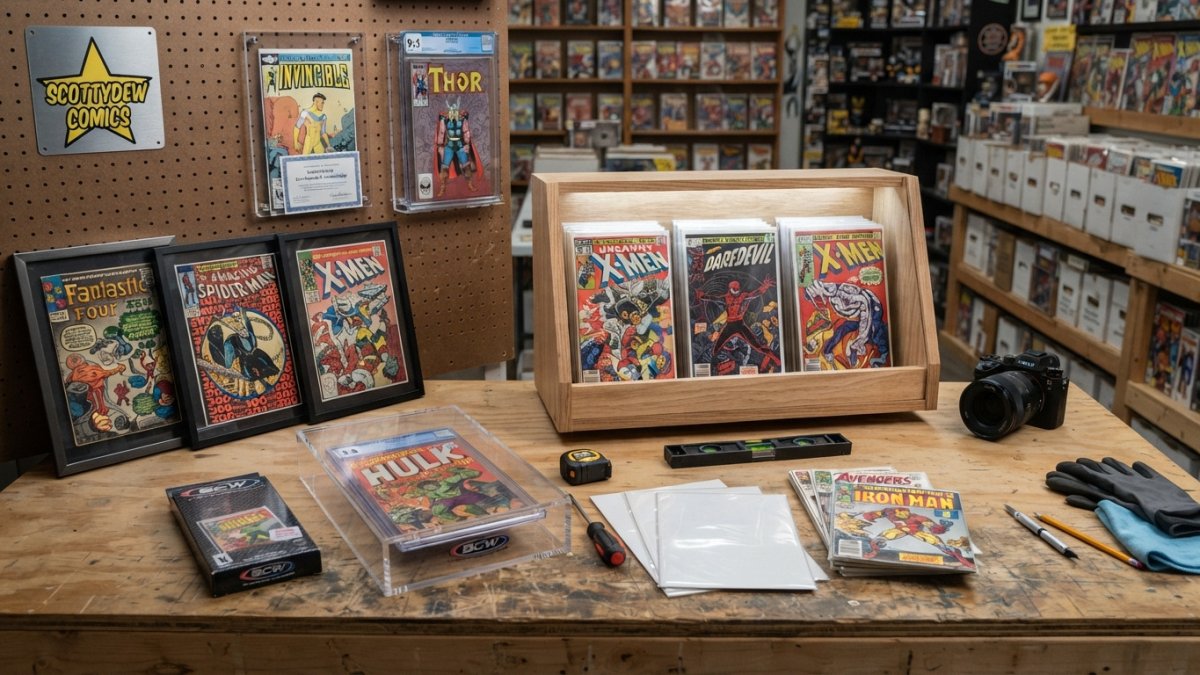
If you enjoy building things, a simple DIY display can cost very little. A wire shelf mounted to a wall, paired with a sturdy backing board, makes a clean display for rotating books.
Start with a plan. Measure your books, decide how many you want to show, and buy materials that match. Use wall anchors rated for your load, and keep the display out of direct sunlight.
The final result can look as good as a store-bought case, and you can adjust it as your collection changes.
Protecting Displayed Comics From Light and Handling
Light is the biggest long-term threat to displayed comics. Direct sunlight fades covers, and bright indoor lighting can do the same over years. Place displays away from windows and consider UV-filtering acrylic if a sunny spot is unavoidable.
Handling causes the most day-to-day damage. Keep displays at a height where children and pets cannot reach, and avoid touching the art or the inside of a slab. Rotate books periodically so no single cover fades more than the others.
Choosing Your First Display at Scottydew Comics
Start with one or two books you care about most, then choose a display that fits your budget and space. A single clear case works well for one key issue. A wall ledge suits a small rotating collection. Adjustable stands fit mixed collections of graded and raw books.
Our top pick for most collectors is a clear, acrylic stand for graded books and a ledge for raw issues. Browse our current selection, and join our community to find the display that fits your collection.
Frequently Asked Questions
What is the cheapest way to display comic books?
The lowest-cost option is usually a wall-mounted ledge or a clear display stand paired with protective sleeves and boards. Adhesive hooks and picture-ledge shelves can be budget options that let you rotate a small selection without buying a full display case. Pricing varies by quantity, size, and retailer, so check current prices directly with Scottydew Comics or the product maker before buying.
How can I display comic books without damaging them?
Keep each book in an archival bag and board before it goes on display, and avoid direct sunlight, which fades covers over time. Use clear, acid-free materials where possible and limit how long any single issue stays in one spot. Handle books by the edges, and rotate displayed issues periodically so the same covers are not exposed indefinitely.
What is the best way to display graded comic books?
Graded books in slabs are already protected, so the priority is secure mounting and light control. Use a sturdy wall ledge or a display case with a clear front, and make sure the slab cannot slide or tip. Keep the display away from windows and heat sources, and check the mounting hardware periodically to confirm it is still secure.
How do you display comic books in a small space?
Vertical wall space is the most efficient option in a small apartment. Floating ledges, narrow frames, and a single clear case on a shelf can hold a rotating selection without taking up floor area. Renter-friendly adhesive hooks and removable mounts let you display books without drilling into walls.