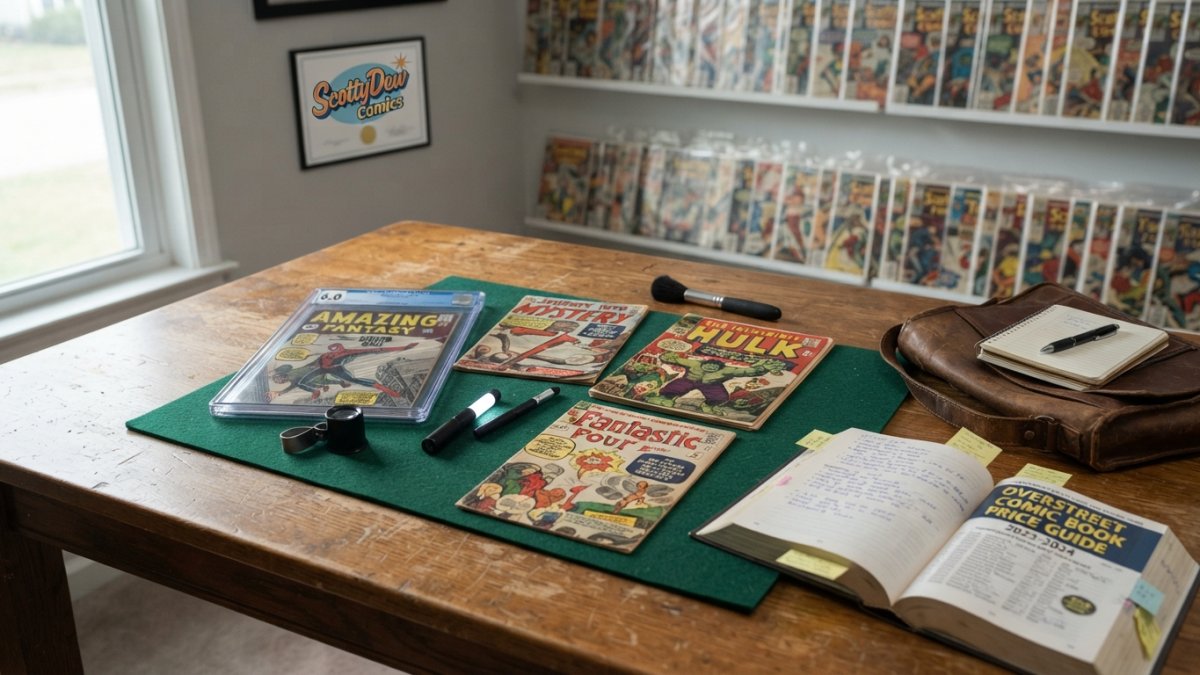
 listicle
Tips for Buying Vintage Comics: A Collector's Guide
Table of Contents
- Where to Buy Vintage Comics
- How to Spot Comic Book Reprints and Avoid Fakes
- How to Grade Comic Books Before You Buy
- Using a Vintage Comic Book Price Guide to Research Value
- Identifying Key Issues and First Appearances
- Common Mistakes to Avoid When Buying Vintage Comics
- Safe Buying Practices and Protecting Your Purchase
- Frequently Asked Questions
Last Updated: October 12, 2026
Where to Buy Vintage Comics
Finding vintage comics means knowing where collectors and dealers actually sell them. Each channel has different strengths.
Online marketplaces like eBay and specialized comic sites offer the widest selection. You can browse thousands of listings, compare prices, and filter by condition, grade, and publication date. The tradeoff: you're buying sight unseen, and seller reputation varies.
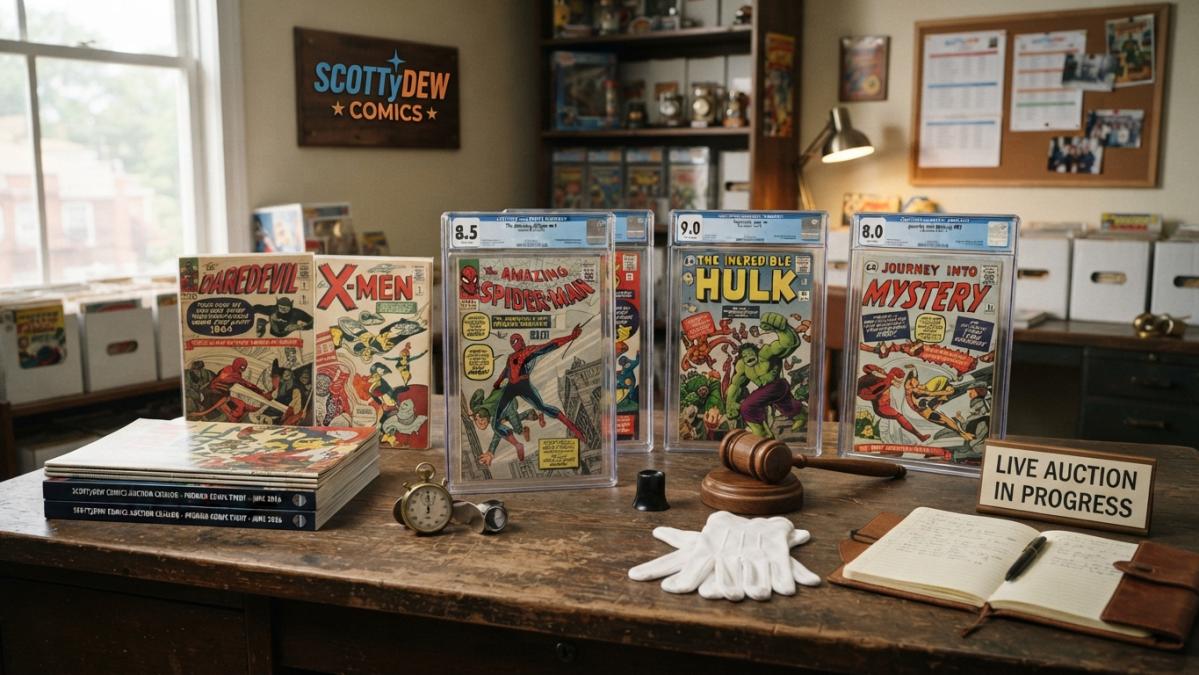
Local comic shops remain essential for serious collectors. You can inspect books in person, ask about provenance, and build relationships with dealers who alert you to incoming inventory. Scottydew Comics, for example, hosts themed shows like Tuesday Night with ScottyDew and Mixed-Up Saturday, giving you direct access to curated collections and live auction experiences on the Whatnot platform.
Comic conventions and shows are goldmines for vintage books. Dealers set up booths with back issues, key issues, and rare finds. You'll pay convention prices (sometimes higher than online), but you can examine books before buying and negotiate directly with sellers.
Auction houses like Heritage Auctions specialize in high-grade, investment-quality comics. Their comic book value guide and auction archives let you research prices and request free appraisals before bidding. Auctions are best for rare, expensive books where provenance and authentication matter most.
Estate sales and liquidation services occasionally surface vintage collections. They're unpredictable but can yield underpriced books if you're patient. Check local listings and auction announcement sites regularly.
The key: use multiple channels. Online research feeds local shopping, and local relationships lead to convention opportunities.
How to Spot Comic Book Reprints and Avoid Fakes
Reprints are legitimate comics, they're just not first printings. But if you're paying first-edition prices for a reprint, you've made an expensive mistake.
Check the publication information on the inside front cover or indicia (the small print block usually on the first or second page). First printings say "First Printing" or show only a single year.
Examine the cover stock and printing quality. First printings from the 1960s and earlier used higher-quality paper and more vibrant inks. Reprints often have duller colors, cheaper paper, and fuzzy halftone dots under magnification.
Look for reprint indicators on the cover. Some reprints are marked clearly: "Reprint Edition," "Facsimile Edition," or a banner stating "This is a reproduction." Others are sneaky.
Compare cover art reproduction. Authentic first printings have original artwork. Reprints are photographic reproductions, so they sometimes show scanning artifacts, different color separations, or registration shifts (misaligned color layers).
Verify the UPC barcode placement and style. Comics from different eras have different barcode formats. A 1970s comic shouldn't have a modern barcode.
Watch for price inconsistencies. If a vintage comic is listed at 10% of its typical market value, ask why. Reprints are cheaper because they're less collectible, and counterfeits are priced low to move before buyers notice.
A common mistake is assuming all old-looking books are first printings. Age alone doesn't determine value: 1970s reprints can look as aged as 1950s first printings. Condition, rarity, and edition status matter.
How to Grade Comic Books Before You Buy
Grading determines value more than any other factor. Learning to assess condition before purchase protects your investment.
Understand the grading scale. The industry standard runs from 0.5 (Poor) to 10.0 (Gem Mint). Most vintage comics fall between 3.0 (Good) and 7.0 (Fine).
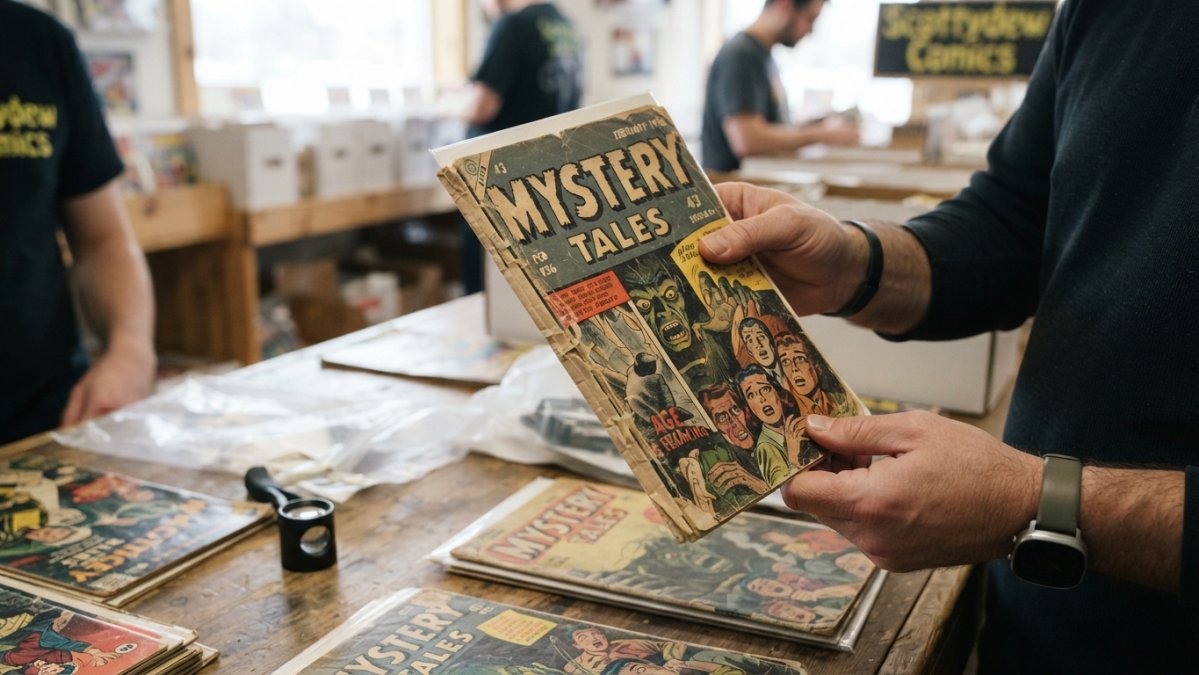
Inspect the cover front and back. Look for creases, tears, stains, fading, and spine stress. Run your fingers along the spine, a sharp, unbroken spine indicates higher grade.
Check the interior pages. Are pages brittle or flexible? Vintage paper yellows naturally, but excessive browning suggests poor storage. Look for writing, stickers, or markings. Water damage, mold, or foxing (brown spots) all lower grade.
Assess the binding. Is the spine intact or separated? Vintage comics were stapled, not glued, so some looseness is normal, but pages shouldn't detach without effort.
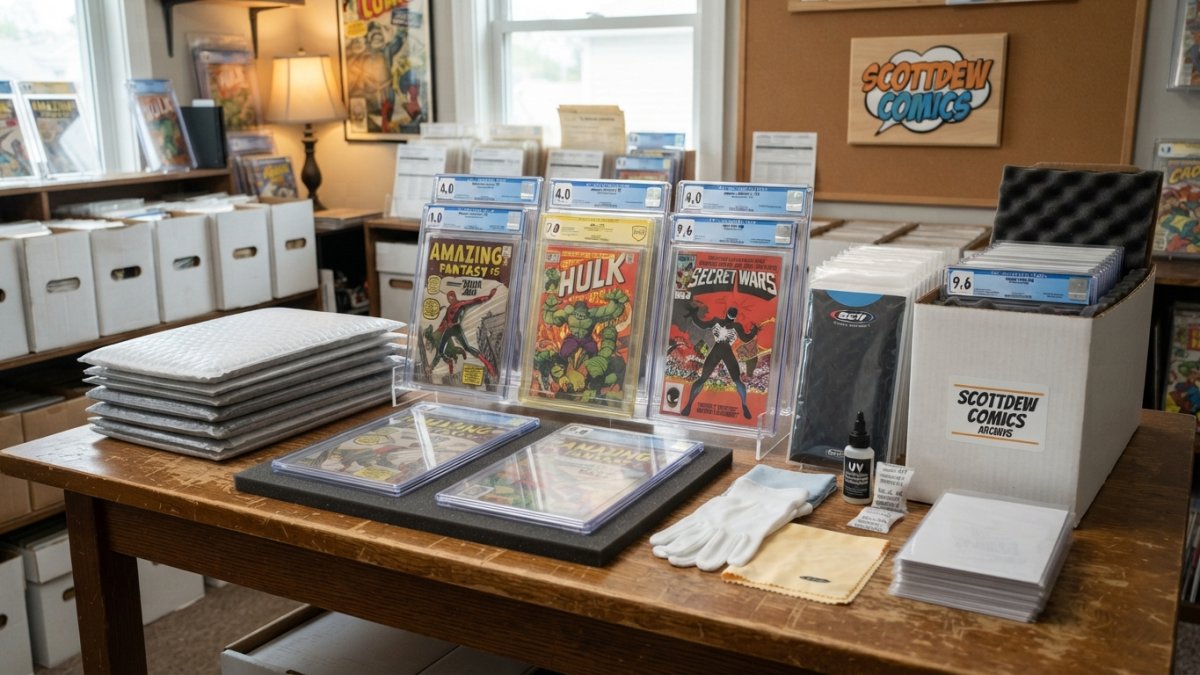
Compare to graded examples. CGC and PSA publish images of graded books at each tier. Seeing a 5.0, 6.0, and 7.0 side by side teaches you what separates grades better than any description.
Remember: raw (ungraded) books are subjective. Two collectors might grade the same book differently. For books under $100, your own assessment usually suffices; for investment-grade books, professional grading adds credibility and resale value.
Using a Vintage Comic Book Price Guide to Research Value
Before you make an offer, know what the book should cost. Price guides prevent overpaying and help you spot deals.
Heritage Auctions offers searchable auction archives and free appraisals that show what similar books actually sold for. This is real market data, not theoretical pricing.
Quality Comix's price guide combines value assessment with expert appraisals for guidance on what a specific comic should fetch. This works well if you're unsure about condition or authenticity and want a professional opinion before committing.
Check multiple sources. No single guide is gospel. If Heritage says $150 and ComicsPriceGuide says $120, the real value is in between. Variation reflects supply, demand, and condition nuances.
Factor in condition heavily. A guide might list a book at $200, but that's for a 7.0 copy; a 5.0 might be half that. Match your book's condition to the listed grade.
Watch for rarity adjustments. First printings command premiums over reprints, limited print runs cost more, and variant covers track separately. A guide baseline is a starting point, not the final word.
Use sold listings, not asking prices. What sellers want and what buyers actually pay are different things. Auction results and completed sales are more reliable than current listings.
A practical approach: gather multiple price points (Heritage auction data and ComicsPriceGuide listing), then use the middle value as your offer ceiling. This protects you from overpaying while staying competitive.
Identifying Key Issues and First Appearances
Not all vintage comics are equally valuable. Key issues, books with historical significance, first appearances, or cultural impact, command premium prices. Learning to spot them is essential.
First appearances are the most sought-after. The first comic featuring Spider-Man, Superman, or any major character is worth vastly more than later issues. These are investment-grade books.
Historically significant issues matter too. First issues, final issues before cancellation, or books tied to major cultural events (moon landing, political moments, industry milestones) hold value even without a famous character debut.
Variant covers and limited printings attract collectors. A standard cover might be common, but a variant or newsstand edition of the same issue can be rare and valuable.
Consult online databases and collector communities. Sites like The Collector Hub's market analysis distinguishing reader, slab, Golden Age, and modern variant markets help you understand which segments drive value.
Ask dealers about provenance. A book with documented history, previous owner, collection pedigree, or authentication, is worth more than an identical copy with unknown origins. Dealers often know the story behind key issues.
Don't assume age equals value. A 1950s comic is older than a 1990s comic, but the 1990s book might be rarer and more valuable if it's a key first appearance or limited variant.
The mistake most new collectors make is buying vintage comics randomly, hoping they're valuable. Instead, research first. Identify which books in your collecting focus are actually key issues, then hunt for them strategically.
Common Mistakes to Avoid When Buying Vintage Comics
Collectors repeat the same errors. Learning what not to do saves money and frustration.
Overpaying for condition you don't need. A 9.0 copy costs three times more than a 7.0 of the same book.
Buying without verifying the edition. Reprints, facsimiles, and variants look similar to first printings. Check the indicia every time. One sentence of verification prevents expensive mistakes.
Ignoring storage conditions. A book stored in a damp basement or direct sunlight degrades visibly in months. Ask the seller how the book was stored.
Trusting seller photos alone. Online listings show the best angle under ideal lighting. Request additional photos of the spine, back cover, and interior pages.
Buying graded books without verifying the grade. Professional grading services (CGC, PSA) use consistent standards. Knockoff grading companies and self-graded slabs are unreliable.
Paying first-edition prices for reprints. This is the most common and costly mistake. A reprint is legitimate, it's just worth less.
Collecting without a focus. Random buying leads to scattered collections with low resale value.
Ignoring market trends. Comic values shift: a character trending in film or TV sees price jumps, and books common five years ago might be rare now.
Negotiating too hard. Dealers expect haggling, but unreasonable offers damage relationships. Offer 10-15% below asking for fair books; respecting fair pricing earns better access and service long-term.
Rushing major purchases. Investment-grade books deserve research time. Sleep on five-figure purchases. Call other dealers for second opinions. Patience prevents regret.
Safe Buying Practices and Protecting Your Purchase
Once you've found a book, buying safely protects your money and your collection.
Use secure payment methods. Credit cards and PayPal offer buyer protection.
Request detailed photos before committing. Ask for close-ups of any flaws, the spine, and interior pages. A seller willing to provide multiple angles is transparent.
Verify seller reputation. Check feedback ratings on eBay, Whatnot, or the seller's website. Read recent reviews.
Ask about return policies. Reputable sellers allow returns if the book doesn't match the listing. A 7-day or 14-day return window protects you.
Insure high-value purchases. Shipping damage happens. For books over $500, pay for insurance. It costs 2-3% of value but protects your investment if the package arrives damaged.
Document everything. Save photos, descriptions, and correspondence. If a dispute arises, documentation proves what you agreed to. Screenshot listings before purchase in case the seller edits them later.
Use tracked, insured shipping. Never accept uninsured or untracked delivery for valuable books, and require signature confirmation. Proper shipping protects both parties.
Inspect immediately upon arrival. Compare the book to the listing photos.
Consider professional grading for investment books. If you're spending over $1,000, professional grading from CGC or PSA adds credibility and resale value.
Build relationships with trusted dealers. Repeat business with reliable sellers pays dividends: they'll notify you about incoming inventory matching your wants, offer fair pricing, and stand behind their sales.
Buying vintage comics wisely means doing your homework before spending money.
At Scottydew Comics, we believe smart collecting starts with access to trusted information and a supportive community.
Frequently Asked Questions
What makes a comic book considered vintage?
Comics printed before the 1980s are generally classified as vintage, though the definition varies by collector. Golden Age comics (1938-1956) and Silver Age comics (1956-1970) command premium prices due to rarity and historical significance. The key factors are age, print run, and current market demand. Older comics with limited print runs and strong collector interest fetch higher prices than newer issues, even if both are technically 'old.'
How do I avoid overpaying for a vintage comic book?
Use multiple price guides before making an offer. Check Heritage Auctions Comic Book Value Guide for recent auction records and ComicsPriceGuide for market comparisons. Compare the asking price against sold listings rather than asking prices. Condition matters enormously, a graded, high-grade copy commands 5-10 times the price of a raw, lower-grade copy of the same issue. Never bid on emotion in live auctions; set a maximum price beforehand and stick to it.
Should I buy graded or ungraded vintage comics?
Graded comics (slabs) offer authentication and a standardized condition grade, making resale easier and protecting against counterfeits. Ungraded raw comics cost less upfront but require you to assess condition yourself and carry more authentication risk. For investment-grade or high-value key issues, grading adds credibility and value. For casual collecting or reader copies, raw comics are affordable and fun. Your choice depends on your budget, collecting goals, and risk tolerance.
How can I tell if a vintage comic is a reprint?
Check the indicia (small print inside the front cover) for the publication date and print statement. Reprints typically say 'Reprinted' or list a later date than the cover price era suggests. Original first printings show only the original publication date. Examine the cover stock, reprints often have glossier, brighter covers than originals, which fade over decades. Compare the paper quality and color saturation to known originals. When in doubt, seek further verification before purchasing.
Where is the best place to buy vintage comics?
Local comic book stores offer hands-on inspection and expert staff guidance. Online marketplaces and auction platforms provide wider selection and competitive pricing. Live auctions on platforms like Whatnot combine transparency, community interaction, and the chance to inspect items in real time. For rare key issues and investment-grade slabs, Heritage Auctions and specialized dealers offer authentication guarantees. Mix your buying channels, shop locally for deals and community, use price guides for research, and turn to trusted online platforms for selection and fair pricing.