 how-to
Avoid Overpaying at Live Comic Auctions: A Collector's Guide
Table of Contents
- Why Collectors Overpay at Live Comic Auctions
- Research Fair Market Value Before You Bid
- How to Calculate Buyer's Premium and True Cost
- Set a Hard Budget Before the Auction Starts
- Master Your Auction Bidding Strategy
- Spot Seller Manipulation and Bidding Wars
- Verify Grading and Condition Before Committing
- Handle Buyer's Remorse and Plan Your Exit
- Frequently Asked Questions
Last Updated: September 20, 2026
Why Collectors Overpay at Live Comic Auctions
Bidding at live comic auctions triggers emotion in ways online shopping doesn't. When you watch bids climb in real-time, it's easy to stop thinking like a collector and start thinking like someone who just doesn't want to lose. That shift from logic to emotion is the biggest reason serious collectors walk away with buyer's remorse.
A collector arrives with a budget, finds a book they love, and suddenly they're paying 40% more than planned because they got caught in the moment.
This is entirely preventable. Collectors who avoid overpaying live comic auctions prepare before bidding: they know fair market value, set a hard ceiling, and understand the psychological tricks that drive prices up.
Research Fair Market Value Before You Bid
Fair market value is what a comic book typically sells for based on recent sales of similar books in similar condition, not asking prices or hopes, but actual sold prices.
Using comps to establish realistic pricing
Comps are recent sales of the same or very similar books, your anchor point for every bid. Identify the exact title, issue number, variant cover, and publisher, then search for sales from the past 30 to 90 days. Older sales become unreliable as market conditions shift.
Pay attention to condition. A book graded 9.6 sells for significantly more than the same book graded 8.0. Each full grade point typically represents a 10 to 20 percent price difference for investment-grade comics. Adjust your estimate if your comp's grade differs.
Document each comp: title, issue, grade, and sale price. This reference sheet lets you bid confidently without searching during the auction.
Checking recent sold listings for condition-matched examples
Search major platforms for sold listings showing actual prices paid. Match condition reports as closely as possible to your target book. Create a spreadsheet with title, grade, sale price, and date. Three to five recent sales at similar grades give you solid fair market value.
Ignore outliers, sales inflated by bidding wars or deflated by urgent sellers. Focus on the middle range of your comps.
How to Calculate Buyer's Premium and True Cost
Most auction platforms add a buyer's premium (10-20 percent). Calculate your true cost before bidding. If you'll spend $1,000 total with a 15 percent premium, your maximum hammer bid is $870. Write this number down as your ceiling, it forces you to stop when emotions run high.
On a $5,000 book, a 15 percent premium is $750. Check the exact premium before researching comps, it changes how you set your budget.
Set a Hard Budget Before the Auction Starts
Set a maximum price before bidding starts. This separates satisfied collectors from those with regrets.
Building your ceiling price into your total
Base your ceiling on fair market value, buyer's premium, and comfort level. If comps show $2,000 and premium is 15 percent ($300), your fair market cost is $2,300. Add 10-15 percent above that for your absolute ceiling. Write it down and stop bidding when you hit it, no exceptions.
Why written limits prevent emotional bidding
Emotion is strongest in the moment. When you see a bid you can beat, your brain says "just one more." When you're close to winning, the urge to finish what you started is overwhelming.
A written limit creates a circuit breaker. It forces you to pause and check the number before you place the next bid. That pause is enough to break the emotional spell.
Collectors who set written limits and stick to them report fewer regrets. They also report that they often walk away from auctions they initially planned to win, and they feel good about it later. That's the sign of a disciplined bidder.
Some collectors use a different strategy: they bid early and then step away. They place their maximum bid and don't watch the rest of the auction. This removes the emotional pull of seeing the bidding escalate in real-time. It's a valid approach if you have the discipline to not check back.
Master Your Auction Bidding Strategy
Timing matters more than most collectors realize. When you bid and how you bid can mean the difference between winning at a fair price and getting caught in a bidding war.

Proxy bidding vs. live manual bidding: which wins
Proxy bidding means you set your maximum bid upfront, and the platform bids on your behalf in small increments. You only pay the minimum needed to win, up to your maximum.
Live manual bidding means you place bids yourself in real-time as the auction unfolds.
Proxy bidding protects you from emotional escalation. You set your limit before emotion takes over. The platform does the work, and you're guaranteed not to exceed your maximum. This is the safer choice for most collectors.
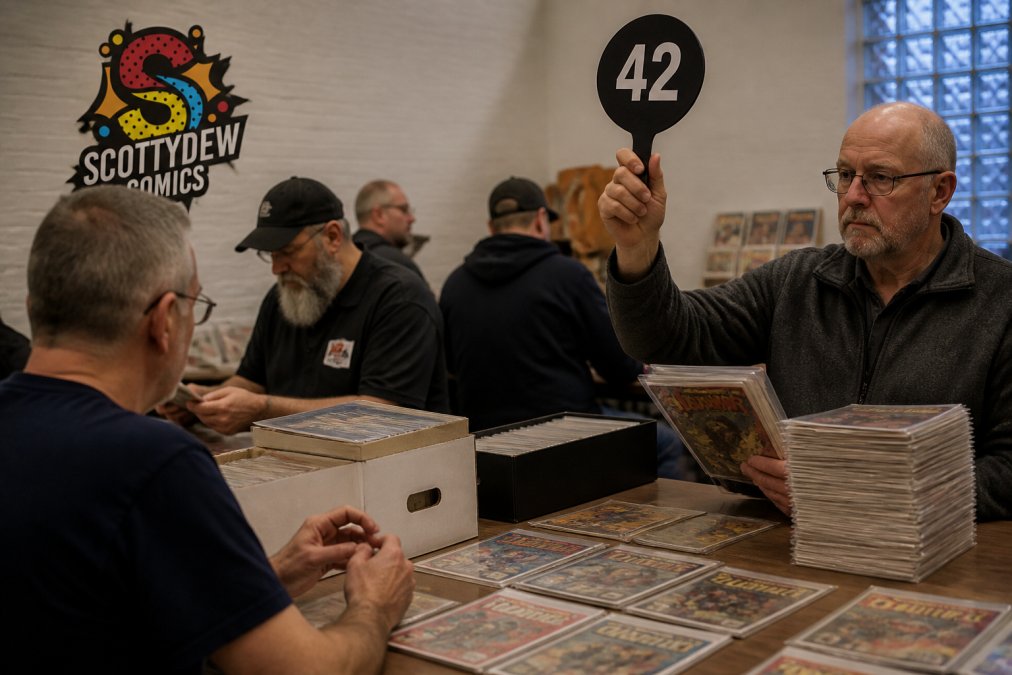
Live manual bidding gives you control and visibility. You see every bid as it happens. You can decide in real-time whether to continue. But this method is also where most overpaying happens. The momentum of the auction, the visible competition, and the pressure of the moment all push you to bid higher than you planned.
For serious collectors trying to avoid overpaying live comic auctions, proxy bidding is the stronger strategy. Set your limit based on your research, place the bid, and walk away. You'll either win at a fair price or lose and move on to the next book.
Early bidding vs. late sniping: timing tactics
Some collectors bid early to establish themselves as serious bidders. They hope this discourages competition. It rarely works. Early bids just give other collectors time to enter the race.
Late bidding, or "sniping," means placing your bid in the final seconds. You wait until the last moment to bid, giving other bidders no time to respond. This works better on fixed-end auctions where the timer doesn't extend with new bids.
On platforms like Whatnot, where Scottydew Comics hosts live auctions, the dynamic is different. Auctions often run in real-time with a live host. Sniping is less effective because the host can extend the auction or restart the timer. In this environment, early proxy bidding is more reliable than trying to snipe at the last second.
Know the auction format before you choose your strategy. If it's a live auction with a real host, set your proxy bid and let it work. If it's a timed auction with a fixed end, consider waiting until the final minutes.
Spot Seller Manipulation and Bidding Wars
Not all high prices are created equal. Sometimes a high price reflects genuine rarity and demand. Sometimes it reflects manipulation.
Recognizing artificial urgency and FOMO tactics
Sellers use several tricks to drive up prices. Artificial scarcity is common. A seller might claim a book is the only copy available, or the last chance to own it. This creates FOMO, fear of missing out. FOMO makes you bid faster and higher than you planned.
Watch for language like "once in a lifetime opportunity" or "never see this again." These phrases are designed to bypass your logic. They push you toward emotional decision-making.
Another tactic is highlighting recent price increases. A seller might say "this book has appreciated 30 percent in the last year." This suggests the price will keep rising, so you should buy now. It's a pressure tactic.
When to walk away from a heated lot
A bidding war happens when two or more collectors decide they both need the same book. Prices climb faster than normal. The energy in the room, or the chat, in live auctions, becomes intense.
Verify Grading and Condition Before Committing
The condition of a comic book determines its value more than almost anything else. A small difference in grade can mean a huge difference in price.
Handle Buyer's Remorse and Plan Your Exit
Even careful collectors sometimes have second thoughts after an auction ends. The book arrives. You look at it again. The price you paid suddenly feels high.
Frequently Asked Questions
How do I determine the fair market value of a comic before an auction?
Research recent sold comps of the same title, issue, and grade on auction platforms and price guides. Check the condition report carefully, grading makes a huge difference in value. Compare hammer prices (final bid amounts) from the last 30-60 days, not asking prices. Factor in buyer's premium when calculating what others actually paid. Sites tracking historical sales data help you spot realistic pricing versus inflated expectations.
What is the best auction bidding strategy to avoid overpaying?
Set your ceiling price before the auction starts and write it down. Decide whether you'll use proxy bidding (automatic incremental bids up to your limit) or manual live bidding. If bidding manually, consider late entry to avoid triggering a bidding war, but stay disciplined, don't chase. The goal is to win at your predetermined price, not to win at any cost. Walk away if the lot exceeds your ceiling.
How do I calculate buyer's premium into my total bid?
Buyer's premium is typically 10-20% added to the hammer price. If a comic has a $100 hammer price and a 15% premium, you'll pay $115 total. Always factor this into your ceiling price before bidding. If you set a $100 maximum bid, your true cost could be $115 or more. Check the auction platform's specific premium rate, it varies by platform. Never ignore this hidden cost or you'll exceed your budget.
What should I do if I win an auction and feel buyer's remorse?
Check the platform's return policy immediately, some allow returns within 24-48 hours if the condition doesn't match the description. Review the condition report and photos against what you received. If the grading or condition is significantly misrepresented, escalate to the seller or platform support. If you simply overbid emotionally, most platforms won't accept returns. This is why setting a hard budget beforehand prevents regret: discipline beats emotion every time.
Avoiding overpaying at live comic auctions comes down to one thing: preparation beats emotion every time. Research fair market value. Calculate your true cost including buyer's premium. Set a hard ceiling. Stick to it. At Scottydew Comics, we've seen collectors transform their results by following this process. Join our community of disciplined collectors who build stronger collections by bidding smarter, not faster.