 blog
Best Comic Grading Services Compared
Table of Contents
- How Comic Grading Works and Why It Matters
- CGC vs CBCS Comic Grading: Head-to-Head
- Comic Book Grading Costs and Service Tiers
- Comic Grading Turnaround Time: Speed vs. Value
- How to Submit Comic Books for Grading
- Choosing the Right Grading Service for Your Collection
- What to Know About Grading Disputes and Reslabs
- Frequently Asked Questions
Last Updated: October 15, 2026
How Comic Grading Works and Why It Matters
Comic grading services evaluate a comic's condition and assign it a standardized numeric grade.
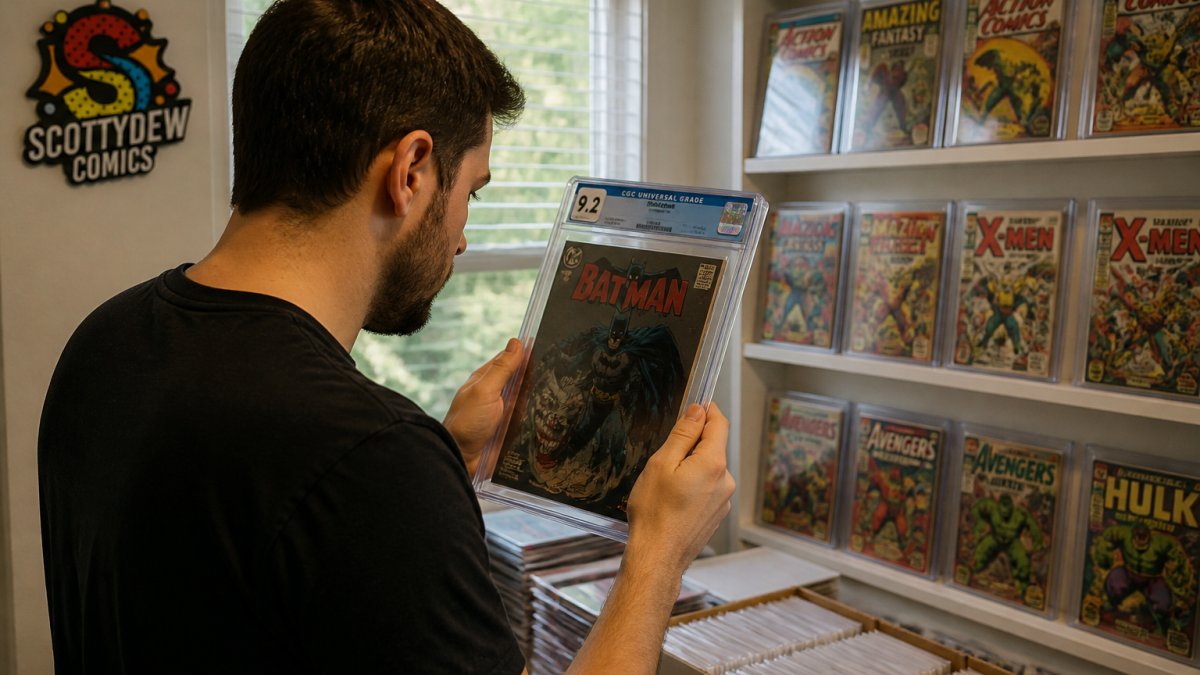
For serious collectors, professional grading transforms a comic from an uncertain purchase into a verified asset.
The Grading Scale and Condition Standards
Comic grading uses a numeric scale from 0.5 to 10, each number representing a condition level: a 9.8 is near mint, a 5.0 is very good.
Condition standards evaluate cover gloss, staple placement, page quality, color fading, and creasing. A comic might have perfect colors but loose staples, which affects the overall grade.
Understanding the scale helps you know what you're buying. A 7.0 comic shows clear wear but remains collectible. A 9.0 looks nearly new.
CGC vs CBCS Comic Grading: Head-to-Head
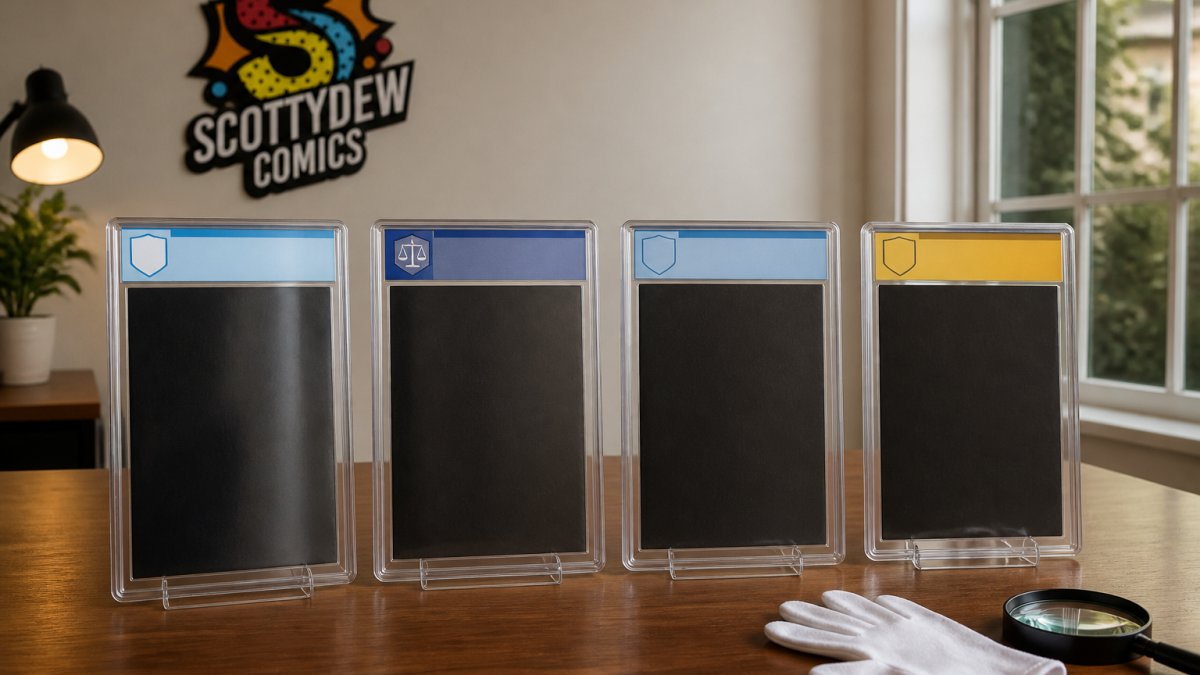
When collectors talk about comic grading services, two names dominate: CGC and CBCS. Both offer professional grading, encapsulation, and market acceptance. But they differ in consistency, turnaround times, and pricing structures.
| Service | Grading Approach | Slab Design | Market Presence | Best For |
|---|---|---|---|---|
| CGC | Established standards, widely recognized | Silver/gold label variants | Highest resale acceptance | Valuable key issues |
| CBCS | Newer, aggressive grading standards | Distinctive label design | Growing collector base | Budget-conscious submissions |
CGC has graded comics since 1998 and maintains the largest collector following, with slabs that command premium prices. CBCS entered more recently but built a reputation for competitive grading and faster turnaround times.
Grading Consistency and Accuracy
Grading consistency is the biggest complaint in the hobby. Two different graders from the same service might assign different grades to the same comic.
The issue stems from the subjective nature of condition assessment. Page quality depends on light source and the grader's interpretation of "off-white" versus "white," and one person's minor crease is another's noticeable defect.
Grading is opinion-based evaluation, not scientific measurement. The best graders have decades of experience and consistent standards, but perfect consistency remains impossible.
Market Acceptance and Resale Value
A comic's grade directly determines its resale value. A 9.8 copy of a key issue might sell for triple the price of a 9.0.
CGC slabs sell faster and command higher premiums, while CBCS slabs are gaining acceptance but still trade at slight discounts compared to equivalent CGC grades.
Resale outcomes depend on the book's desirability, the grade, and current market demand. A graded copy always sells better than raw (ungraded) comics, but the grading service itself affects final price.
Comic Book Grading Costs and Service Tiers
Most comparison articles stop at "prices vary by tier," which is useless when deciding whether to grade a book. Here is the framework for budgeting a submission, plus the line items that catch collectors off guard.
How Grading Fees Are Actually Structured
Every major service prices on three stacked variables:
- Declared value per book. You state what you believe the comic is worth, and the service uses that number to set your fee tier and liability ceiling. Under-declaring to save money is the most common and most expensive mistake: if the book is lost or damaged in-house, your payout is capped at the number you wrote down.
- Turnaround tier. Faster tiers cost more per book. Economy, standard, and premium/walkthrough are the usual rungs, and the spread between the cheapest and fastest tier on the same book is often several times the base fee.
- Add-ons. Pressing, signature verification (for signed books), custom labels, and imaging are billed separately from the base grading fee.
The Line Items Collectors Forget
- Return shipping and insurance. The service ships your slabs back insured, billed to you, and on a multi-book order it can add a meaningful amount per book.
- Inbound shipping and insurance. You pay to get the books there safely, including declared-value insurance.
- Pressing. A press can improve a grade, but it is a separate per-book charge that adds time before grading starts.
- Signature verification. Authentication for signed books is a separate service with its own fee.
- Handling and minimums. Some tiers have per-order minimums or handling fees that make small submissions uneconomical.
A Practical Budgeting Method
Because published fee schedules change, build your own estimate:
- Look up the current fee schedule on each service's own site for your tier.
- Multiply the per-book fee by your book count.
- Add pressing per book if you want it.
- Add signature verification per signed book.
- Add return shipping and insurance, then divide by book count for a true per-book cost.
- Compare that cost against the realistic resale premium you expect.
When Grading Does Not Pay Off
Grading only makes financial sense above a certain book value. On low-value books, the all-in cost can approach or exceed market value, making the slab a presentation choice rather than an investment. Run the all-in math before committing a stack of mid-value books to economy tier.
current fee schedule and tier definitions current fee schedule and tier definitions
Comic Grading Turnaround Time: Speed vs. Value
Turnaround is where most submissions go wrong, because the clock does not start when you mail the box. Understanding the full timeline, not just the advertised tier window, lets you plan around a sale, auction, or convention.
The Real Timeline Has Four Stages
- Transit to the facility. Your shipping time plus however long the service takes to log the package, which can be days to weeks depending on carrier and volume.
- Receiving and queue. Once logged, the book enters the queue for its tier, the stage that balloons during peak periods.
- Pressing (if ordered). Pressing happens before grading and adds its own queue, so budget for both waits.
- Grading, encapsulation, and return shipping. Grading and slabbing, then the insured trip back to you.
The advertised tier window covers only part of this. The all-in time from mailbox to doorstep is longer, sometimes substantially.
How Tiers Map to Speed
The relationship is direct and steep: the fastest tiers can cost several times the economy rate for the same book. The trade-off is not just money but risk exposure, since your books sit in someone else's facility for the entire wait.
| Tier posture | Typical use | Trade-off |
|---|---|---|
| Economy | Low-value books, no deadline | Lowest fee, longest wait, most exposure |
| Standard | Mid-value books, flexible timeline | Balanced fee and wait |
| Premium / walkthrough | High-value books, hard deadline | Highest fee, shortest wait |
Why Backlogs Happen
Submission volume is not constant. It spikes after major comic releases, around convention season, and when a hot key issue drives a wave of grading. During those windows, even standard tiers can run well past their normal windows, and collectors who submit right before a spike wait far longer than those who submit in a quiet period.
Planning Around a Deadline
If you need a book graded for a specific sale, auction, or show, work backward:
- Pick your target date.
- Subtract the advertised tier window.
- Subtract pressing time if you ordered it.
- Subtract receiving and queue time, padded for the current season.
- Subtract two-way shipping.
If the remaining date is already in the past, you need a faster tier or must accept missing the deadline. Choosing the tier after this math is the difference between a smooth submission and a missed auction.
Speed, Value, and Risk Together
Faster tiers cost more but reduce how long your books are out of your hands, lowering risk exposure. Slower tiers save money but keep your comics in transit and in queue longer. The right tier matches your deadline and your tolerance for having valuable books out of your possession, not simply the cheapest or fastest.
How to Submit Comic Books for Grading
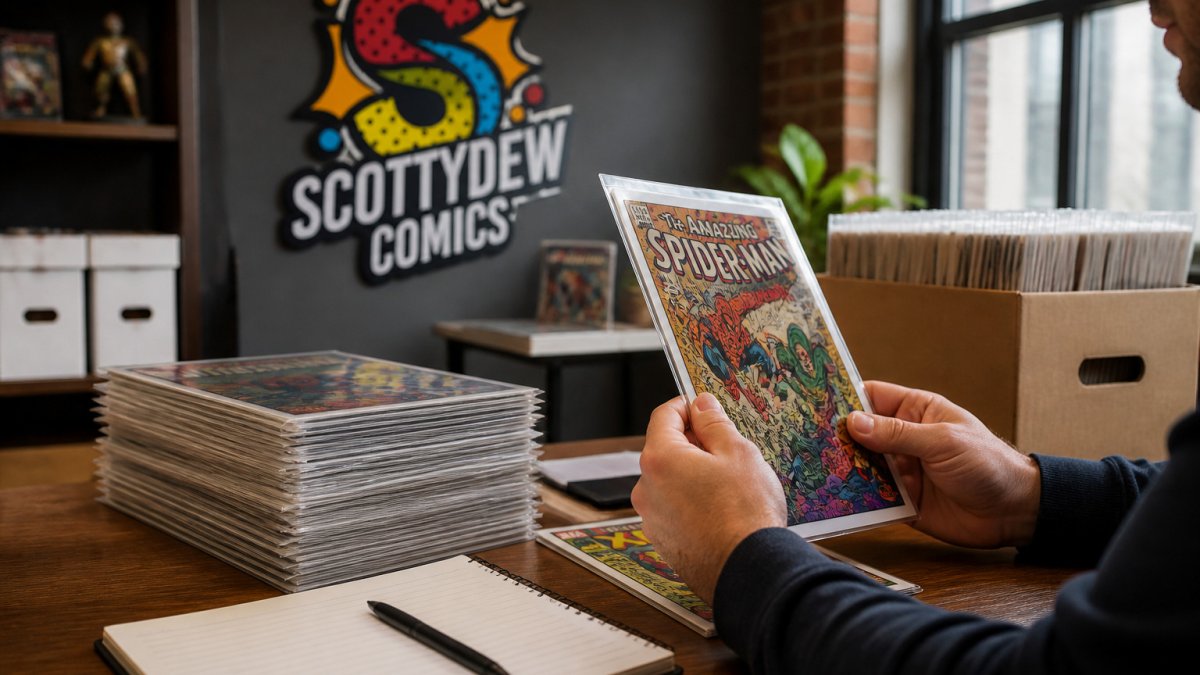
The submission process is straightforward but requires attention to detail. Create an account with your chosen grading service, list each comic with its title and issue number, declare its value, and choose your service tier.
Most services provide online submission forms: fill in comic details, select your service level, and pay upfront. Then pack your comics carefully and ship them insured to the grading facility.
Preparation and Insurance
Before submitting, ensure your comics are free of obvious debris. Don't attempt to clean or restore them, since graders penalize heavy cleaning or restoration work. Pack each comic in a protective sleeve and board to prevent shipping damage.
Insurance is critical. Declare the value you expect your comics to reach after grading, since this determines both coverage and the grading fee. Underinsuring means you won't recover full value if something happens during shipping.
Shipping and Risk Management
Ship your package with tracking and signature confirmation through established carriers, insured. The cost is worth the peace of mind.
Some collectors use specialty comic shipping boxes designed to prevent bending and crushing. Others use standard boxes with careful padding. Either way, the goal is keeping your comics safe during transit.
Track your shipment until it arrives at the grading facility, where the service will send confirmation. From that point, your comics are in their hands until graded and returned.
Choosing the Right Grading Service for Your Collection
The choice between CGC and CBCS depends on your goals. For investment-grade books and maximum resale value, CGC dominates. For budget-conscious collectors and faster turnaround, CBCS offers competitive advantages.
Best Service by Collector Goal
For maximum resale value: CGC remains the market standard. Their slabs command premium prices, especially for valuable key issues.
For budget submissions: CBCS offers competitive pricing and faster turnaround, and its grades are becoming more accepted.
For casual collectors: Either service works, since resale value matters less for books you plan to keep.
At Scottydew Comics, we see collectors succeed with both services. The best choice depends on your specific books and timeline.
What to Know About Grading Disputes and Reslabs
If you disagree with your grade, both services offer reslabs: resubmitting the same comic for re-evaluation by a different grader.
Reslab outcomes vary: sometimes the new grade matches the original, sometimes it's higher or lower.
Most experienced collectors accept initial grades and move forward.
Choosing a comic grading service means understanding the trade-offs between cost, speed, and market acceptance.
Frequently Asked Questions
What is the difference between CGC and CBCS comic grading?
CGC and CBCS are the two largest third-party comic grading services. CGC has dominated the market longer and commands stronger collector demand, which typically translates to higher resale value. CBCS has grown rapidly and offers competitive grading standards and often faster turnaround times. Both use similar numeric grading scales and encapsulation methods, but market perception and collector preference differ. CGC slabs generally sell for a premium, while CBCS appeals to budget-conscious collectors seeking professional grading at lower costs.
How much does professional comic grading cost?
Comic book grading costs depend on the service tier and comic value. Standard grading services vary in cost, with expedited or premium tiers costing more. Higher-value books may require special handling and insurance, increasing submission costs. Budget-conscious collectors should compare service fees across grading companies, as pricing and turnaround options vary. Contact your chosen grading service directly for current pricing and tier options suited to your collection's value.
How long does comic grading take?
Turnaround time for comic grading varies by service tier and current submission volume. Standard turnaround varies, while expedited services may complete grading faster. Premium rush services can deliver results quickly but at higher costs. During peak collecting seasons, standard turnaround can extend beyond posted estimates. When choosing a grading service, factor in turnaround time against your collection timeline and budget to balance speed with cost-effectiveness.
Is professional comic grading worth the cost?
Professional grading adds value for investment-grade comics and rare key issues, as third-party authentication increases collector demand and resale value. Graded slabs provide protective encapsulation and a standardized condition assessment that casual buyers trust. For common or lower-value comics, grading costs may exceed the resale benefit. Serious collectors and investors typically find grading worthwhile for high-demand titles, while casual enthusiasts may prefer raw (ungraded) copies for personal enjoyment.