 ultimate-guide
Comic Book Community Events Online: 2026 Guide
Table of Contents
- Why Online Comic Book Community Events Are Booming
- How to Participate in Live Comic Auctions
- Virtual Comic Book Conventions and Online Panels
- Finding the Right Discord Servers and Community Calendars
- Trivia Nights, Book Clubs, and Creative Workshops Online
- Platform-Specific Tips for Attending Comic Events Online
- Networking for Aspiring Creators in Virtual Spaces
- Frequently Asked Questions
Last Updated: September 16, 2026
Why Online Comic Book Community Events Are Booming
The comic book community has moved online in a big way, and the reasons go beyond convenience. Virtual gatherings remove the barriers that keep fans apart: distance, ticket costs, travel time, and convention hall crowds. A collector in a small town can now bid on a grail issue, sit in on a creator panel, and swap theories about a new run, all from the same desk.
How to Participate in Live Comic Auctions
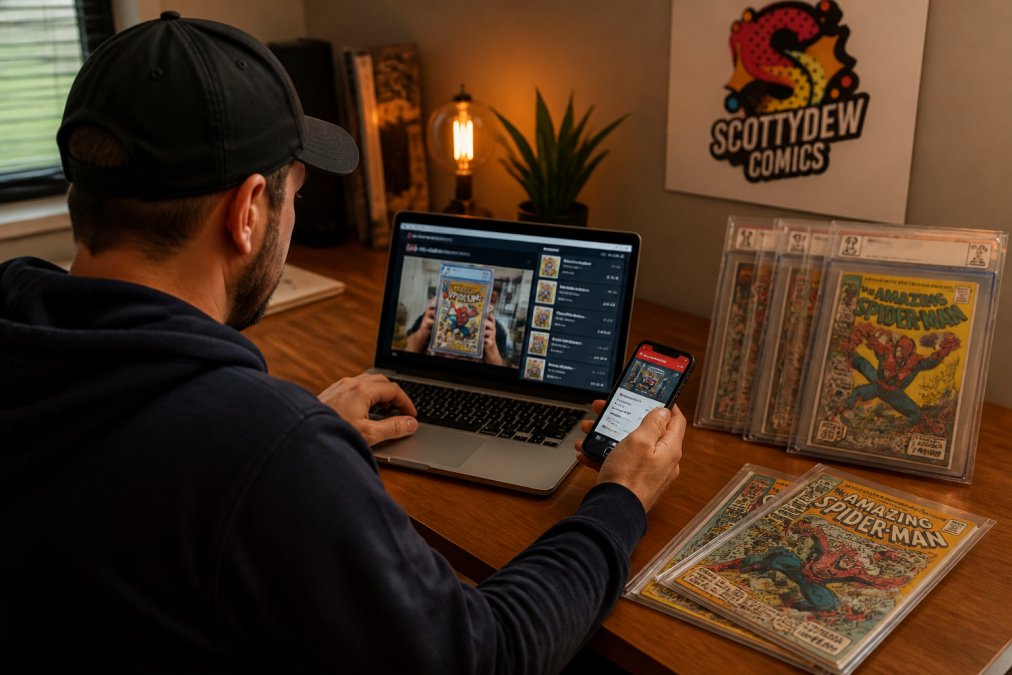
Live comic auctions are the fastest-growing corner of online comic book community events. A live comic auction is a real-time, hosted sale where bidders compete for single issues, graded slabs, and bundles while a host walks the audience through each item. The format rewards preparation more than fast reflexes.
Setting Up Your Auction Account and Bidding Strategy
Create your account before the show starts, not during it. Verify your payment method and shipping address early so you aren't fumbling when a key issue comes up. Then set a hard ceiling per book and write it down. A written limit is the single best defense against auction fever.
- Know the platform's bid increments and buyer's premium before you bid
- Watch one full show without bidding to learn the host's pacing
- Track completed sales on comparable issues to calibrate your ceiling
- Bid early on lower-profile lots to test your connection and timing
Avoiding Overpayment and Verifying Graded Slabs
Virtual Comic Book Conventions and Online Panels
Virtual comic book conventions replicate the convention floor in a browser tab. Expect live-streamed panels, artist alley booths, cosplay showcases, and dealer rooms hosted on event platforms or Discord servers. Registration is usually free or low-cost, and sessions are often recorded for later viewing.
What to Expect at a Virtual Convention
Most virtual conventions run a published schedule across a weekend. Panels feature creators discussing storytelling, character design, and publishing. Artist alley booths let you buy commissions and prints directly. Some events add interactive activities like sketch battles or live drawing sessions.
Finding the Right Discord Servers and Community Calendars
Discord servers and community calendars are the backbone of comic book community events online. A community calendar is a shared schedule where organizers post upcoming shows, auctions, and meetups. Discord servers host the day-to-day conversation between events. The problem is that no single directory covers everything, so the practical skill is learning to filter across several sources at once.
Building a Consolidated Event View
Most fans waste time bouncing between a dozen bookmarks. A better pattern is to pull every source into one calendar you control:
- Google Calendar or Apple Calendar subscription links. Many event platforms and library systems publish an iCal feed. Subscribe once and new events appear automatically instead of you re-checking a page.
- Discord's built-in Scheduled Events. Server admins can create native events with a start time, location (voice channel or external link), and RSVP list. Click the event, then "Interested," and Discord will notify you when it starts.
- Publisher and grading company newsletters. These are the most reliable source for official virtual panels and live auction announcements, and they usually go out before the event hits aggregators.
- Library event portals. Public library systems run comic and manga programming year-round, and their calendars are often searchable by age group and format.
Filtering Global vs. Local Events
The single biggest source of confusion is mixing worldwide virtual events with local in-person or hybrid ones. Separate them deliberately:
- Global virtual events have no geographic restriction. They run on Twitch, YouTube Live, Zoom, or Discord and are open to anyone with a connection. Time zone is the only real constraint.
- Local and hybrid events are tied to a library, comic shop, or regional convention. They may stream a panel globally but reserve workshops, signings, or giveaways for local attendees.
Accessibility in Virtual Comic Spaces
Accessibility is the gap almost every event listing ignores, and it matters whether you need it yourself or you're recommending events to someone who does. Before you commit to an event, check for:
- Live captions. Zoom, Google Meet, and Microsoft Teams all support automatic live captions, and many organizers enable them by default. Twitch streamers can turn on closed captions through their broadcast settings.
- Recorded sessions with transcripts. A recording is only useful if it's captioned or transcribed. Ask in the event channel whether recordings will be posted with captions.
- Screen reader compatibility. Discord's desktop and mobile apps work with common screen readers, but heavy use of images, custom emoji, and unlabeled channels can break navigation. Servers that label channels clearly and avoid image-only announcements are far easier to use.
- Chat-only participation. Not everyone can or wants to appear on camera. Look for events that offer a text chat backchannel so you can participate without speaking or showing your face.
Discord Scheduled Events help documentation
Trivia Nights, Book Clubs, and Creative Workshops Online
Trivia, book clubs, and workshops turn passive fandom into active participation. These events are low-pressure, often free, and a great entry point if you're new to the online side of collecting.
Comic and Manga Trivia Sessions
Trivia nights test your knowledge of storylines, creators, and character history. Formats vary: some run rapid-fire multiple choice, others use themed rounds like "silver age" or "manga only." Team play is common, which makes trivia one of the easiest ways to meet other fans.
Graphic Novel Discussion Groups and Zine Craft
Graphic novel discussion groups pick one book per month and meet to talk themes, art, and pacing. Zine craft workshops teach you to fold, staple, and design a small self-published booklet, a hands-on way to move from reader to creator. Both formats build the fan discussion and literary engagement that keep a community alive between big events.
Platform-Specific Tips for Attending Comic Events Online
Every platform has quirks, and knowing them separates a smooth experience from a frustrating one. Here's how the main formats differ, plus the specific settings and habits that matter on each.
| Platform Type | Best For | Watch Out For |
|---|---|---|
| Live auction apps | Bidding on slabs and keys | Buyer's premiums, bid increments |
| Video conferencing | Panels, workshops, book clubs | Mute discipline, time zones |
| Discord servers | Daily chat, event announcements | Notification overload |
| Event platforms | Convention registration | Ticket tiers, session caps |
Discord: Taming the Firehose
Discord is where most comic communities actually live, and the default settings will bury you. Two changes fix most of it:
- Mute servers, not channels. Right-click a server and choose Notification Settings, then set it to "Only @mentions." You'll still see event pings without every chat message lighting up your phone.
- Use channel categories. Collapse categories you don't follow (general chat, off-topic) and expand the ones you do (event announcements, buy-sell-trade). This turns a chaotic server into a clean dashboard.
- Pin the event channel. Pinned messages usually hold the current schedule, registration links, and rules. Check pins before asking a question.
Zoom and Video Conferencing: The Boring Settings That Save You
Panels, workshops, and book clubs run on Zoom, Google Meet, or Microsoft Teams. The failure modes are predictable:
- Join early and run the audio test. Every platform has a "test speaker and microphone" step. Use it. Most "I can't hear you" problems are solved before the host even starts.
- Know the mute etiquette. Mute by default, unmute only to speak. Background noise from an open mic derails more panels than bad questions do.
- Check whether it's being recorded. If you plan to ask a question or share work, know whether the session is being captured and posted later.
- Watch the time zone. A 7 p.m. Eastern start is 4 p.m. Pacific. Convert the day before, not five minutes prior.
Twitch and YouTube Live: Chat Is the Room
For streamed panels, sketch sessions, and watch-alongs, the live chat is where the community actually happens:
- Follow and turn on notifications for channels you attend regularly so you don't miss impromptu streams.
- Learn the channel's chat rules. Many comic channels use slow mode or subscriber-only chat during big events to keep things readable.
- Use the clip feature. If a creator drops a useful tip or a great moment happens, clip it. It's the fastest way to share a highlight with the community afterward.
Event Platforms: Registration and Session Caps
Dedicated convention platforms handle registration, schedules, and dealer rooms in one place. The traps are administrative:
- Ticket tiers. Free tiers often exclude workshops or recorded sessions. Read the tier comparison before you register.
- Session caps. Popular panels fill up. Add sessions to your personal schedule as soon as registration opens.
- Calendar export. Most platforms let you export your schedule to Google Calendar or Apple Calendar. Do it once and you won't miss a session.
Networking for Aspiring Creators in Virtual Spaces
Networking online works differently than on a convention floor. There's no hallway to bump into an editor, so you have to be deliberate. Show up to the same servers and panels consistently, share your work in the channels built for it, and offer feedback before you ask for any.
- Post finished pages in portfolio channels, not random chat threads
- Enter creative contests and sketch challenges to get eyes on your work
- Follow up with one genuine message after a panel, not a pitch
- Collaborate on zines or fan projects to build a working relationship
Frequently Asked Questions
How do I find online comic book community events?
Start with dedicated community calendars on comic shop websites and Discord servers focused on comic book collecting. Follow creators, publishers, and auction platforms on social media, where they announce virtual gatherings, trivia nights, and live auctions. Library websites also list virtual comic programs. For a curated experience, check Scottydew Comics' event schedule, which includes themed live shows and community-focused events with sticker giveaways and exclusive drops.
Are there virtual alternatives to Free Comic Book Day?
Yes. Many comic shops and online communities host digital events on Free Comic Book Day, including live unboxing streams, virtual creator signings, and online trivia sessions. Some libraries run virtual comic giveaways and digital comic creation workshops. Auction platforms often schedule special drops or themed auctions that weekend. Check your local shop's social media and community Discord servers for announcements, and look for online panels featuring artists and writers celebrating the event remotely.
How can I participate in live comic book auctions online?
Create an account on a live auction platform like Whatnot, set a firm budget before the stream begins, and review the seller's verification process for graded slabs. During the auction, bid only within your limit and ask questions in the chat about condition, authenticity, and shipping. Scottydew Comics runs live auctions on Whatnot with themed shows, and their community-focused approach means you can ask questions in real time before committing to a bid.
Do libraries host virtual comic book events?
Many public libraries host virtual comic book events, including graphic novel discussion groups, digital comic creation workshops, and author panels. These programs are often free and open to all ages. Check your local library's online calendar or newsletter for upcoming sessions. Library-hosted events are a low-pressure way to explore comics, meet other readers, and learn about the medium without spending money. Some libraries also partner with comic shops for community outreach events.
The hardest part of the online comic scene isn't finding events; it's finding the ones worth your time. Scottydew Comics builds that community for you with live auctions on the Whatnot platform, themed shows like Tuesday Night with ScottyDew, community-focused events with sticker giveaways, and the Wham! Stand to display your slabs and records with flair. Join our community and start discovering rare treasures with collectors who get it.