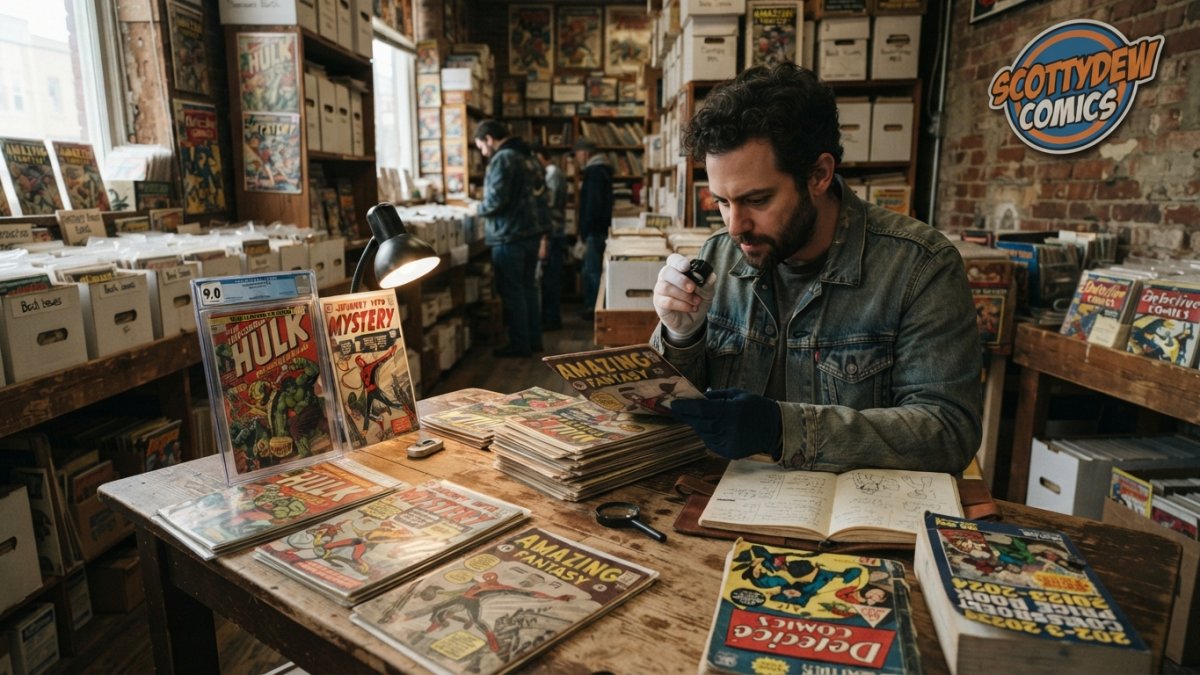
 ultimate-guide
Rare Comic Book Hunting Guide: Find Valuable Issues
Last Updated: October 22, 2026
Quick Summary
Rare comic book hunting succeeds by knowing where to search, including flea markets, estate sales, comic shops, conventions, and online marketplaces like eBay and Whatnot. Building relationships with dealers, arriving early, and researching current market prices helps you find valuable issues before other collectors.
- Flea markets, estate sales, and comic conventions concentrate rare inventory, with early arrival and vendor relationships yielding the best deals.
- Key issues include first appearances, origin stories, and Golden Age or Silver Age comics, which command premium prices due to historical significance.
- Condition determines value more than any other factor, with the ten-point grading scale from Poor to Gem Mint affecting prices exponentially.
- Set automated alerts on eBay and specialty sites, track target issues in a spreadsheet, and compare sold listings to avoid overpaying.
- Define your collecting focus, investment, reading, character, or creator, and research thoroughly before major purchases to build an appreciating collection.
Table of Contents
- Where to Search for Rare Comic Books
- Understanding Comic Book Key Issues
- Comic Book Grading and Condition Assessment
- How to Value Old Comic Books
- Finding Rare Comic Books for Sale
- Field Checklist: What to Inspect Before You Buy
- Common Mistakes to Avoid in Comic Book Hunting
- Building Your Collection Strategy
- Frequently Asked Questions
Where to Search for Rare Comic Books
Finding rare comic books depends less on luck than on knowing which venues attract serious sellers.
Flea Markets and Local Markets
Flea markets remain reliable grounds for rare comic book hunting.
Smaller, less-trafficked flea markets often yield the best deals. Ask vendors directly about back inventory not on display.
Vendors expect negotiation, especially on bulk or stale inventory. A respectful offer often succeeds, and rapport can lead to first looks at new acquisitions.
Estate Sales and Garage Sales
Estate sales offer concentrated opportunities for rare comic book finds because they liquidate entire collections, but professional buyers often get there first.
Monitor estate sale sites and apps, set alerts for comic collections, and attend preview days.
Garage sales require patience but occasionally yield exceptional finds, since homeowners rarely know comic values.
Comic Shops and Conventions
Local comic shops are essential for building a hunting network and accessing curated inventory. Regular visits establish you as a serious buyer with first access to new acquisitions.
Comic conventions concentrate buyers, sellers, and rare inventory, with larger shows attracting dealers nationwide.
Exchange contact info with dealers whose inventory matches your interests; many run email lists about upcoming acquisitions.
Online Marketplaces
Online platforms have transformed rare comic book hunting by making inventory nationwide instantly accessible. eBay, Facebook Marketplace, and specialty sites like Heritage Auctions and Whatnot expand your territory, though competition is higher and you can't inspect items in person.
Set saved searches on multiple platforms and check daily, since desirable items sell within hours.
Whatnot has emerged as a dynamic platform for live auctions, letting you inspect items in real time, ask questions, and bid competitively.
Understanding Comic Book Key Issues
A key issue is a comic with significant historical or market importance. Knowing which issues matter separates successful hunters from those who accumulate expensive but less valuable inventory.
First Appearances and Origin Stories
First appearances drive collecting because they mark the debut of culturally significant characters.
Origin issues carry similar weight and often cost less than the same character's first appearance, but serious collectors seek both.
Identifying first appearances requires reference material. Comic databases and price guides document which issue introduced each character.
Silver Age and Golden Age Milestones
Silver Age comics span roughly 1956 to 1970, when modern superhero comics emerged. Golden Age comics (1938-1956) include the earliest superhero publications.
Golden Age comics face inherent scarcity: fewer were printed, and most were read repeatedly and discarded.
Age alone doesn't determine value, but it contributes to rarity.
Variant Editions and Rare Covers
Variant editions include second printings, special covers, and regional variants.
Cover variants became common in the 1990s, with publishers releasing multiple designs for the same issue. Identifying variants requires knowing which variations exist and which are scarce.
Rare covers include limited releases, retailer-exclusive variants, and small-run special editions that appeal to completionists.
Comic Book Grading and Condition Assessment
Condition determines value more than any other factor for rare comic books. Assessing it accurately prevents overpaying for damaged books.
Grading Scale Basics
The Certified Guaranty Company (CGC) and Overstreet Comic Book Price Guide established the standard ten-point grading scale, from 0.5 (Poor) to 10.0 (Gem Mint), with intermediate grades like Fine (6.0), Very Fine (8.0), and Near Mint (9.0).
Higher grades command exponentially higher prices because condition-sensitive collectors seek books approaching perfect preservation. Since professional grading carries fees, understanding the scale helps you decide whether grading justifies the cost.
Grading reflects cumulative condition: cover wear, spine condition, page quality, and binding integrity all contribute.
Identifying Damage and Wear
Cover wear appears as fading, creasing, and corner softness. Spines show creasing and color loss from repeated opening.
Water damage, staining, and tape repairs significantly reduce value and often aren't visible in online photos, which is why in-person inspection matters for expensive purchases.
Restoration, cleaning, pressing, recoloring, affects value significantly. Professional restoration can improve appearance without destroying value, but amateur restoration reduces value below unrestored condition.
When to Grade Professionally
Professional grading through CGC or similar services provides authenticated condition assessment and protective slabbing.
Slabbed comics appeal to investment-focused collectors and make reselling easier because the grade is authenticated; unslabbed comics appeal to readers who want to handle their books.
Consider grading when you've acquired a potentially high-value book and want authentication before selling; independent verification protects both you and the buyer. The Wham!
How to Value Old Comic Books
Accurate valuation requires current market conditions rather than outdated price guides. Comics that seemed valuable five years ago might have depreciated while others appreciated. Active research prevents overpaying for inventory that won't hold value.
Using Price Guides and Market Data
Overstreet Comic Book Price Guide provides baseline values but represents averages across grades and regions.
Valuation varies by condition, rarity, and current demand.
Subscription services with live market data help serious hunters avoid expensive mistakes on high-value acquisitions. For casual hunting, completed sales on eBay and specialty auction sites provide free market research.
Comparing Sold Listings
Sold listings on eBay show actual transaction prices rather than asking prices.
Auction results from Heritage Auctions and similar platforms document significant sales with detailed condition descriptions, showing how professional graders assess condition and what serious collectors pay for top-tier books.
Account for regional variation, though online sales have reduced coastal-versus-Midwest differences. Seasonal factors matter too; demand for certain properties increases around movie releases or television premieres.
Rarity and Demand Factors
Rarity alone doesn't determine value; demand matters equally. A rare issue nobody collects might cost less than a common issue featuring a character with a popular movie franchise.
Character popularity shifts with media releases; a film or television revival increases demand for early appearances. Anticipating these shifts helps you acquire appreciation potential.
Print runs and survival rates affect rarity.
Finding Rare Comic Books for Sale
A systematic approach to sourcing increases your success rate and reduces time spent hunting. Casual browsing occasionally yields finds, but intentional strategy finds more books worth acquiring.
Building Your Hunting Network
Relationships with dealers, collectors, and shop owners create sourcing channels unavailable to casual browsers.
Attend local comic shops regularly and establish yourself as a serious buyer.
Exchange contact information with dealers at conventions and shops. Many maintain email lists for customers interested in specific properties or eras, giving you early access before inventory is publicly listed.
Setting Alerts and Tracking Sources
Automated alerts on eBay, Facebook Marketplace, and specialty sites notify you when matching inventory appears.
Create a tracking spreadsheet listing issues you're seeking, target prices, and recent sale prices, updated monthly. This prevents impulse purchases at inflated prices and helps you recognize genuine bargains.
Follow dealers on social media and subscribe to their mailing lists; many announce new acquisitions through Instagram, Facebook, and email before listing them on marketplaces, giving you first access to desirable inventory.
Field Checklist: What to Inspect Before You Buy
In-person inspection prevents costly mistakes that online photos can't reveal. Use this checklist at shops, conventions, flea markets, and estate sales.
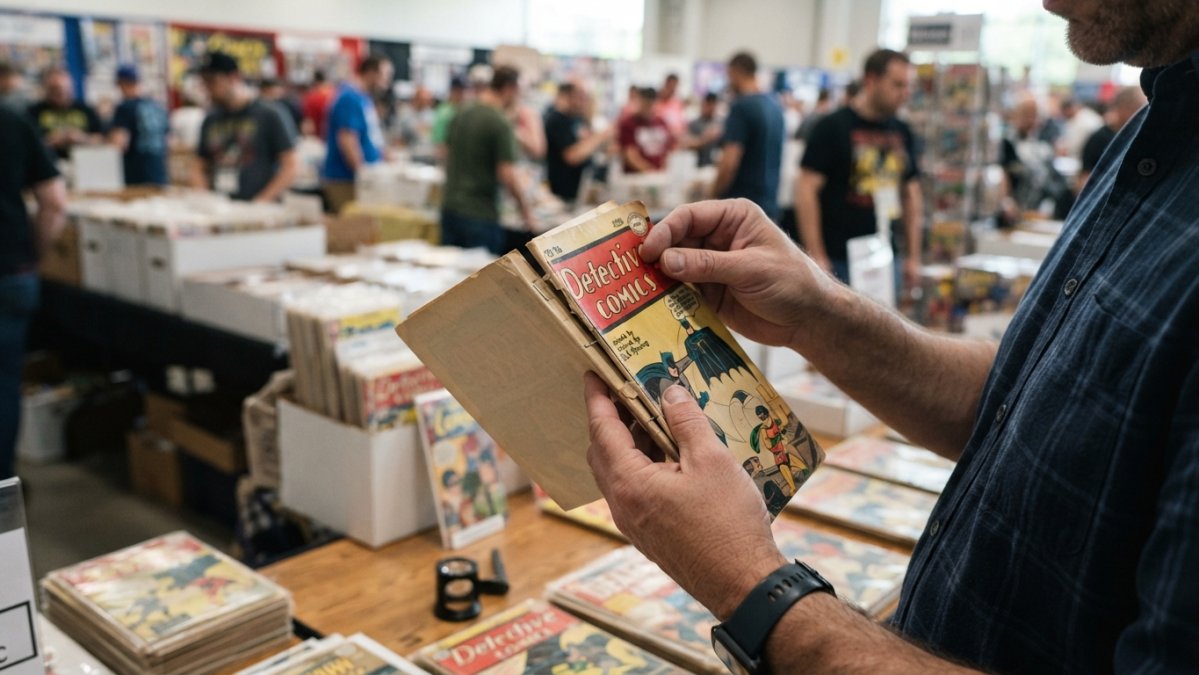
Before committing, systematically evaluate the book's condition across multiple dimensions to prevent excitement-driven overspending.
Cover Assessment:
- Check for creasing, particularly along the spine and corners
- Look for fading or color loss indicating sun exposure or age
- Inspect for stains, water damage, or tape residue
Spine Condition:
- Run your finger along the spine to feel for creasing
- Look for color loss or stress marks from repeated opening
- Check whether the spine is intact or shows separation
Interior Pages:
- Flip through the book to assess page color (white, cream, or yellow)
- Check for loose pages or binding issues
- Look for writing, markings, or damage inside
Completeness:
- Verify the book contains all original pages without cut-outs
- Check that the back cover and interior back cover are intact
- Confirm no pages are missing between the front and back covers
Pricing Reality Check:
- Compare the asking price to recent sold listings for similar condition
- Consider whether the condition matches the asking price
- Negotiate if the price exceeds market value for that condition
Common Mistakes to Avoid in Comic Book Hunting
Understanding common pitfalls helps you avoid expensive errors that experienced hunters have already made.
Buying condition-challenged books hoping to restore them rarely works financially.
Ignoring storage conditions damages your collection over time.
Failing to track your collection creates problems when you want to sell or assess value.
Building Your Collection Strategy
Successful collecting requires defining your focus rather than collecting everything.
Define whether you're collecting for investment, reading enjoyment, or character/creator focus.
Research your focus area thoroughly before major purchases.
Track your collection's development over time, documenting acquisition dates, prices, and condition.
Finding rare comic books combines systematic hunting with genuine passion.
Frequently Asked Questions
How do you find the value of old comic books?
Start by identifying the issue number, publication date, and condition grade. Check online price guides like the Overstreet Comic Book Price Guide, then compare recent sold listings on auction sites and marketplaces. Graded slabs from certified services show market value more reliably than ungraded copies. Rarity, demand, and condition grade are the three factors that drive value most significantly in the rare comic book market.
What makes a comic book a key issue?
Key issues are comics with significant historical, cultural, or collector value. First appearances of major characters, origin story issues, and milestone publications command premium prices. Golden Age and Silver Age key issues are particularly sought after. Limited print runs and variant covers also create key issue status. Identifying these requires researching character debut dates and publication history before you hunt.
How can you tell if an old comic book is valuable?
Check the issue number against a price guide to see if it's a recognized key issue. Examine the condition carefully, high-grade copies are worth significantly more. Look for first appearances, rare variant covers, or low print runs. Compare actual sold prices on recent auctions rather than asking prices. Professional grading from recognized services adds credibility and value. Rarity combined with strong condition and collector demand determines true value.
Where can you find rare comic books for sale?
Flea markets, estate sales, and garage sales often yield underpriced finds before other collectors arrive. Comic shops and conventions offer curated selections at fair prices. Online marketplaces and auction platforms provide access to a wider inventory. Building relationships with dealers, joining collector communities, and attending themed shows increases your sourcing opportunities. Each channel has different advantages, flea markets reward speed and negotiation, while online platforms offer research time and broader selection.
Is it better to buy graded or ungraded comics?
Graded slabs from certified services (like CGC or PSA) provide verified condition grades and authentication, making them easier to resell and value. Ungraded comics cost less upfront but require personal condition assessment and may be harder to sell. For investment-grade rare comics, professional grading protects your purchase and adds market confidence. For casual collecting, ungraded copies can offer better value if you're comfortable assessing condition yourself.
What's the difference between variant editions and standard covers?
Variant editions include alternate covers, limited print runs, or special releases from the same issue. They're often rarer and more valuable than standard covers. Variant identification requires research, check publisher records and collector databases to verify authenticity. Some variants command 5-10 times the price of standard editions depending on rarity and demand. Always verify variant status before paying premium prices, as misidentification is a common collector mistake.
How do I avoid overpaying when I find a rare comic?
Research the comic's value before negotiating. Know the asking price on price guides and recent sold listings. At flea markets, expect to negotiate, opening offers are often 20-40% below asking price. Set a maximum price you'll pay before you hunt, and stick to it. Compare graded slab values to ungraded copies to understand condition premiums. Patience and multiple sourcing channels help you find fair deals rather than impulse purchases.
What condition issues should disqualify a comic from my collection?
Major structural damage like missing pages, water damage, or severe creasing significantly reduces value. Heavy staining, mold, or odor issues can worsen over time and affect nearby books. Loose or detached covers reduce grade dramatically. Minor wear like edge stress, light creasing, or slight fading is normal for older comics. Your tolerance depends on your collecting goals, investment-grade requires high condition, while casual collecting allows more flexibility.