 ultimate-guide
Comic Key Issues for Beginners: A Buying Guide
Table of Contents
- What Makes a Comic a Key Issue
- Raw vs Slabbed Comics for Beginners
- How to Spot Counterfeit Comic Books
- Understanding Comic Book Grading and Authentication
- Where to Source Key Issues: Local Shops vs. Online Markets
- Comic Book Price Guide Resources and Valuation
- Building Your Collecting Strategy Without Overpaying
- Frequently Asked Questions
Last Updated: September 27, 2026
What Makes a Comic a Key Issue
A key issue is a comic book that holds significant value to collectors due to its historical importance, scarcity, or cultural impact, and understanding comic key issues beginners need to know is essential for smart collecting. These aren't just any back issues, they're the comics that defined characters, introduced major plot points, or marked pivotal moments in the medium's history.
Key issues typically fall into a few categories. First appearances are the obvious ones: the debut of Spider-Man in Amazing Fantasy #15 or the first appearance of Batman in Detective Comics #27. But key issues also include origin stories, major character deaths, first meetings between heroes, and issues that launched iconic storylines. Some key issues gain value because they're scarce, low print runs from decades ago mean fewer copies exist today. Others become valuable because they're tied to major cultural moments: a comic that inspired a blockbuster film suddenly sees demand spike.
The distinction matters for comic key issues beginners encounter because not every old comic is a key issue, and not every key issue will appreciate in value. Understanding what makes something truly key helps you avoid overpaying for a common book or missing genuine investment opportunities. Scottydew Comics helps collectors identify which books actually matter in the market versus which ones are just old.
Raw vs Slabbed Comics for Beginners
When you're starting out, you'll encounter two ways comics are sold: raw (ungraded) and slabbed (professionally graded and sealed in protective cases).
Raw comics are loose, ungraded books. They're cheaper upfront and give you the tactile experience of holding an actual piece of comic history. You can flip through the pages, feel the paper stock, and appreciate the original artwork without a barrier. For casual collectors or budget-conscious beginners, raw comics make sense. The downside is that condition is subjective, what one person calls "fine" another might call "very fine." Resale becomes harder because buyers can't trust your assessment.
Slabbed comics are professionally graded by third-party companies like CGC or CBCS, then sealed in a protective case with a grade label. The grade (typically 0.5 to 10.0 scale) is standardized and verified, which means a 9.0 from CGC means the same thing whether you're buying from a dealer in New York or California. Slabbed comics cost more upfront, but that premium reflects the authentication and condition certainty. For investment-grade key issues, slabbing is the standard because it protects value and makes the book easier to sell later.
Your choice depends on your goal. Building a personal collection of books you'll enjoy reading? Raw comics work fine. Buying key issues as long-term holdings? Slabbed is the safer play. Most serious collectors mix both, raw comics for reading copies, slabbed for investment pieces.
How to Spot Counterfeit Comic Books
Counterfeits exist, especially for high-value key issues. Knowing what to look for protects your investment.
Start with the paper and printing quality. Legitimate comics from the Golden and Silver Ages have a specific feel, the paper stock, ink saturation, and printing registration are consistent with the era. Counterfeits often use modern printing techniques that don't match the original. Look at the halftone dots under a magnifying glass; they should follow the dot pattern of the era. Modern counterfeits sometimes have too-clean printing or inconsistent color registration.
Check the cover stock and finish. Original comics have specific textures and glosses that changed over decades. A Silver Age comic should have a particular matte finish; a Bronze Age book might have a slightly different sheen. Counterfeiters struggle to replicate these details perfectly.
Examine the spine and staples. Original staples show age-appropriate rust or discoloration. The spine should have natural wear patterns consistent with the book's stated grade. Counterfeits sometimes have suspiciously pristine spines or staples that look too new.
Look at the interior pages. Binding quality, paper color, and ink saturation should match the era. Pages should show natural aging, slight yellowing, minor foxing (brown spots from oxidation). A counterfeit might have pages that are too white or too uniform in color.
The barcode area is another tell. Comics from the 1970s onward have barcodes. The placement, style, and printing quality should match the era. Counterfeits sometimes get the barcode position wrong or use modern printing that looks out of place.
Due diligence means buying from reputable sources. Established dealers, certified auction houses, and platforms with buyer protection are your safest bets. If a deal seems too good to be true on a high-value key issue, it probably is.
Understanding Comic Book Grading and Authentication
Comic book grading is a standardized system that evaluates condition and assigns a numerical score. The two major grading companies are CGC (Certified Guaranty Company) and CBCS (Certified Collectibles Book Service). Both use the 0.5 to 10.0 scale, where 10.0 is "Gem Mint" (essentially perfect) and 0.5 is "Poor" (barely readable).
The grading process examines multiple factors: cover gloss, color fading, creases, tears, stains, spine stress, page quality, and centering. Graders inspect the book under controlled lighting and assign a grade based on industry standards. The book is then encased in a tamper-evident slab with the grade label visible. This certification protects the book from further damage and provides third-party verification of condition.
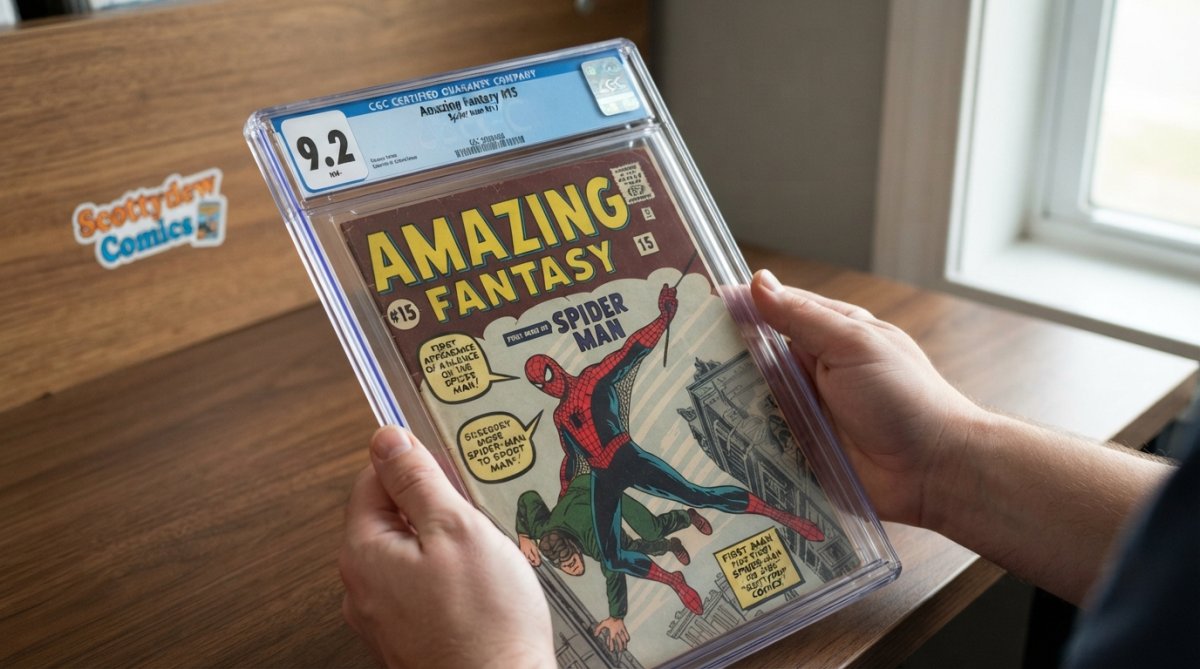
For beginners, understanding the grade scale matters because it directly impacts price. A 9.8 copy of a key issue might cost three times what a 9.0 copy costs. The difference in visual condition between those two grades is subtle, maybe a tiny crease or slight color variation, but collectors pay for that precision. A 7.0 (Fine/Very Fine) is still a solid, displayable book but trades at a fraction of the price.
Authentication goes beyond grading. Graders verify that the book is genuine, not a counterfeit or reprint. They check for signs of restoration (which lowers the grade and affects value). A "qualified" grade label indicates the book has been restored or has some condition issue that makes it non-standard. This transparency is crucial for investment-grade purchases.
When you're buying slabbed comics, always check the label. Know the difference between a regular grade and a qualified grade. Understand that a book graded 10 years ago might have shifted slightly in its case, so the current condition might not match the original label perfectly, but the slab still provides a baseline for value assessment.
Where to Source Key Issues: Local Shops vs. Online Markets
Finding key issues requires knowing where to look. Each channel has tradeoffs.
Local comic shops offer the advantage of hands-on inspection. You can hold the book, examine the condition in person, and ask the shop owner questions about provenance and authenticity. Building relationships with local retailers is valuable, they often hold books for regular customers or alert you when key issues come in. The personal connection also provides some accountability; a shop owner with a reputation won't sell you counterfeits or misrepresented books.
The downside of local shops is limited inventory. Most independent shops carry common back issues and recent releases, not extensive collections of high-value key issues. You might wait months for a specific book to appear. Pricing at local shops can also be higher because they have overhead costs and smaller profit margins on individual sales.
Online markets cast a wider net. eBay, Heritage Auctions, Whatnot, and specialized comic retailers have vastly larger inventories. You can find rare key issues that would never appear in a local shop. Prices are often more competitive because online sellers have lower overhead.
The risk with online buying is that you can't inspect the book before purchase. You're relying on photos, condition descriptions, and seller ratings. Counterfeit risk is higher online, especially on platforms with less seller vetting. Shipping can damage books, a key issue arriving with a new crease is a disaster.
Scottydew Comics bridges this gap through live auctions on the Whatnot platform, where you can see items in real-time, ask questions directly, and participate in a community of collectors. This interactive format gives you access to curated key issues and rare finds.
The best approach for beginners is to start locally, build knowledge, then expand online once you understand grading, pricing, and authentication. Mix both channels: source common key issues online for better pricing, reserve local shops for high-value purchases where you want to inspect the book first.
Comic Book Price Guide Resources and Valuation
Pricing key issues is more art than science. The same book can vary widely in value depending on condition, rarity, and current market demand.
The Overstreet Comic Book Price Guide is the industry standard reference.
Building Your Collecting Strategy Without Overpaying
The easiest way to overpay is to buy without a plan. Beginners often chase whatever catches their eye, then realize they've spent thousands on random books with no cohesion.
Frequently Asked Questions
What makes a comic book a key issue worth buying?
A key issue is a comic that introduced a major character, marked an important storyline, or represents a first appearance. For example, Amazing Fantasy #15 introduced Spider-Man, making it one of the most sought-after key issues. Key issues hold value because collectors actively seek them out, and their scarcity drives market demand. When you're starting out, focus on first appearances and origin stories rather than every issue in a series.
Should beginners buy raw vs slabbed comics for beginners?
Raw comics cost less upfront and let you handle and read them, but slabbed (professionally graded) comics offer authentication and condition protection. For investment-grade key issues, slabbed comics are safer because the grading company guarantees authenticity. Beginners often start with raw comics to learn the hobby affordably, then move to slabbed versions as their budget grows and they understand what they're collecting.
How do I know if a comic book is counterfeit?
Check the paper quality, printing clarity, and spine integrity. Counterfeit comics often have fuzzy print, incorrect colors, or flimsy paper that feels different from originals. Examine the cover art closely for misalignment or color bleeding. Buy from reputable sellers with authentication processes, and request a condition report. If the price seems too good to be true, it probably is. Professional grading services like CGC and CBCS provide definitive authentication when you're unsure.
What's the difference between speculation and investment-grade collecting?
Investment-grade comics are established key issues with proven liquidity and stable market value, like first appearances of major characters. Speculation means betting on future demand for comics that might not appreciate. Beginners should focus on investment-grade key issues with clear collector demand rather than chasing market trends or lesser-known titles hoping they'll become valuable. This approach reduces risk and builds a collection with genuine long-term value.