
 how-to
How to Display Graded Comic Slabs: 7 Methods
Table of Contents
- Why Proper Display Matters for Graded Comics
- UV Protection for Comic Slabs: Preventing Light Damage
- Wall Mounted Comic Book Display Systems
- Display Stands and Easels for Tabletop Showcase
- How to Organize Graded Comics for Maximum Visual Impact
- Acrylic Display Cases and Protective Casing
- Budget-Friendly Display Solutions
- Environmental Control: Humidity and Climate for Wall Displays
- Frequently Asked Questions
Last Updated: September 26, 2026
Why Proper Display Matters for Graded Comics
Displaying graded comic slabs protects your investment. Poor display conditions damage slabs: light fades colors, humidity warps the protective casing, and temperature swings stress the acrylic or glass.
Proper display combines the right mounting system, environmental control, and protective materials. Your graded comic slabs deserve a setup that keeps them safe while showing them off.
This guide covers proven methods to display graded comic slabs: UV protection, wall mounting, display stands, organization strategies, and budget-friendly options.
UV Protection for Comic Slabs: Preventing Light Damage
UV rays fade ink, bleach paper, and degrade protective casing. Direct sunlight is worst, but even indoor lighting causes cumulative damage over time.
UV-blocking glass and acrylic filter harmful UV wavelengths. Acrylic is lighter and cheaper; glass is more durable and clearer. For wall displays, acrylic works well. For high-value slabs, UV-blocking glass offers superior protection.
Choosing UV-Blocking Glass and Acrylic
UV-blocking materials stop 99% of ultraviolet radiation. Acrylic is affordable and lightweight for standard slabs. Glass offers better clarity but is heavier and more expensive.
When choosing a protective casing:
- Acrylic: lighter, affordable, good UV protection, scratches over time
- Glass: superior clarity, heavier, more expensive, more durable
- UV-filtering film: adhesive overlay, budget option
Look for products blocking UVA and UVB rays with a 99%+ rating for archival-quality protection.
LED Lighting Options for Safe Display
LED lighting showcases your collection without heat or UV damage. Incandescent and fluorescent bulbs emit UV radiation and heat; LEDs don't and are energy-efficient.
Choose LED lights with a color temperature between 2700K and 4000K to mimic natural daylight without UV. Warmer tones (2700K) create a cozy feel; cooler tones (4000K) make colors pop.
Popular LED options: picture lights, strip lighting, accent spotlights, and track lighting. Mount lights at least 12 inches from slabs to prevent heat buildup. Test for 48 hours before leaving unattended.
Wall Mounted Comic Book Display Systems
Wall mounting saves space, showcases your collection, and creates visual impact. The key is choosing the right mounting hardware and installation technique.
Mounting Hardware and Installation Tips
Mounting hardware must support the weight of your slabs without damaging the wall or casing. Standard graded slabs weigh 2-4 ounces; acrylic cases add 1-2 ounces.
Use a stud finder. Never mount slabs on drywall alone. Anchor hardware into studs to prevent wall damage and keep your collection secure.
Common mounting options: picture hooks (10-25 lbs), floating shelves (4-8 slabs), rail systems, and French cleats. For single slabs, use a 20+ lb picture hook. For gallery walls with 5+ slabs, use floating shelves or rail systems.
Installation: Mark stud locations 16 inches apart, drill pilot holes, install anchors into studs, mount hardware level, and check stability.
Weight Distribution and Wall Damage Prevention
Improper weight distribution cracks drywall and risks your collection falling.
Use one slab per anchor point. For a 3-slab display, use three separate anchor points.
Spread weight evenly across floating shelves with 2-3 inches between slabs for balance and appearance.
Match fasteners to wall type: toggle/molly bolts for drywall, expansion anchors for plaster, concrete anchors for concrete, masonry anchors for brick. Test by gently pulling; upgrade if movement occurs.
Display Stands and Easels for Tabletop Showcase
Tabletop stands offer flexibility to move and rearrange your collection across rooms.
Adjustable easels hold single slabs at 45 degrees, preventing glare and showcasing artwork.
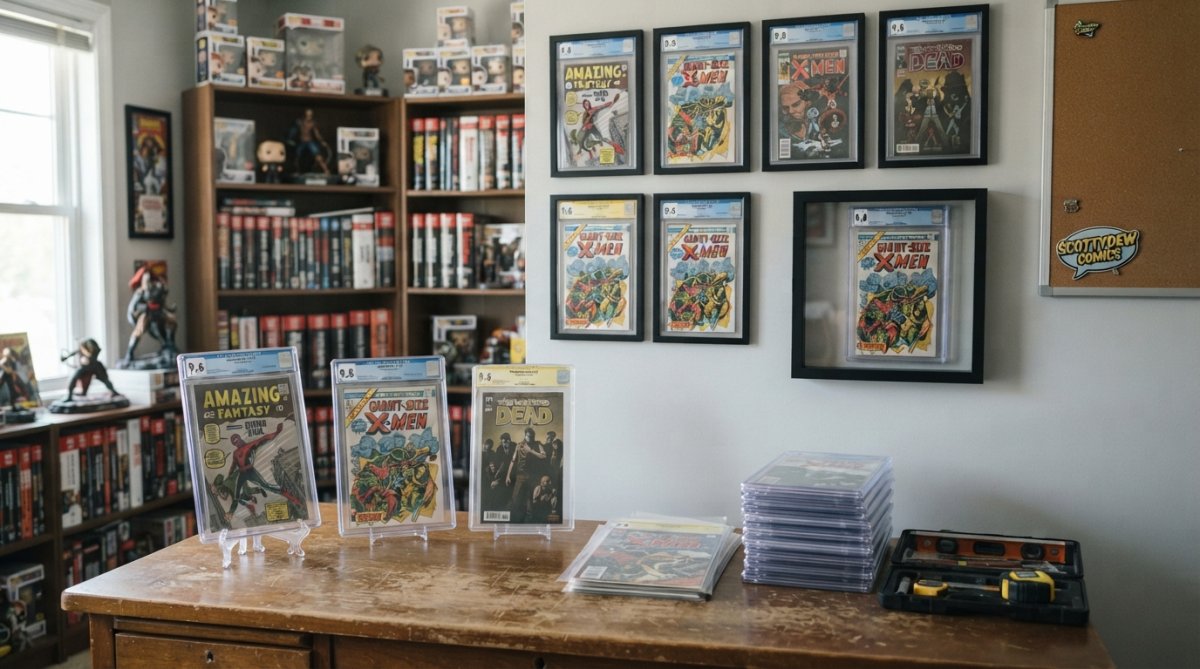
Popular options: acrylic easels, wooden stands, metal adjustable stands, and custom displays. The Wham! Stand from Scottydew Comics holds slabs at optimal viewing angles while protecting from dust and damage.
For tabletop displays, keep slabs away from:
- Direct sunlight through windows
- Heat sources like radiators or vents
- High-traffic areas where they might get knocked over
- Humid areas like bathrooms or kitchens
Dust accumulates on tabletop displays faster than wall-mounted slabs. Wipe your stand and slabs weekly with a soft, dry microfiber cloth. Avoid liquids and harsh cleaners.
How to Organize Graded Comics for Maximum Visual Impact
Organization transforms a random collection into a curated display. Thoughtful arrangement draws the eye and tells a story about your collection.
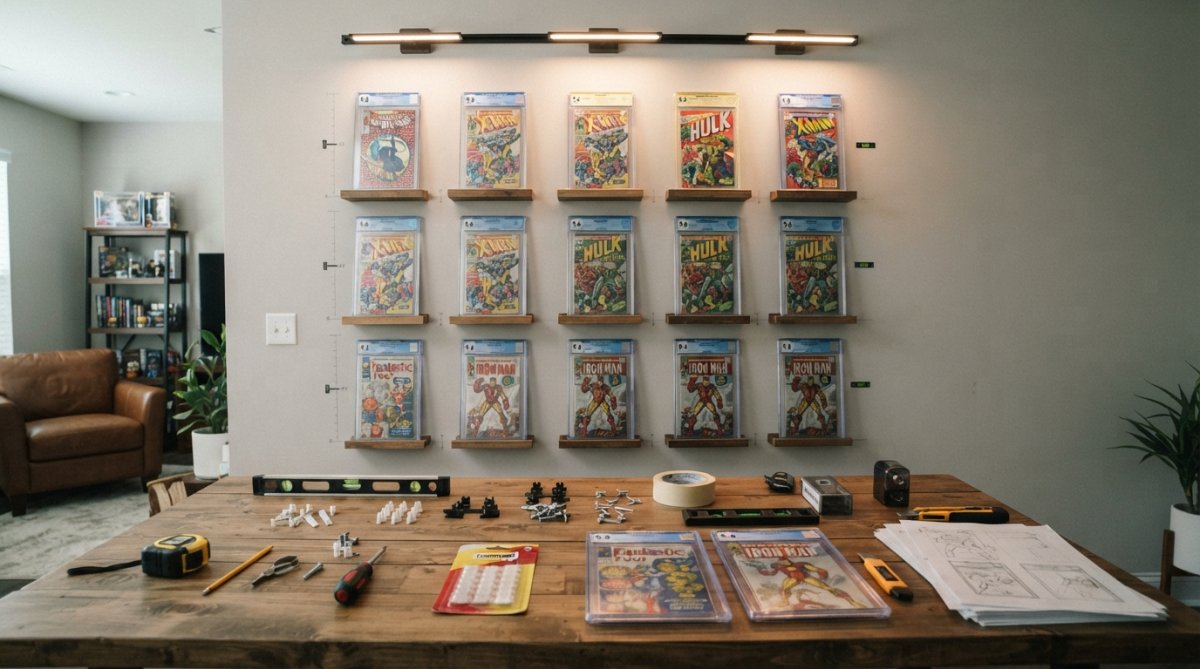
Arrangement Patterns and Gallery Wall Layouts
Gallery walls work because they follow visual principles. Symmetry feels balanced. Asymmetry feels dynamic. The best layout depends on your space and collection size.
Gallery wall patterns:
- Grid: rows and columns, clean and organized, works for 6-12 slabs
- Salon style: mixed sizes, varied spacing, artistic and curated, works for 8+ slabs
- Linear: single horizontal or vertical line, minimalist, works for 3-5 slabs
- Cluster: 2-3 slabs grouped together, scattered across wall, flexible
Grouping by Grade, Series, or Aesthetic
Grouping creates visual cohesion. Collectors respond to organization. It shows you care about your collection.
Group by grade:
- Display all 9.8s together, then 9.0s, then lower grades
- Creates a clear hierarchy of value
- Satisfies the collector's need for organization
- Works best if grades are close (all 8.0-9.8 range)
Group by series:
- Display a complete run of Amazing Spider-Man issues
- Show the evolution of a character across decades
- Tells a narrative arc
- Works for thematic displays or key issue collections
Group by aesthetic:
- Match cover colors or art styles
- Create a visual flow across your gallery wall
- Prioritize how it looks over strict organization
- Appeals to design-focused collectors
Acrylic Display Cases and Protective Casing
Acrylic cases protect your slabs from dust, handling, and environmental stress. They're transparent, so your comics stay visible. They're lightweight, so they work for wall displays.
Acrylic case features to look for:
- UV-blocking material (99% UVA/UVB protection)
- Acid-free backing to prevent slab damage
- Tight-fitting design to prevent movement inside the case
- Anti-glare finish to reduce reflections
- Easy-open design for occasional access
To prevent scratching:
- Don't stack cases on top of each other
- Use soft microfiber cloths for cleaning
- Avoid abrasive cleaners
- Store cases upright, not flat
- Keep cases away from direct contact with rough surfaces
Budget-Friendly Display Solutions
You don't need expensive equipment to display graded comics well. Smart choices keep costs down while maintaining protection.
Budget display options:
- Picture ledges: wall-mounted, adjustable, 20-40 dollars per shelf
- Simple picture frames: standard frames with UV glass, 15-30 dollars each
- Homemade easels: cardboard or foam backing, under 10 dollars per unit
- Pegboard displays: modular, flexible, 30-50 dollars for a full setup
- Fabric-backed shelving: IKEA shelves with backing material, 40-80 dollars per shelf
Avoid these budget pitfalls:
- Non-UV-blocking glass or acrylic (damages slabs over time)
- Flimsy mounting hardware (falls and damages collection)
- Acid-containing backing materials (degrades slab integrity)
- Crowded displays (increases handling and damage risk)
Environmental Control: Humidity and Climate for Wall Displays
Temperature and humidity fluctuations stress graded comic slabs. The protective casing expands and contracts. The slab shifts inside. Over time, this movement damages the book and the slab integrity.
Environmental factors affecting display:
- Direct sunlight: causes UV damage and temperature swings
- Heat sources: radiators, vents, fireplaces cause humidity fluctuations
- Moisture: bathrooms, kitchens, basements promote mold and rust
- Air conditioning: rapid temperature changes stress the slab
- Seasonal changes: winter heating and summer cooling create stress
Solutions for environmental control:
- Use a humidifier in dry climates or winter months
- Use a dehumidifier in humid climates or basements
- Install weatherstripping around windows to prevent temperature swings
- Keep displays away from exterior walls where temperature fluctuates most
- Use thermal curtains to reduce sunlight exposure and temperature swings
Frequently Asked Questions
How do you hang CGC comics on a wall without damaging them?
Use mounting hardware rated for the weight of your graded comic slabs. Install wall anchors or studs to distribute weight evenly, preventing wall damage. Mount slabs horizontally or at a slight angle using secure brackets designed for collectibles. Ensure the frame or mount doesn't apply pressure to the slab edges, which can compromise slab integrity. Check your wall's weight capacity before installation and use a level to ensure proper alignment.
Does sunlight damage graded comic slabs?
Yes, direct sunlight causes significant light damage to graded comics. UV rays fade colors and degrade paper quality over time, reducing collector grade and value. Display slabs away from windows or use UV-protective glass and acrylic cases. Install UV-blocking LED lighting if you want illuminated displays. This is especially critical for valuable, high-grade slabs where preservation directly impacts resale value.
What's the best way to organize a graded comic collection on display?
Organize graded comics by series, publication date, or grade to create visual coherence. Group by aesthetic themes or color palettes for gallery wall impact. Arrange high-grade slabs at eye level where they draw attention. Leave consistent spacing between slabs for a curated collection appearance. Consider the room's lighting and wall color when planning your layout. Mix frame sizes and orientations to add visual interest while maintaining a professional look.
What's the difference between wall mounts and tabletop stands for slabs?
Wall mounts secure slabs directly to walls, maximizing space and creating a gallery effect for permanent displays. They require proper installation and weight distribution planning. Tabletop stands and easels offer flexibility, you can rearrange them easily and move displays without wall damage. Stands work better for renters or collectors with limited wall space. Wall mounts suit serious collectors ready to commit to a curated display; stands suit those who like to rotate or reorganize frequently.