
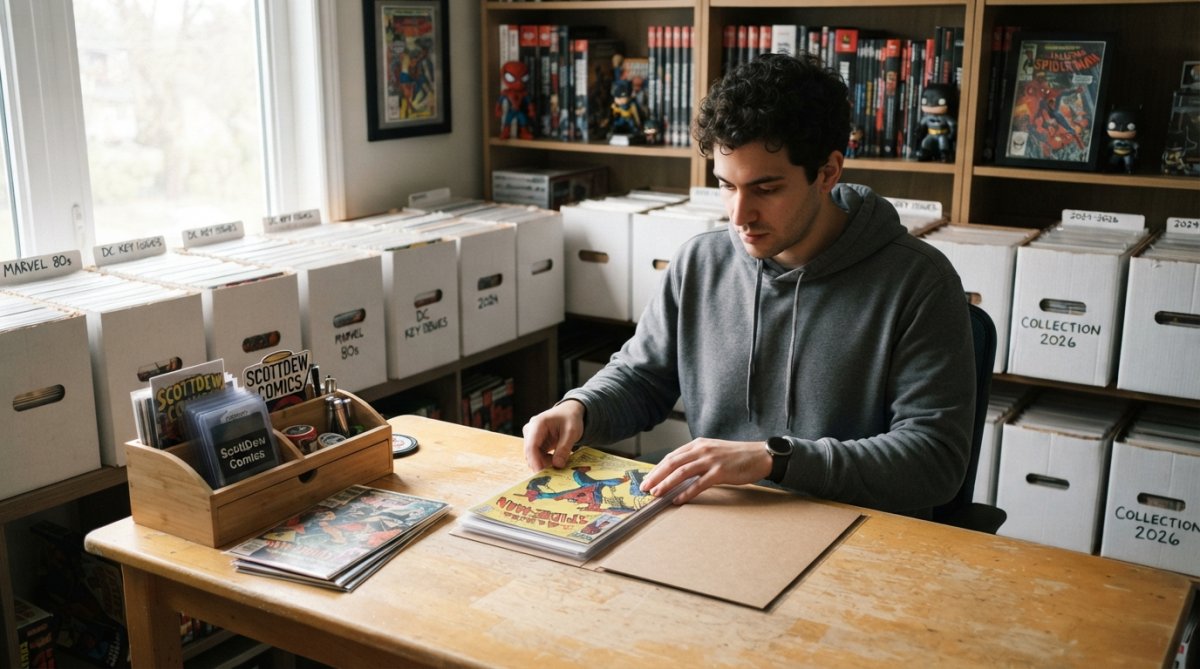
 ultimate-guide
How to Start a Comic Book Collection in 2026
Table of Contents
- Define Your Comic Book Collection Goal
- Set a Monthly Budget That Works
- Learn Comic Book Grading Standards
- Find the Best Comic Book Storage Supplies
- Understand How to Organize a Comic Collection
- Where to Buy Comics and Build Your Pull List
- Track Value, Speculation, and Resale
- Conclusion: Start Your Comic Book Collection Today
- Frequently Asked Questions
Last Updated: September 9, 2026
Starting a comic book collection is more than buying a few issues; it is an entry into a community, a study of art history, and a pursuit of tangible pieces of pop culture. Whether you are chasing nostalgic finds from your childhood or hunting for investment-grade keys, the process can feel overwhelming without a plan. The difference between a chaotic pile of floppies and a valuable library comes down to strategy. This guide breaks down how to start comic book collection the right way, covering everything from your first budget to archival storage and market speculation.
The biggest mistake beginners make is buying randomly without a defined goal. A comic book collection built on impulse purchases rarely satisfies its owner and often wastes money. Before you spend a dime, you need to decide what kind of collector you want to be, because that decision drives every subsequent choice about budget, storage, and purchasing.
Define Your Comic Book Collection Goal
Your collecting niche determines the entire structure of your hobby. Are you a reader who wants story arcs, a fan of a specific superhero, or an investor seeking key issues with collectible value? Most successful collections focus on one of three pillars: character-focused runs, creator-driven work, or era-specific nostalgia.
Character-focused collectors chase the adventures of a single hero, often seeking first appearances and milestone issues. Creator-driven collectors follow specific artists and writers, building runs around their work regardless of the character. Era-specific collectors target the Bronze Age, Copper Age, or Modern Age, often driven by the comics they read as children.
The practical difference matters for your wallet and your shelves. A focused collection is easier to organize, easier to budget for, and easier to display. A scattershot approach leads to duplicate purchases and buyer's remorse. Write down your goal in one sentence and keep it visible when you shop.
Set a Monthly Budget That Works
Comic collecting is a hobby, not a financial obligation, and it should never strain your monthly expenses. A common approach is to set a fixed monthly budget that you treat like any other entertainment cost, similar to a streaming subscription or dining out. This discipline prevents the emotional overspending that happens at auctions or conventions.
Your budget should account for three categories: new releases on your pull list, back issues you are hunting, and storage supplies. Many collectors allocate roughly half their budget to new single issues, a third to back issues and grails, and the remainder to bags, boards, and boxes. Adjust the split based on your goal from the first section.
Learn Comic Book Grading Standards
Understanding comic book grading standards is essential for knowing what you are buying and what your collection is worth. The industry uses a 10-point scale, with 10.0 being Gem Mint and 0.5 being Poor. Most collectors target books in the 9.0 to 9.8 range, often called near mint or mint, because these grades command the highest resale value.
Grading considers several physical factors: page quality, spine stress, corner wear, color strike, and the presence of tears or creases. A book with a flawless cover but a slightly damaged spine will grade lower than you expect. Learn to inspect books in person before buying, and when shopping online, ask for detailed photos of the spine and corners.
For serious investment pieces, many collectors turn to slabbing, which is the process of having a book professionally graded and sealed in a rigid, tamper-evident holder. A slabbed comic protects the book and provides a verified grade that increases buyer confidence during resale. While slabbing costs money, it removes ambiguity about condition and makes a collection easier to insure or liquidate later.
Find the Best Comic Book Storage Supplies
Protecting your investment starts with the right supplies, and skimping here damages your books over time. The best comic book storage supplies include acid-free backing boards, archival-grade bags, and sturdy storage boxes. Standard polyethylene bags are fine for short-term storage, but mylar bags offer superior clarity and durability for high-value issues.
The storage hierarchy looks like this:
| Storage Item | Purpose | Best For |
|---|---|---|
| Mylar bags + acid-free boards | Maximum protection, clear display | Key issues, graded candidates |
| Polyethylene bags + standard boards | Affordable everyday protection | Reading copies, common issues |
| Short boxes | Portable, easy to organize | Active collections under 300 books |
| Long boxes | High capacity, stackable | Full runs, larger collections |
| Slab holders | Rigid protection for graded books | Investment-grade, slabbed comics |
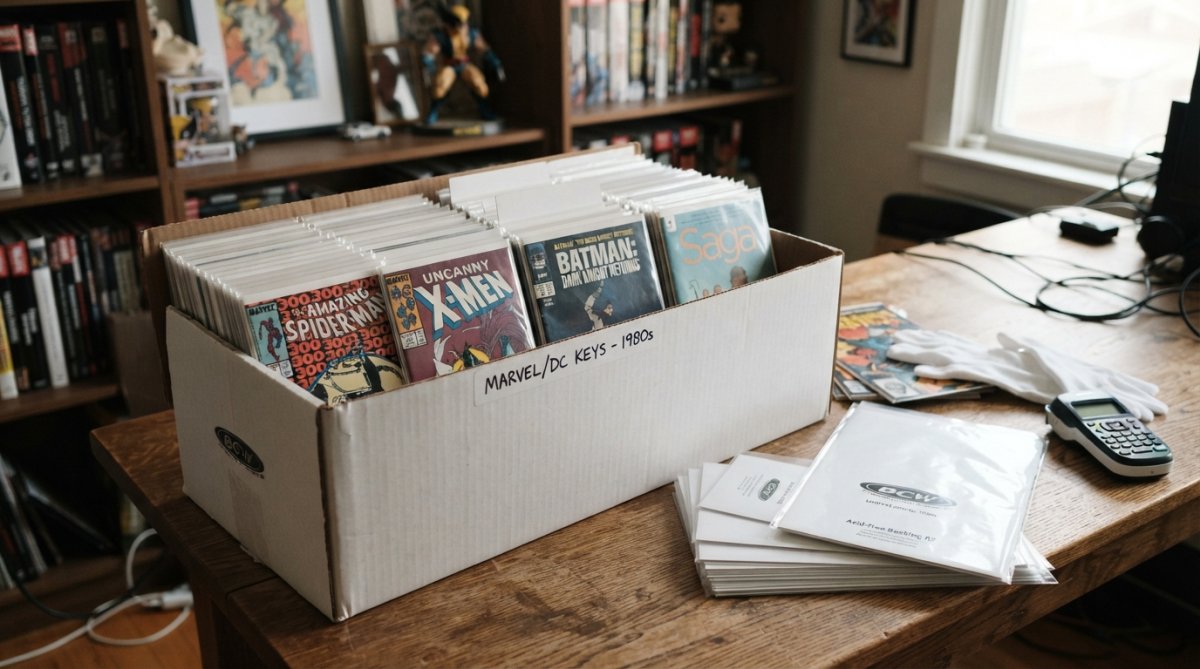
Store your boxes upright, never flat-stacked, to prevent the weight of upper books from warping lower ones. Keep your collection in a climate-controlled room away from direct sunlight, which fades covers, and away from basements or attics where humidity causes mold and paper damage. Consistent temperature and moderate humidity are the two most critical factors for long-term preservation.
Understand How to Organize a Comic Collection
An organized collection is a usable collection, and how to organize a comic collection is a question every serious collector answers differently. The two dominant systems are alphabetical by title and numerical by publisher. Alphabetical ordering works well for readers who grab books by character. Numerical ordering, typically by publisher and then issue number, suits collectors tracking complete runs.
Many collectors use a hybrid system: alphabetical by title for single issues, with graphic novels and trade paperbacks shelved separately by author or publisher. Whichever system you choose, consistency matters more than the method itself. A collection where every book has a logical home is a collection you can actually enjoy.
Where to Buy Comics and Build Your Pull List
Your local comic shop is the backbone of the hobby, and building a relationship with your shop owner pays dividends. Most shops offer a pull list or subscription service, which automatically reserves new issues for you each month based on your preferences. This ensures you never miss a key issue on release day, when cover prices are lowest.
Beyond your local shop, the buying landscape includes online retailers, auction platforms, and conventions. Live auctions have become a popular way to acquire rare keys and graded slabs, offering the thrill of real-time bidding from your phone. For newcomers, auction platforms with community features are particularly valuable because you can ask questions about condition before committing.
The best strategy combines sources: a pull list at your local shop for new releases, auction platforms for rare finds, and conventions for the tactile experience of flipping through long boxes. Diversifying your sources gives you access to a wider pool of books and better price comparison opportunities.
Track Value, Speculation, and Resale
Comic book values fluctuate, and treating the hobby purely as an investment carries real risk. Market volatility is driven by speculation around movie announcements, character debuts, and creator moves. A key issue can double in value on a casting rumor and just as quickly lose that gain when the hype fades. Collect what you love first, and treat appreciation as a bonus rather than the goal.
That said, understanding the market helps you buy smart. First appearances of major characters and significant story milestones historically hold value better than variant covers printed in high quantities. For resale, condition is everything, which is why grading standards and proper storage matter so much. A 9.8 graded copy of a key issue can sell for multiples of the same book graded at 9.0.
When you decide to sell, options include auction platforms, direct sales to dealers, or comic book stores. Auction platforms often yield the highest prices for sought-after keys because they reach a national audience of motivated buyers. For lower-value books, selling in bulk lots or trading toward your grails is often more practical than listing each issue individually.
Conclusion: Start Your Comic Book Collection Today
Building a comic book collection is a journey of discovery, but it works best with a plan. Define your goal, set a budget, learn grading, protect your books with proper storage, and organize everything from day one. The market will fluctuate, but a collection built on genuine interest and sound preservation practices will always hold personal value.
Ready to find your first key issue or add a rare slab to your growing library? Join the Scottydew Comics community on Whatnot for live auctions, themed shows, and curated bundles that make collecting accessible and fun. And when your collection outgrows its boxes, explore the Wham! Stand to display your prized slabs and single issues with the style they deserve. Get started today and discover the rare treasures waiting for you.
Frequently Asked Questions
What is the difference between raw and slabbed comic books?
Raw comics are ungraded and sold as-is, which makes them more affordable for reading and handling. Slabbed comics have been professionally graded and sealed in a rigid plastic holder, protecting their condition and providing a verified grade. For a starter comic book collection, raw books help you learn the hobby without high upfront costs. Slabbed books become more relevant when you target high-value key issues or want documented proof of condition for resale.
How do I determine the value of a comic book?
Value depends on three main factors: condition, rarity, and demand. Condition is measured using the comic book grading standards, where Near Mint and Mint grades command the highest prices. Rarity involves print runs and variant covers, while demand shifts with character appearances in movies or shows. Check recent sold listings on auction sites and price guides for a realistic range. First appearances of popular characters in key issues are the most consistent value drivers.
What are the essential supplies needed for a new comic collector?
You need bags, boards, and a box. Start with standard comic bags and acid-free boards for regular single issues, then upgrade to mylar bags for valuable books since they offer the best archival storage. A long box or short box keeps everything organized and protects books from light and dust. Add labels for the box so you can find issues without flipping through everything. These supplies are inexpensive insurance for your collection.
Should I collect comics for investment or for personal enjoyment?
Most collectors do both, but your primary focus changes how you buy. If enjoyment leads, grab the runs and characters you love, including trade paperbacks and graphic novels. If investment matters more, research key issues, first appearances, and market trends before purchasing. The smartest approach is buying stories you like that also hold collectible value. Market volatility and speculation make pure investment risky, so collect what you genuinely enjoy.
How do I keep track of my comic book inventory?
Start with a simple spreadsheet listing title, issue number, publisher, condition, and purchase price. As your comic book collection grows past a few hundred issues, switch to a dedicated inventory app that tracks values and lets you scan barcodes. Organize your physical boxes by title or publisher first, then by issue number. This system helps you avoid duplicate purchases and gives you a clear record for insurance or resale purposes.