 listicle
Tips for Beginner Comic Book Collectors 2026
Table of Contents
- Set a Manageable Budget Before You Start
- How to Identify Key Issues and First Appearances
- Understanding Comic Book Grading Explained
- Best Comic Book Storage Supplies for Your Collection
- Raw Comics vs. Slabbed: Which Path for Beginner Collectors
- Finding Comics: Local Shops, Online Marketplaces, and Live Auctions
- Mistakes Beginner Comic Collectors Make (and How to Avoid Them)
- Frequently Asked Questions
Last Updated: September 29, 2026
Starting a comic book collection can feel overwhelming, but tips for beginner comic book collectors 2026 don't require a fortune or encyclopedic knowledge, just a clear framework.
Successful collectors set spending boundaries upfront, learn to spot key issues, distinguish between reading and investment collecting, and know where to find quality books without overpaying.
Set a Manageable Budget Before You Start
Your first decision is how much you're willing to spend monthly, make this choice before you shop.
Skipping this step leads to overspending: you spot a rare issue, feel the rush, and suddenly you've burned three months' budget in one weekend.
Decide what's manageable for your finances, $25, $100, or $500 monthly. Divide it into three categories: reading copies, long-term holds, and opportunistic flips.
Allocate 60% to books you want to read or display, 30% for key issues at good prices, and 10% as a buffer. This prevents chasing every hot book.
Decide upfront whether you're collecting for hobby or investment, they require different strategies and time commitments.
How to Identify Key Issues and First Appearances
Not all comics are equal: a random 1987 issue might be worth $2, while a first appearance from the same year could be worth $200-$2,000 depending on condition.
A key issue introduced something culturally significant: a major character's first appearance, landmark story arc, iconic variant cover, or series turning point. Knowing key issues versus filler separates real value from boxes of common books.
The easiest way to learn is through free tools. Key Collector Comics offers a mobile app that flags key issues instantly, you can scan a book's cover and see if it's a first appearance or significant issue. Comics Price Guide lets you search any title and see which issues command premium prices historically.
Learn key issues in characters you care about: Spider-Man's first appearance (Amazing Fantasy #15) and major villain debuts, or which Image Comics first issues launched careers.
Don't assume older means valuable: a 1960s comic in poor condition may cost less than a 2010 first appearance in mint condition. Rarity, condition, and cultural impact matter more than age.
When you're hunting, use GoCollect to see what graded versions of a book actually sold for recently. This beats guessing based on price guides, real market data shows what collectors actually paid, not what sellers are asking.
Understanding Comic Book Grading Explained
Comic book grading assesses condition on a 0.5-10.0 scale (CGC and others), then encapsulates the book in a protective slab. Condition determines value dramatically: a Near Mint key issue might sell for 10 times a Good condition copy.
Grade only high-value key issues you plan to hold or sell; the slab protects the book and the grade certificate proves condition to future buyers.
Raw comics are cheaper and readable; slabbed comics preserve value and ease resale but cost more upfront.
The grading scale: 10.0 (Gem Mint), 9.9 (Near Mint/Mint), 9.0 (Very Fine/Near Mint), 8.0 (Very Fine), 6.0 (Fine), 4.0 (Very Good), 2.0 (Good). Each grade jump affects price significantly.
Learn the difference between Fine (clean, minor wear) and Very Good (visible wear, creases, fade), most beginner collections fall here. Don't obsess over 8.1 vs. 8.3; that precision matters to investors, not hobbyists.
Only grade books you believe will appreciate or hold long-term; grading a $5 book doesn't make financial sense.
Best Comic Book Storage Supplies for Your Collection
How you store comics determines whether they'll be readable and valuable in 10 years or turn yellowed and brittle.
Use acid-free bags and boards to prevent deterioration, mylar sleeves for archival storage, and proper containers to protect from light, moisture, and temperature swings.
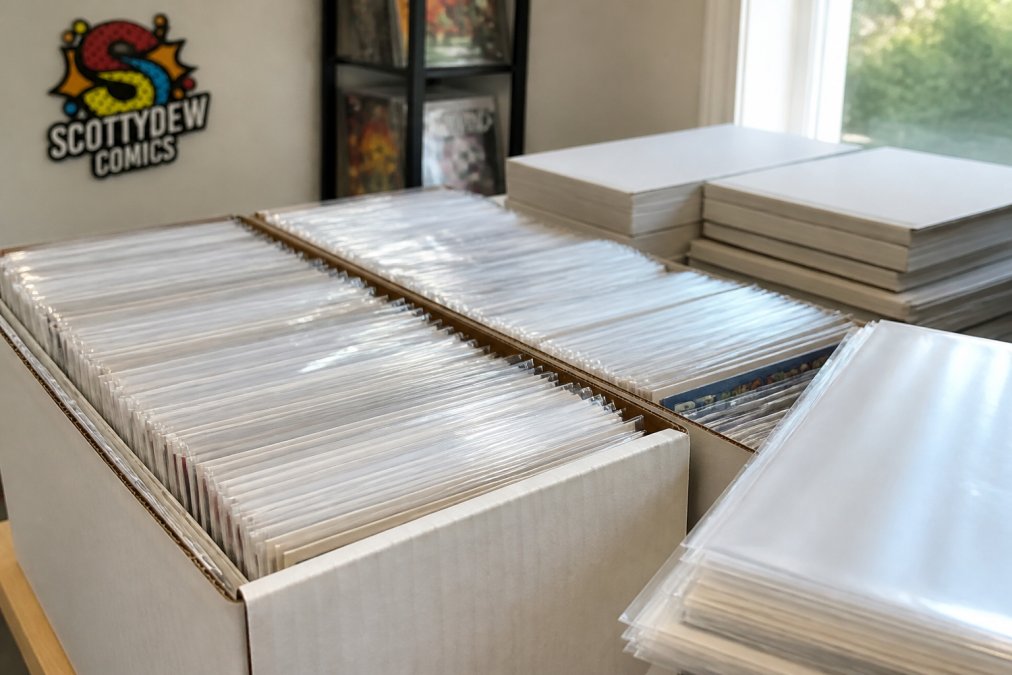
Here's what to buy:
Bags and Boards: Use acid-free bags and boards (not regular plastic, which degrades and damages paper). A long box holds roughly 200-250 comics.
Mylar Sleeves: For high-value raw comics, add a mylar sleeve over the bag-and-board combo. Mylar won't yellow or off-gas chemicals; reserve for long-term holds.
Storage Containers: Store bagged-and-boarded comics upright in long boxes (flat stacking warps spines). Keep boxes away from sunlight, basements, and temperature swings.
Organization: Organize by title and issue number with dividers. This saves time hunting and prevents double-buying.
A beginner setup: 50-100 raw comics in acid-free bags and boards in one or two long boxes, away from sunlight.
Raw Comics vs. Slabbed: Which Path for Beginner Collectors
The core choice: keep books raw and readable, or invest in grading and slabbing?
Raw comics are ungraded and readable, cheaper to acquire, and risk-free if you lose interest. Downside: you can't prove condition to future buyers, and handling degrades condition.
Slabbed comics are graded and sealed in protective cases, unreadable but condition-preserved indefinitely. The grade certificate eases resale.
Start with raw comics. Buy books you want to read or display, learn the market, then grade valuable key issues you plan to hold long-term.
A hybrid approach: keep common books raw, slab high-value key issues. This balances enjoyment, cost, and preservation.
One note on slabbed comics: they're harder to sell locally (most comic shops don't buy slabs; they buy raw books) but easier to sell online through auction platforms. If you're planning to hold and eventually sell, slabbing makes sense. If you're collecting to read and enjoy, raw is the way to go.
Finding Comics: Local Shops, Online Marketplaces, and Live Auctions
Where you buy matters because prices, selection, and experience vary widely.
Local Comic Shops: These are your direct market sources, independent shops and chains that stock new releases and back issues. The advantage: you can inspect books before buying, get expert recommendations, and build relationships with staff who'll alert you to incoming key issues. The disadvantage: selection varies by shop, and prices can be higher than online alternatives. Many shops run pull lists, where you reserve new releases each week.
Online Marketplaces: eBay, Amazon, and specialty sites like Heritage Auctions offer massive selection but require patience to find deals. You're bidding against other collectors, and prices can spike quickly. The upside: you can find rare books and compare prices across sellers. The downside: shipping costs add up, and you're buying blind without handling the book.
Live Auctions: Scottydew Comics hosts live auctions on the Whatnot platform, where you can bid in real-time, see books on camera, and join a community of collectors. The experience is interactive and often more fun than clicking through listings. Prices are competitive because bidding is transparent and live. You can also attend in-person auctions at comic conventions and specialty events.
Direct Market: This is the wholesale channel where comic shops buy new releases. As a collector, you can't buy directly, but understanding the direct market helps you spot valuable variant covers and limited releases early.
A practical strategy: use local shops for new releases and relationship-building. Use online marketplaces for hunting specific back issues. Use live auctions (like Scottydew's Whatnot shows) when you want the social experience and real-time bidding excitement. Each has a place in a well-rounded collecting approach.
Mistakes Beginner Comic Collectors Make (and How to Avoid Them)
Most beginner missteps come from rushing or not understanding the market. Here are the ones to watch for:
Buying without a plan. New collectors often grab anything that looks cool, end up with 500 random books, and realize they have no coherent collection. Fix: decide what you're collecting (a character, a publisher, a genre, an era) before you start buying aggressively.
Overpaying for common books. You'll see a 1990s Marvel book priced at $20 and assume it's valuable because it's old.
| Strategy | Best For | Time Investment | Cost |
|---|---|---|---|
| Local shop pull lists | New releases, relationship-building | Low (weekly pickup) | Standard retail |
| Online marketplaces | Hunting specific back issues | Medium (browsing, bidding) | Variable (often discounted) |
| Live auctions (Whatnot) | Community experience, key issues | Medium (real-time bidding) | Competitive market prices |
| Grading key issues | Long-term holds, high-value books | High (shipping, waiting) | $30-$100+ per book |
| Raw storage | Reading copies, casual collecting | Low (simple supplies) | Under $50 total setup |
Frequently Asked Questions
What makes a comic book a 'key issue' that beginners should know about?
Key issues are comics that introduced major characters, had significant story events, or achieved cultural impact. First appearances of iconic heroes like Spider-Man or Batman are key issues. You can identify them using tools like Key Collector Comics, which flags important issues in your search. Starting with key issues gives your collection foundation value and collectibility, even as a beginner.
Is it better to collect raw or slabbed comic books as a new collector?
Raw comics (ungraded) are affordable for building a reading collection and learning what you enjoy. Slabbed comics (professionally graded by services like CGC) offer authenticity verification and preservation but cost more upfront. Beginners typically start with raw comics to explore genres and characters, then move to slabbed key issues as their budget and knowledge grow.
What's the best way to store comics to protect them from damage?
Use acid-free bags and boards to prevent deterioration, store comics upright in long boxes or short boxes, and keep them in a cool, dry place away from direct sunlight. Mylar sleeves provide extra protection for valuable books. Avoid stacking comics flat or storing them in damp basements. Proper storage preserves condition and maintains resale value over time.
How do I know what price to pay for a comic book in 2026?
Check Comics Price Guide or GoCollect for current market data based on condition. Remember that prices vary by condition grade, so assess the book's state carefully. Start with free tools to understand pricing trends, then use paid services if you become a serious collector tracking a large inventory.