 Listicle
10 Comic Book Collecting Tools Every Beginner Needs
Last Updated: November 16, 2026
Quick Summary
The most important comic book collecting tools for beginners are acid-free bags and sleeves, backing boards, and storage boxes, because they protect paper from yellowing, bending and damage. Add a tracking app to log what you own and what you paid. Start with bags and boards before buying storage.
- Acid-free bags and sleeves prevent yellowing and brittleness caused by acids and oils.
- Backing boards stop bending, creasing and corner damage during storage and transport.
- Fill storage boxes to about three-quarters full to avoid spine stress and warping.
- Start with under $50 in supplies for your first 25 to 50 books.
- Buy bags and boards before a large storage box, since bags protect individual books.
Table of Contents
- Why the Right Tools Matter Before You Buy Your First Long Box
- How We Ranked These 10 Comic Book Collecting Tools
- The 10 Comic Book Collecting Tools, Ranked for Beginners
- 1. Acid-Free Comic Bags and Sleeves
- 2. Backing Boards
- 3. Comic Storage Boxes
- 4. Collection Tracking App (Key Collector Comics)
- 5. Price Guide Resource (CovrPrice)
- 6. Price Guide and Community (ComicsPriceGuide.com)
- 7. Cotton Gloves and Handling Supplies
- 8. Magnifier or Loupe for Inspecting Condition
- 9. Divider Drawer Systems
- 10. Wall or Shelf Display Stand (Wham! Stand)
- Matching Your Tools to Your Budget and Collection Size
- Putting the Tools Together in a Simple Collecting Workflow
- Your Next Step: Pick Three Tools and Start Your Collection Log
- Frequently Asked Questions
Why the Right Tools Matter Before You Buy Your First Long Box
Starting a comic book collection is exciting, but the first few purchases can quietly shape how well your collection holds up for decades.
The good news is that the core supplies are easy to learn. For a look at the events and resources available to collectors online, see our Comic Book Community Events Online guide.
Many new collectors buy storage first and protection second. That order usually costs money later. Start with bags and boards, then add storage, tracking and handling supplies as your collection grows.
How We Ranked These 10 Comic Book Collecting Tools
We ranked these tools by how much they protect your comics, how often a beginner will need them, and how well they work together. Items that prevent physical damage ranked higher than convenience items, because a scratched or yellowed issue cannot be undone. Digital tools were ranked by how clearly they help a new collector catalog, value and manage a growing collection.
Cost also matters. Some tools are essential from day one, while others become useful once you own a few dozen books. Current prices for any product should be confirmed on the seller's own website.
The 10 Comic Book Collecting Tools, Ranked for Beginners
1. Acid-Free Comic Bags and Sleeves
Acid-free bags and sleeves are the first line of defense for every comic. Without them, paper picks up oils from your fingers and acids from its surroundings, which causes yellowing and brittleness over time. Choose sleeves labeled acid-free and archival-safe, and avoid soft plastic bags that can trap moisture.
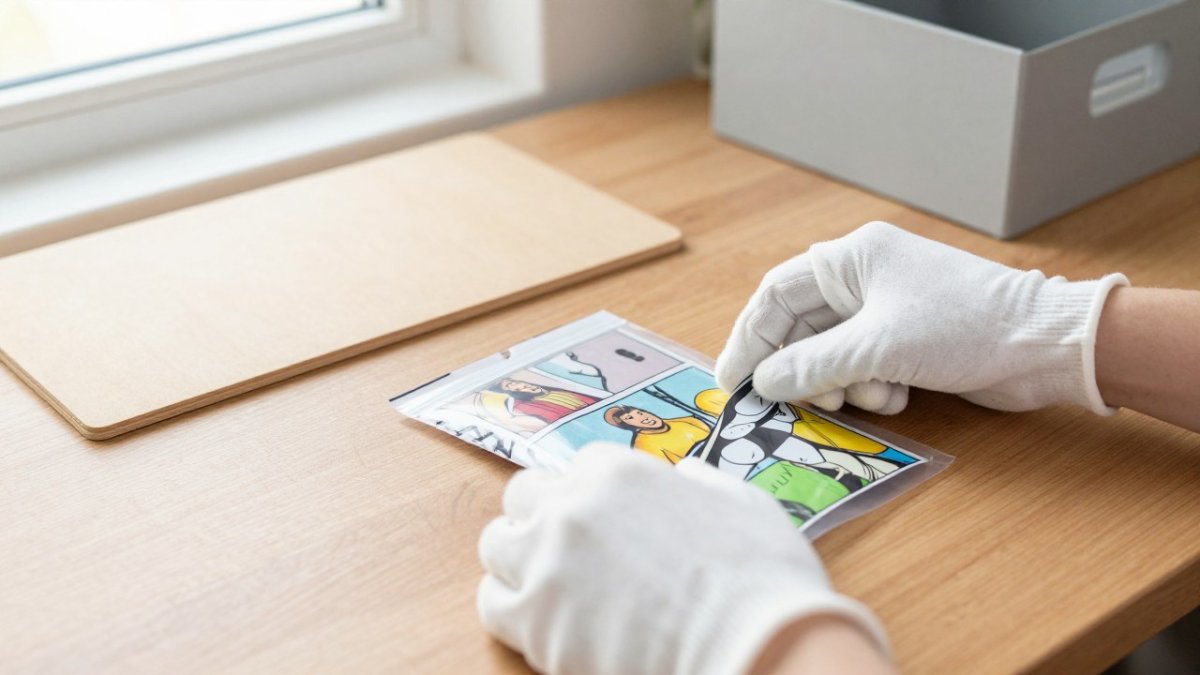
Best for: every collector, from the first issue onward. Skip if: you only ever read comics and never plan to keep them.
2. Backing Boards
Backing boards are rigid, acid-free cardboard inserts that sit behind a comic inside its bag. They stop bending, creasing and corner damage during storage and transport. Buy boards sized to match your bags, and always place a comic in a sleeve before adding a board.
3. Comic Storage Boxes
Storage boxes keep bagged and boarded comics upright, dust-free and protected from light. Look for acid-free, lignin-free boxes sized to fit standard comic bags. Storing comics flat or stacked too tall causes spine stress and warping, so keep boxes no more than about three-quarters full.
For more options, see our guide to alternatives to traditional comic book boxes for collectors. Our overview of how to store floppy comics explains how bags, boards and boxes work together.
4. Collection Tracking App (Key Collector Comics)
Key Collector Comics is an app for managing your collection. It lets you catalog issues, track estimated values and receive alerts for key issues and first appearances. For a beginner, this is useful for knowing exactly what you own and what you paid.
Pros: combines value tracking with key issue alerts, helps you find first appearances. Cons: the available information does not detail paid tiers or every platform's features, so check the app store listing before you rely on it.
5. Price Guide Resource (CovrPrice)
CovrPrice is a comic price guide and collection tool. Price guides give a rough reference point, not a guaranteed sale price, so compare results with recent sales before making a large purchase.
Pros: combines pricing guidance with collection tools, built for comic collectors. Cons: pricing details were not available in our research, so confirm current plans directly with the provider.
6. Price Guide and Community (ComicsPriceGuide.com)
ComicsPriceGuide.com offers market value lookups and a place to store your collection.
Pros: price lookup, collection storage and community features together. Cons: market value methodology was not explained in our sources, so treat values as a starting point.
7. Cotton Gloves and Handling Supplies
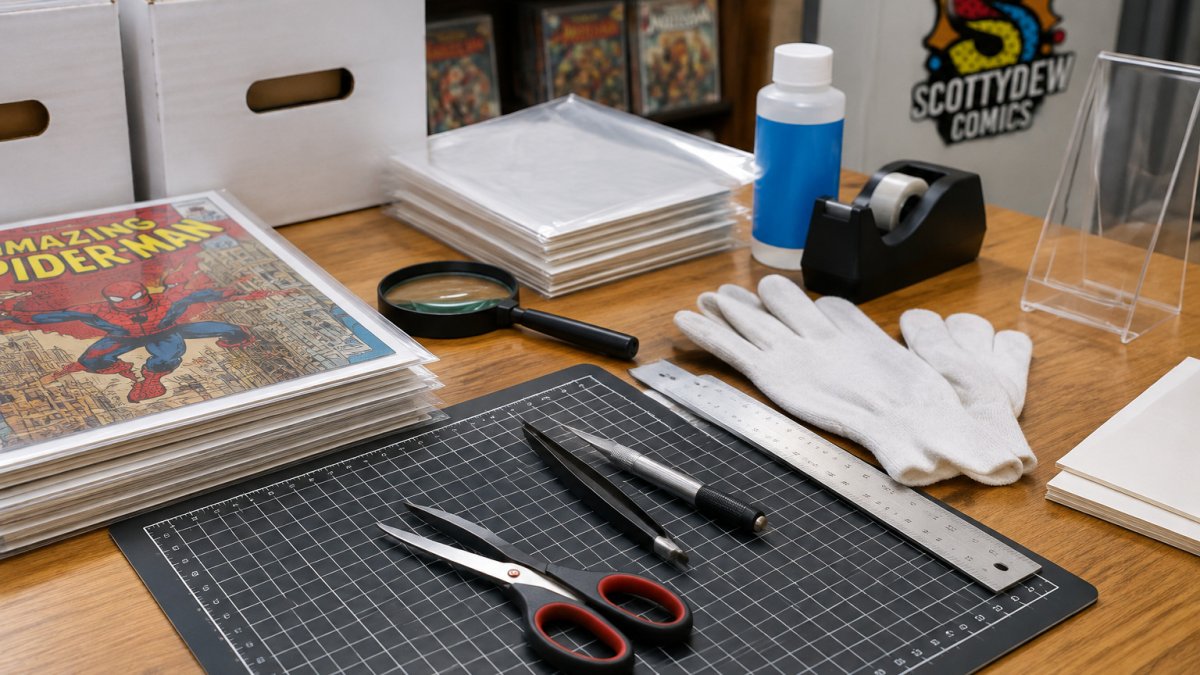
Cotton gloves are a common handling supply for reducing oils and moisture from your hands that can mark glossy covers and interior pages. They are most useful when inspecting high-grade or valuable issues. Handle comics by their edges, keep your work surface clean, and avoid eating or drinking near your collection.
Watch out: bare hands are the most common source of avoidable fingerprint damage, even on well-protected comics.
8. Magnifier or Loupe for Inspecting Condition
A magnifier helps you spot spine ticks, stress lines, color breaks and small tears that are hard to see at a glance. Learning condition details early will help you judge what you are paying for when you buy. A basic 10x loupe is enough for most beginners.
9. Divider Drawer Systems
Divider drawers organize comics by title, issue number or value, so you can find what you need without pulling boxes apart. They also reduce handling, which lowers the chance of damage. Choose drawers made from acid-free materials, and leave a little room in each drawer so books can slide out without bending.
10. Wall or Shelf Display Stand (Wham! Stand)
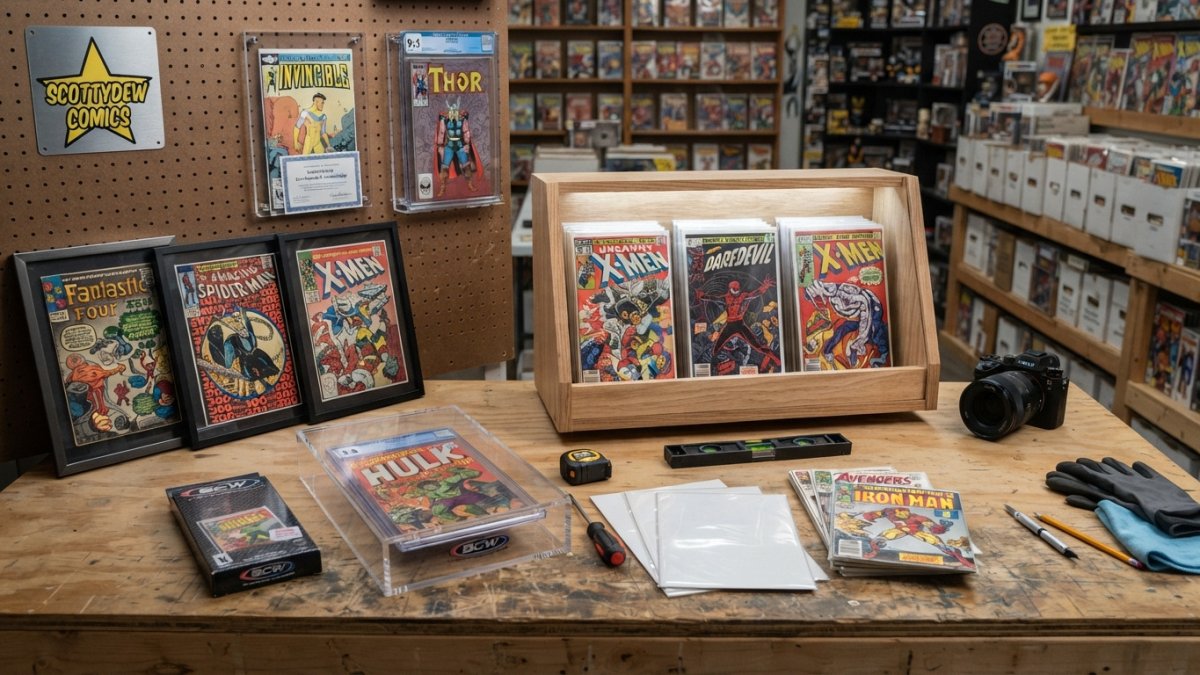
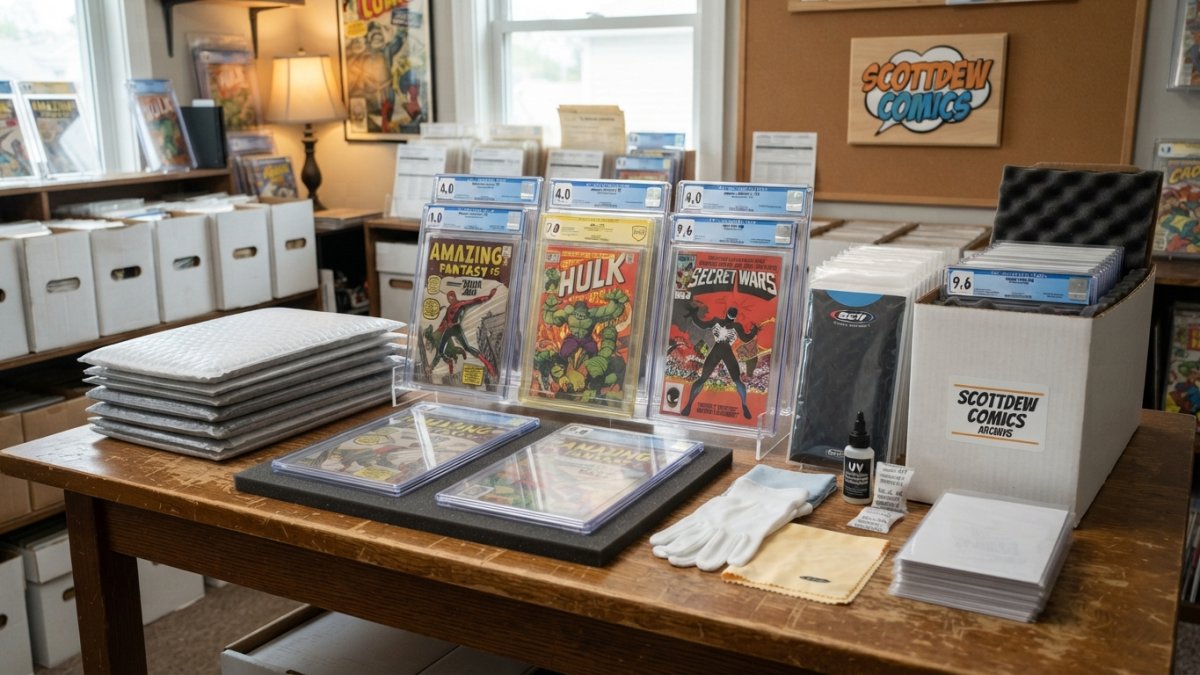
Once a comic or slab is worth showing off, a display stand keeps it visible and protected. The Wham! Stand from Scottydew Comics is a display solution for showcasing comics, slabs and records. Keep displayed items out of direct sunlight, since UV light fades covers over time.
To see how to set up graded items safely, read our guides on displaying graded comic slabs and wall display solutions for comic slabs.
Here is a quick reference to help you match each tool to what it is best for.
| Tool | Best for | Key note |
|---|---|---|
| Acid-free bags and sleeves | Every collector | Prevents yellowing and brittleness |
| Backing boards | Storage and transport | Stops bending and corner damage |
| Comic storage boxes | Keeping bagged comics upright | Fill to about three-quarters full |
| Key Collector Comics app | Cataloging and key alerts | Check app store listing for plan details |
| Cotton gloves | Handling valuable issues | Bare hands leave marks on covers |
| 10x loupe | Spotting condition flaws | Catches spine ticks and stress lines |
| Divider drawers | Finding issues fast | Less handling means less damage |
| Wham! Stand | Displaying slabs and comics | Keep out of direct sunlight |
Matching Your Tools to Your Budget and Collection Size
A beginner does not need all ten tools on day one. The right stack depends on two variables: how many books you own and how much you are willing to spend to protect them. The tiers below are a practical starting framework, not a rule, adjust them to your own pace.
Tier 1: The first 25 to 50 books (under about $50 in supplies)
At this stage, protection matters more than organization. A single pack of acid-free bags and matching backing boards, plus one acid-free storage box, covers most small collections. Add a free tracking app so you can log purchase price and condition from the first issue. Skip gloves, a loupe, divider drawers and display stands for now, they add cost without solving a problem you have yet.
A common pattern is for new collectors to buy a large box first and bags second. Reverse that order. Bags and boards protect individual books; a box only protects the group. If your budget is tight, buy fewer bags and board every book before buying the box.
Tier 2: 50 to 250 books (roughly $50 to $200 in supplies)
Once you have more than a couple of long boxes' worth of books, organization often becomes the bottleneck. Add divider drawers or labeled dividers so you stop pulling entire stacks to find one issue. This is also the point to upgrade from a free tracking app to a price guide with collection storage if you are buying keys or first appearances.
Watch out: do not buy premium storage for low-value books. Spending more on a box than the comics inside it are worth is the most common beginner budget mistake.
Tier 3: 250+ books or any graded slabs (variable, often $200+)
Larger collections justify cotton gloves for handling high-grade issues, a dedicated display solution for slabs, and a paid price guide tier if you are actively buying and selling. At this scale, the cost of a single damaged key issue usually exceeds the cost of every supply on this list combined, so the math shifts toward over-protecting rather than under-protecting.
When to upgrade
Upgrade a tier when you hit a specific trigger, not on a calendar: when your box is three-quarters full, when you cannot find an issue in under a minute, when you start buying books worth more than the supplies protecting them, or when you catch yourself guessing at values instead of looking them up. Each trigger maps to one tool on this list, which keeps spending tied to a real problem.
Current prices vary by seller, quantity and bulk options, so confirm pricing on each supplier's website before you buy. Buying bags and boards in bulk typically lowers the per-unit cost, but only buy bulk once you know you will keep collecting.
Putting the Tools Together in a Simple Collecting Workflow
A simple workflow keeps your physical supplies and digital tools in sync. When you bring a new issue home, put on cotton gloves and inspect it with your loupe. Place it in an acid-free sleeve with a backing board, then file it in a labeled storage box or divider drawer. Finally, add the issue to your tracking app with its purchase price and condition notes.
Doing this every time keeps your records accurate and your comics protected. It also makes it easier to see what your collection is worth and where your gaps are.
Your Next Step: Pick Three Tools and Start Your Collection Log
Choose three tools from this list to start with, most likely bags, boards and a tracking app, and log your current books today. Each new issue you add will be easier to protect and value because you started with a clear system. Join our community at Scottydew Comics to discover rare treasures, compare notes with other collectors and find the supplies that fit your collection.
Frequently Asked Questions
What are some tips for starting to collect comics as a beginner?
Start small and pick a clear focus, such as one character, one publisher, or a set of key issues you like. Buy protection before you buy volume: acid-free bags and boards keep books in good condition from day one. Keep a simple record of what you own and what you paid, even in a spreadsheet, so you can track spending against your budget. Attend local shows or shop reputable sellers, and check condition carefully before paying, since condition drives value more than almost anything else.
How should beginners store and protect comic books?
Place each comic in an acid-free bag, then add a rigid backing board to prevent bending. Store the bagged books upright in a comic storage box or drawer system, keeping them out of direct sunlight, humidity, and temperature swings. Avoid rubber bands, tape, and standard plastic bags, which can damage paper over time. Handle books by the edges with clean, dry hands or cotton gloves.
What is the best app for tracking a comic book collection?
Key Collector Comics is an option for beginners who want to catalog comics, track values, get key issue alerts, and discover first appearances. ComicsPriceGuide.com combines market value lookups with collection storage and a community. CovrPrice is another collector-focused tool; check its current pricing before committing, since the supplied information does not confirm it. Whichever you choose, back up your collection data regularly and confirm you can export it.
How can beginners find out what their comic books are worth?
Use a comic price guide to look up market values, but remember that a guide shows reference prices, not guaranteed sale prices. Condition, grading, and recent sales all affect what a book is worth, so compare your copy against listings for similar condition. Check two or more sources before deciding, and treat any single number with caution.