
 how-to
Display Comics in Small Apartments: 7 Space-Smart Ideas
Table of Contents
- Assess Your Space and Collection Size
- Best Comic Book Storage Boxes for Small Spaces
- Comic Book Wall Mount Ideas for Apartments
- How to Preserve Comic Books in Limited Square Footage
- Graded Comics and Slab Display Techniques
- Budget-Friendly DIY Display Hacks
- Rotating Display Systems and Curation Strategies
- Frequently Asked Questions
Last Updated: October 4, 2026
Assess Your Space and Collection Size
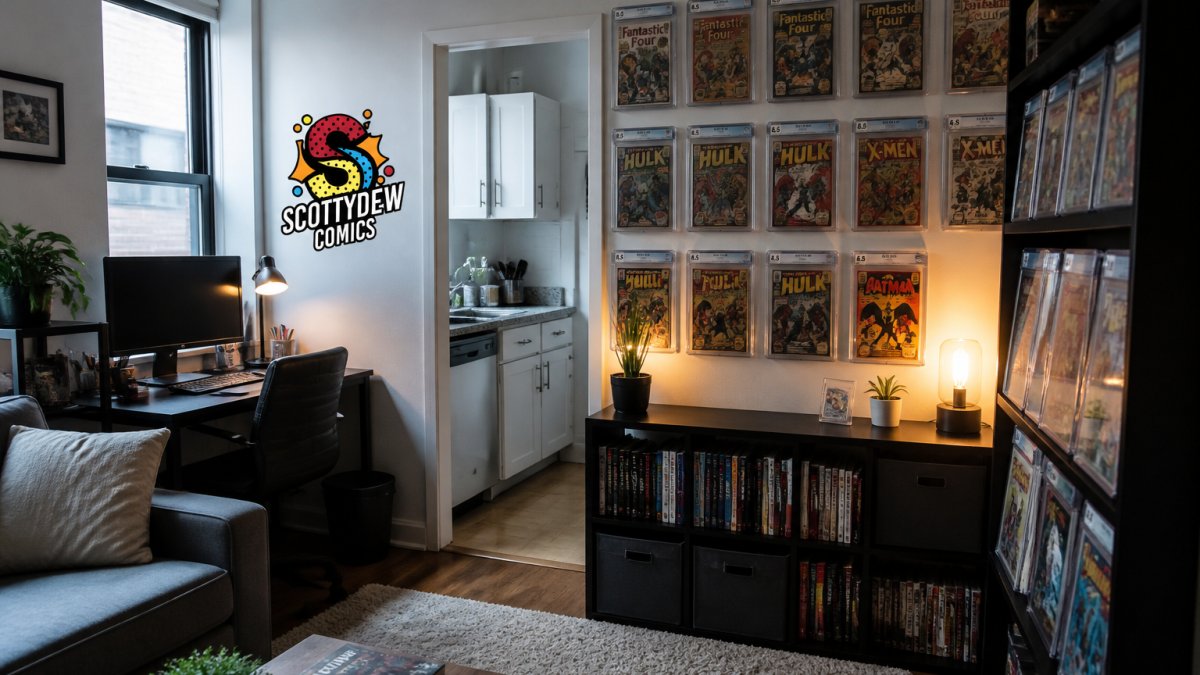
Before you display comics small apartments, measure your wall space, shelf availability, and natural light. Know your collection size, 50 books or 500?, as this shapes everything. Focus on showcasing your best pieces for visual impact, not storage volume.
Identify your display wall in areas with natural light but no direct sunlight (UV damage is real). Corner spaces, above furniture, or accent walls work well. Sort your collection by priority, graded slabs, first editions, variant covers, and display those. Store the rest carefully elsewhere for a curated feel.
Best Comic Book Storage Boxes for Small Spaces
Acid-free storage boxes are non-negotiable for preservation. Look for boxes made from polypropylene or acid-free cardboard to prevent yellowing and paper breakdown. Regular boxes accelerate damage.
For small apartments, stack boxes vertically on shelves or in closets. Label each box clearly so you know contents without opening them.
Consider these storage approaches:
- Long boxes (hold ~300 comics): Standard for serious collectors, but take up floor or closet space
- Short boxes (hold ~150 comics): More flexible for apartment living, stack easily on shelves
- Short boxes with dividers: Keep comics organized within the box, reduce damage from shifting
- Magazine holders: Budget-friendly for small collections under 100 books
- Archival filing boxes: Premium option, maximum protection, higher cost
Comic Book Wall Mount Ideas for Apartments
When you display comics small apartments, choosing the right mounting system is essential. You need something that looks intentional, protects your books, and doesn't damage walls if you're renting.
Floating shelves are ideal for apartments. Mount them at eye level (around 5 feet) for best visual impact. Group in odd numbers, three or five shelves create better visual rhythm than four or six.
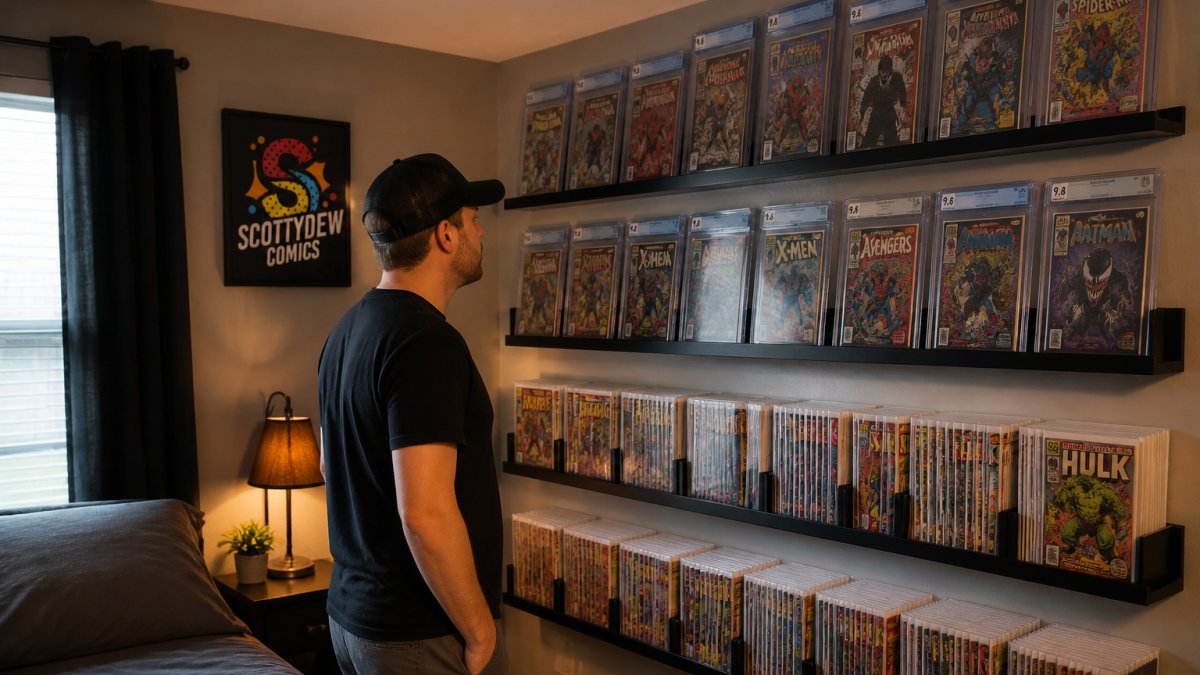
Floating Shelves for Vertical Storage
Install floating shelves floor-to-ceiling if possible. Space them 12-15 inches apart vertically for standard comic heights plus visual breathing room.
Mix graded slabs with bagged-and-boarded comics, varying heights and orientations for visual interest. Floating shelves typically hold 25-50 pounds per shelf, know your limit before loading.
Damage-Free Display Systems for Renters
Renters face unique constraints. You can't drill into walls. You can't use permanent adhesives. But you still want to display comics beautifully.
Adhesive strips (up to 16 pounds per pair) work for lightweight displays without wall damage. Tension rods between walls create display rails without drilling. Leaning shelves avoid drilling but require careful stacking to prevent tipping.
The Wham! Stand from Scottydew Comics is a rental-friendly option. It stands independently, displays slabs and comics beautifully, and moves with you. No wall damage. No permanent commitment.
How to Preserve Comic Books in Limited Square Footage
Small apartments create unique preservation challenges. You can't control building-wide temperature or humidity, and windows are often the only light source. This section covers preservation strategies specific to apartment constraints.
UV Damage in Small Spaces
Ultraviolet light is the primary threat to comics in apartments. Direct sunlight fades covers, yellows pages, and weakens paper fibers permanently. In small apartments, windows are often unavoidable.
UV-blocking window film blocks 99% of UV rays and costs $10-20 per square foot installed or $5-10 DIY. For a standard window, expect $50-150 installed or $25-75 DIY. The trade-off: slightly reduced visible light. Test a small section before committing to full windows.
Blackout curtains block 95-99% of UV light ($30-80 per window) but block all light. Sheer UV-blocking curtains ($60-150 per window) preserve visibility and are ideal for display shelves near windows.
Placement Strategy for UV Avoidance
Position displays strategically: avoid south- or west-facing windows (intense afternoon sun); use north- or east-facing walls (indirect or morning light); prefer interior walls when possible. If displaying near windows, use a shelf with built-in shade. Rotate displayed comics every 3-6 months to distribute light exposure.
Temperature and Humidity Control in Apartments
Apartment HVAC systems are often unreliable. You can't control building-wide temperature, but you can protect individual books.
Ideal conditions are 65-70°F and 30-40% relative humidity. Most apartments fluctuate outside this range, especially near windows, exterior walls, or in kitchens and bathrooms. Don't obsess over perfect conditions, most comics survive normal apartment fluctuations. Focus on extremes: avoid freezing (below 50°F), overheating (above 75°F), and high humidity (above 50%).
Use a cheap hygrometer ($10-20) to monitor humidity in your display area. If humidity spikes above 50%, move comics away from that area or use a small dehumidifier ($40-80). Basements and bathrooms are high-humidity zones; avoid storing comics there.
Keep comics away from heat sources: radiators, heating vents, direct sunlight, and appliances. Heat accelerates paper degradation. In winter, don't store comics against exterior walls where cold drafts penetrate.
Bagging, Boarding, and Archival Storage
For comics you're not displaying, archival storage is non-negotiable. Use acid-free polypropylene bags with acid-free backing boards. These cost $0.50-1.50 per comic but prevent yellowing and paper breakdown.
Bag and board all comics before storing them, even if they're not graded. This single step extends the life of your collection by decades. Unbagged comics deteriorate 3-5 times faster than bagged ones, especially in apartments with variable humidity.
Store bagged comics in acid-free boxes (not regular cardboard). Label boxes clearly with contents and storage date. Stack boxes vertically on shelves or in closets, not horizontally on floors where moisture accumulates.
Moisture Management in Apartments
Moisture is the silent killer of comic collections. Apartments with poor ventilation, bathrooms near bedrooms, or basement storage are high-risk. Signs of moisture damage: warped pages, mold spots, musty smell.
Prevent moisture by:
- Using silica gel packets in storage boxes (replace every 6 months)
- Storing comics in interior closets, not near exterior walls
- Avoiding basements entirely (moisture rises from concrete)
- Using a small dehumidifier in high-humidity rooms ($40-80)
- Ensuring storage boxes have air circulation (don't seal them airtight, which traps moisture)
If you live in a humid climate (coastal areas, southern states), consider a climate-controlled storage unit for your non-display collection. Costs are $50-150 per month, which is expensive but worthwhile if you have high-value books. Most apartment collectors skip this and rely on bagging, boarding, and careful storage.
Pest and Dust Control
Small apartments are vulnerable to pests (silverfish, cockroaches) and dust. Both damage comics.
Keep comics in sealed bags and boxes. Don't leave bagged comics exposed on shelves. Use display cases with glass doors for valuable slabs. This prevents dust accumulation and pest access.
Store boxes off the floor (on shelves or pallets) to prevent moisture and pest access. Don't store boxes directly against walls where pests hide.
Use cedar blocks or lavender sachets in storage boxes to deter insects. These are non-toxic and don't damage comics. Replace every 6 months.
Rotation and Monitoring
Rotate your display every 3-6 months to distribute light exposure. Move displayed comics to storage and swap in new ones. This prevents any single book from receiving years of constant light.
Inspect stored comics every 6-12 months. Look for signs of moisture, pests, or deterioration. Catch problems early before they spread to your entire collection.
Graded Comics and Slab Display Techniques
Graded slabs demand different display strategies than bagged comics. Slabs are rigid, heavy, and valuable. They deserve prominent placement.
Display slabs face-forward on dedicated shelves. This shows off the grade and artwork. Avoid stacking slabs horizontally, they're designed to stand upright. Horizontal stacking puts pressure on the slab corners.
Create a focal point shelf for your best slabs. Use the middle shelf at eye level. Light this shelf if possible with small LED strips. Graded comics deserve to be seen.
Slab spacing matters. Leave at least half an inch between slabs to prevent rubbing. This protects the plastic and the grade. Crowded shelves look chaotic and risk damage.
Consider a dedicated display case for your most valuable slabs. Glass cases protect from dust and accidental contact. They also frame your collection beautifully. Cases take minimal floor space, perfect for apartments.
Budget-Friendly DIY Display Hacks
Not every display needs to be expensive. DIY solutions work well for small apartments when done thoughtfully.
Reclaimed wood shelves cost less than commercial floating shelves. Find old barn wood or reclaimed lumber. Mount them with basic hardware. Sand and stain them to match your decor.
Pegboard walls create flexible display systems. Mount pegboard to studs, then hang shelves, hooks, and baskets. Rearrange anytime without new holes. Paint the pegboard to match your room.
Wire shelving units are cheap and adjustable. They're less attractive than floating shelves but functional. Use them in closets or corners.
Lean-to shelves against walls work without drilling. Build simple wooden frames and lean them at an angle. Secure them to prevent tipping. They hold surprisingly much weight and move easily.
Command hooks designed for heavy items hold small shelves. Hang individual slabs or small groupings. They're damage-free and removable. Perfect for renters.
Rotating Display Systems and Curation Strategies
Rotating your display keeps your apartment feeling fresh. It also protects comics from constant light exposure.
Create a display schedule. Decide which comics show for which months. Rotate high-value slabs less frequently. Rotate standard comics more often.
Curate by theme or character. Display all Spider-Man issues one month, X-Men the next.
Use the Scottydew Comics community for inspiration. Join live auctions and themed shows. See how other collectors display their comics. Steal ideas.
Seasonal displays work well in apartments. Winter: darker, moody comics. Spring: bright covers and new releases. Summer: action-packed adventures. Fall: classic collections.
Store rotated comics carefully. Use acid-free boxes in cool, dry spaces. Label boxes by rotation date.
Displaying comics in small apartments is about strategy, not square footage. Choose your best pieces. Mount them thoughtfully.
At Scottydew Comics, we understand that passionate collectors come in all apartment sizes.
Frequently Asked Questions
What's the best way to display comics in a small apartment without damaging walls?
Use floating shelves, damage-free adhesive strips, or adjustable frame systems that avoid permanent damage. For renters, command strips and tension rods are ideal since they leave no holes. Ensure your mounting hardware can support the weight of your collection. Position shelves to maximize vertical storage and minimize floor space. Graded comics in slabs work well on narrow floating shelves since they're compact and protect the book simultaneously.
How do I preserve comic books in limited space?
Store comics upright or flat in archival-quality, acid-free boxes with polypropylene bags and backing boards. Keep them away from direct sunlight and heat sources to prevent fading and deterioration. Use acid-free storage boxes specifically designed for comic book preservation. Maintain consistent temperature and humidity levels. Rotate displayed comics periodically to minimize UV exposure to any single book. For graded comics, display cases with UV-protective glass offer both protection and visual impact.
Should I store my comics flat or upright in a small apartment?
Upright storage is space-efficient for small apartments and works well with wall-mounted shelves and display cases. Flat storage is better for long-term preservation if you have drawer or box space. For graded slabs, upright display is ideal since slabs are compact and designed to stand. Mix both methods based on your space: use upright shelving for your most-prized collector items and flat storage in boxes for your backup collection. This approach balances preservation with visual curation.
How can I display graded comic slabs on a wall in a small space?
Graded slabs are perfect for small apartments because they're compact and self-protective. Mount them on floating shelves, in adjustable frame systems, or on specialized display stands like the Wham! Stand. Space them strategically to create visual impact without overwhelming your walls. Use wall mounts designed for slab weight (typically 2-5 pounds per slab). Arrange by grade, series, or theme to create a curated collector display. This approach turns your collection into interior design while protecting your investment-grade comics.