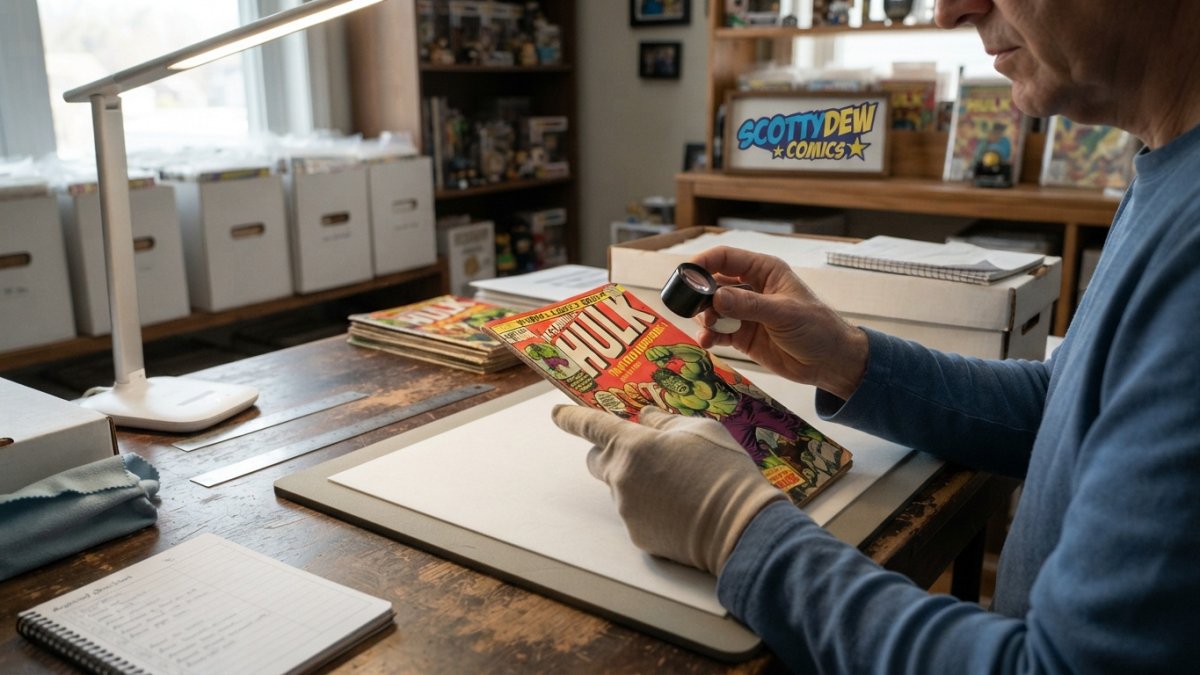
 How-to
7 Things to Check Before Buying a Raw Key Issue
Last Updated: November 7, 2026
Quick Summary
Raw key issues can be worth buying when you can judge condition accurately, because skipping professional grading lets you pay less than the graded price. The upside depends on your grade estimate, so run the math at a conservative grade before you commit.
- Raw copies usually cost less than graded copies of the same issue, but you carry the grading risk.
- Confirm the book and printing first by checking the indicia inside the front cover.
- Ask the seller directly whether the book has been pressed, cleaned, trimmed, or restored.
- Add asking price, shipping, tax, and expected grading or selling fees before deciding.
- Grade a copy only when the net graded result beats its raw resale value.
Table of Contents
- Raw Versus Graded Comics: What You Actually Give Up
- The Real Upside of Buying Raw Key Issues
- The Risks Most Buyers Underestimate
- How to Grade Comic Books Yourself Before You Buy
- Comic Book Grading Costs and When Professional Grading Pays Off
- Low-Grade Raw Key Comics: When They Are Profitable
- Your Next Step: Checking Scottydew's Current Raw Key Listings
- Frequently Asked Questions
Is buying raw key issues worth it? For many collectors, the answer depends less on the comic's fame and more on what its condition really is. Raw key issues, the unslabbed first appearances and major story milestones that drive a title's value, can offer real upside, but only for buyers who know what to check. The buyers who come out ahead are usually the ones who slow down and inspect before they pay. For a detailed walkthrough of assessing condition yourself, see How to Grade Comic Books Yourself.
Raw key issues are comics that have not been professionally graded and sealed in a protective slab. Buying one means you judge the grade yourself, which saves money up front but puts the risk on you. Below, we walk through the trade-offs, the upside, the risks most buyers underestimate, and the seven checks to make before you buy.
Raw Versus Graded Comics: What You Actually Give Up
A graded comic carries a third-party grade and a sealed slab, which gives buyers confidence in condition and authenticity. A raw copy gives you none of that certainty. You give up the outside verification, and in return you can often pay less than the graded price for the same issue.
The trade-off is simple to state and harder to manage. Learn how to verify a graded comic's authenticity before you pay. Professional grading protects the buyer from overpaying for a copy that looks better than it is. Without it, the discount on a raw copy only makes sense if your own grade estimate is accurate. Many buyers overestimate their eye, especially on minor defects like spine stress or color touch.
The Real Upside of Buying Raw Key Issues
The upside of raw copies comes from the price gap. When a raw copy of a key issue sells below the graded price for a similar grade, the buyer captures the difference, minus any cost of later grading. That margin is the main reason serious collectors shop raw.
Raw purchases also let you build a collection at a lower entry cost. You can acquire more titles for the same budget, or pick up a key issue in a grade you could not otherwise afford. For collectors focused on reading copies, a raw copy is often the practical choice from the start.
The Risks Most Buyers Underestimate
A major risk is condition error. A copy that looks clean in listing photos can hide creases, color breaks, or staple problems that drop its grade. A small miscall in grade can erase your expected margin.
Restoration and authenticity are the other concerns. Some copies have been pressed, cleaned, or repaired to hide defects, and not every seller discloses this. Counterfeit covers and altered printings also circulate. A raw purchase leaves you responsible for catching these problems, which is why an inspection routine matters.
How to Grade Comic Books Yourself Before You Buy
Many raw-buying mistakes happen before the comic ships, not after. A practical inspection routine turns a vague hunch into a repeatable process. Use this checklist on every listing and every in-person look.
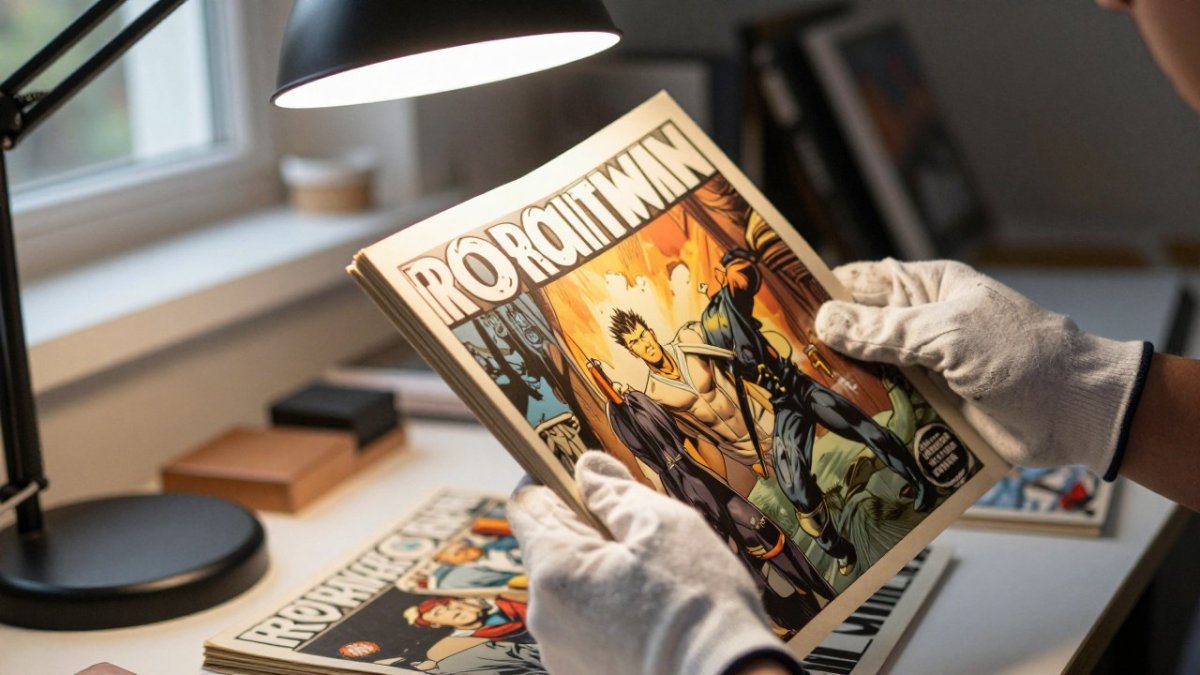
1. Confirm the book and the printing. Match the cover to the correct issue and printing before you judge condition. Check the indicia inside the front cover for the title, issue number, publisher, and publication date. Reprints, second printings, and variant covers can look identical from the outside but carry very different values.
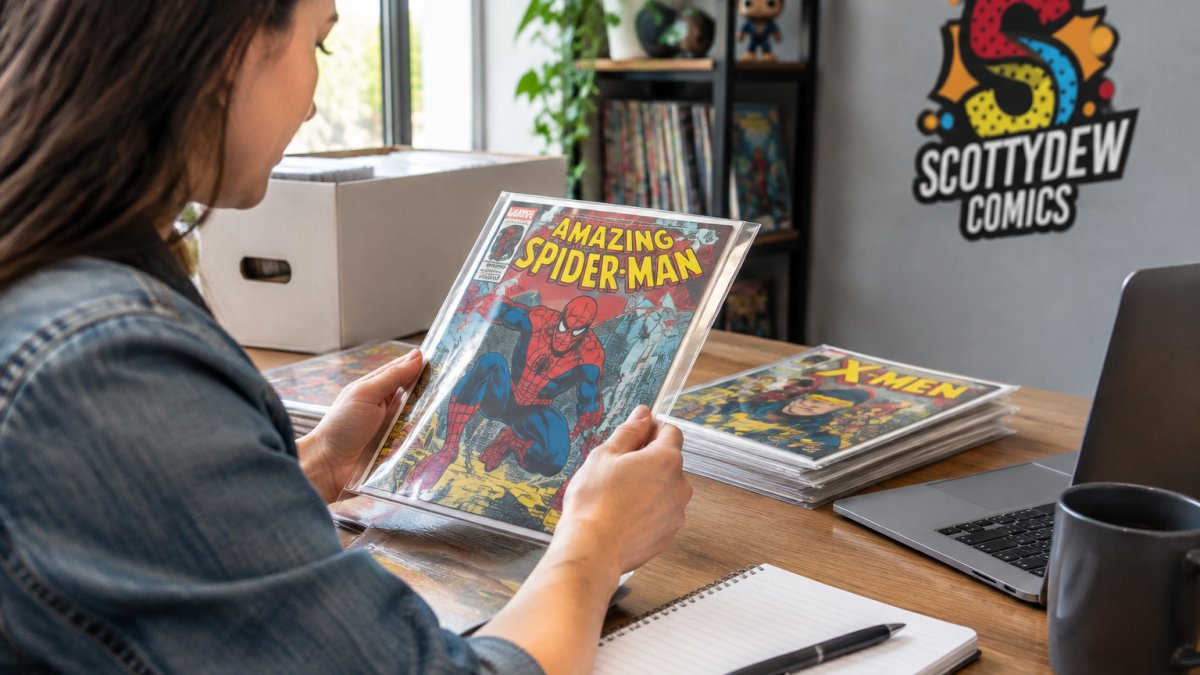
2. Read the photos like a grader. Ask for or study close-ups of the spine, all four corners, the staples, and the centerfold. Look for spine stress, color breaks, creases that break color, corner blunting, and staple rust or pull-through. Tilted or angled shots hide surface indentations, so request a straight-on photo under raking light.
3. Check the pages and page quality. Ask for interior photos of the first page, centerfold, and last page. Look for tears, tape, writing, water stains, foxing, and brittle edges. Page quality (often described as white, off-white, cream, or tan) affects both grade and long-term stability.
4. Screen for restoration and concealed defects. Common restoration includes color touch, trimming, piece replacement, tear seals, and pressing. Look for a trimmed edge that sits too close to the art, color that does not match under light, or a spine that looks suspiciously flat.
5. Verify authenticity and seller evidence. Compare the cover to known copies of the same issue, check the indicia, and ask for a photo of the copyright page. Review the seller's history, return window, and payment method before you bid.
6. Estimate the grade, then stress-test it. Give the copy a conservative grade, then assume it is one or two steps lower. Compare it to graded examples of the same issue sold recently. If your margin only works at your most optimistic grade, the purchase does not work.
7. Price the downside before you commit. Add the asking price, shipping, tax, and any grading or selling fees you expect later. Compare that total to recent sold prices for the grade you realistically expect. If the total leaves no room for error, walk away.
A collector's eye usually sharpens only after comparing many raw copies to graded examples of the same issue. Build the habit slowly, and keep a written record of what you paid, what grade you estimated, and what grade the book actually received. That record is the fastest way to calibrate your own grading.
Comic Book Grading Costs and When Professional Grading Pays Off
Grading is a math problem, not a default. The question is whether the slabbed value of the copy, minus grading fees, shipping, insurance, and selling fees, beats what you can get for it raw. If it does not, grading destroys value.
Build the expected-value comparison. For a specific raw copy, write down four numbers:
- The asking price plus shipping and tax.
- The realistic graded value if the book comes back at your expected grade.
- The all-in grading cost: the grading tier fee, shipping to and from the grader, insurance, and any pressing or screening fees.
- The selling cost if you plan to resell: marketplace commission and payment processing fees.
Then compare the net proceeds from grading against the raw resale value. Grading adds value only when the net graded result beats the raw resale value, and that difference is the number that matters.
Account for grade risk. Grading is not a guarantee. A copy you estimate at 9.0 can come back at 8.0, and each step down the scale can change the price substantially. A common pattern is to run the math at your expected grade and at one grade lower. If the deal only works at the optimistic grade, it is not a deal.
Know when grading tends to pay. Grading usually makes sense for high-value keys where the slabbed premium clearly exceeds the all-in cost, and for copies you plan to sell to buyers who will not bid confidently on raw books. It rarely makes sense for low-value books, where fees eat the gain, or for copies you intend to keep and read.
Check current fees before you commit. Grading companies publish their fee schedules, which can change, so confirm current pricing directly with the company. Confirm the current schedule and the declared-value rules before you ship, because undervaluing a book to save on fees can create problems if it is damaged in transit.
Decide by your goal. If you are a reader, grading usually adds cost without adding reading value. If you are a collector building a long-term hold, grade only the copies where the slab protects and documents the grade. If you are an investor or reseller, run the expected-value comparison on every copy and grade only where the spread is wide enough to absorb grade risk and fees. Watch out: grading a book you just bought at a thin margin is the most common way raw buyers turn a good purchase into a loss.
The article lays out how to tell whether grading a raw copy is worth the cost, step by step.
| Step | What to do | Note |
|---|---|---|
| Add up asking price | Include shipping, tax and the price you pay | Start of the comparison |
| Estimate graded value | Use the value at your expected grade | Realistic, not optimistic |
| Total grading cost | Tier fee, shipping, insurance, pressing fees | All-in cost of grading |
| Selling cost | Marketplace commission and processing fees | Applies if you plan to resell |
| Stress-test grade | Run the math one grade lower | Grade risk can shift price |
| Compare to raw value | Net graded result vs raw resale value | Grade only if graded wins |
Low-Grade Raw Key Comics: When They Are Profitable
Low-grade raw key comics can be profitable when the title has steady demand and the copy is priced well below its potential graded value. These books are often overlooked, which can create buying opportunities for patient collectors.
The math only works if you buy at the right price. Compare recent sold prices for the same issue and grade before you commit, and avoid paying a premium for a copy that needs grading to justify its cost. A modest, well-chosen low-grade key can serve as an accessible entry point into key issue collecting.
Your Next Step: Checking Scottydew's Current Raw Key Listings
If you are ready to put these checks into practice, browse what is available now. Scottydew Comics runs live auctions on Whatnot and offers curated collectibles and bundles. You can also browse our graded comic books for sale. Check the descriptions and photos closely, apply the inspection steps above, and ask questions before bidding so you do not get pulled into an impulse buy. Our collector's guide to buying vintage comics covers finding key issues, verifying authenticity, and avoiding overpayment.
Once you have a few purchases under your belt, you will know whether raw key issues suit your collecting style. Join our community to see new listings, themed shows, and exclusive drops as they go live.
Frequently Asked Questions
Is buying raw key issues worth it?
It can be, but only when the numbers work. A raw key issue is worth considering when its condition matches a grade you can confidently assess, the price sits at or below recent sold listings for that grade, and you have a realistic resale plan. Raw copies carry more risk than slabbed ones because you are relying on your own judgment of condition, restoration and authenticity. Estimate what you would net after selling fees and possible grading costs before you buy, and only pay a premium if the expected return justifies the added uncertainty.
Are raw key comics a better investment than graded comics?
Not automatically. Raw key comics often sell for less than the same issue in a certified slab, which can create a buying opportunity, but the discount reflects the buyer's risk. Graded comics are easier to resell quickly and trade on a known grade. Raw copies can outperform if you buy a well-preserved example below market value, and can underperform if condition is overstated or defects are missed. Compare recent sold prices for both formats before deciding.
What should you check before buying a raw key issue?
Inspect the spine for stress lines and color breaks, the cover for color flaking or staining, and the centerfold for tears or detached staples. Look for restoration under UV light or magnification, check for trimming along the edges, and confirm the book is the correct printing or variant. Ask the seller for close-up photos of all sides, a return policy, and their reputation history. Write down your expected grade and check it against recent sales before paying.
Should you get a raw key comic professionally graded?
Sometimes. Professional grading makes sense when the expected value of the certified copy, after grading fees and shipping, exceeds what you would receive selling it raw. Fees depend on the service tier, declared value and turnaround time, so get current pricing from the grading company before submitting. Grading is less worthwhile for low-value issues, where fees can consume most of the gain, and more worthwhile for high-value keys where a slab sells with a clear premium.