 how-to
Are Comic Collecting Communities Good for Beginners?
Table of Contents
- Why Comic Collecting Communities Matter for Beginners
- Finding the Right Comic Book Collector Groups
- Essential Comic Collecting Tips for Beginners
- Understanding Comic Book Grading Basics
- How to Store Comic Books Properly
- Community Etiquette and Safety for New Collectors
- Getting Started: Your First Steps in a Comic Collecting Community
- Conclusion
- Frequently Asked Questions
Last Updated: October 7, 2026
Why Comic Collecting Communities Matter for Beginners
Comic collecting communities give beginners support, knowledge, and connection, helping newcomers navigate an overwhelming hobby with confidence.
New collectors face real challenges: what's worth buying, how to spot a good deal, where to find other collectors. Communities solve all of these at once.
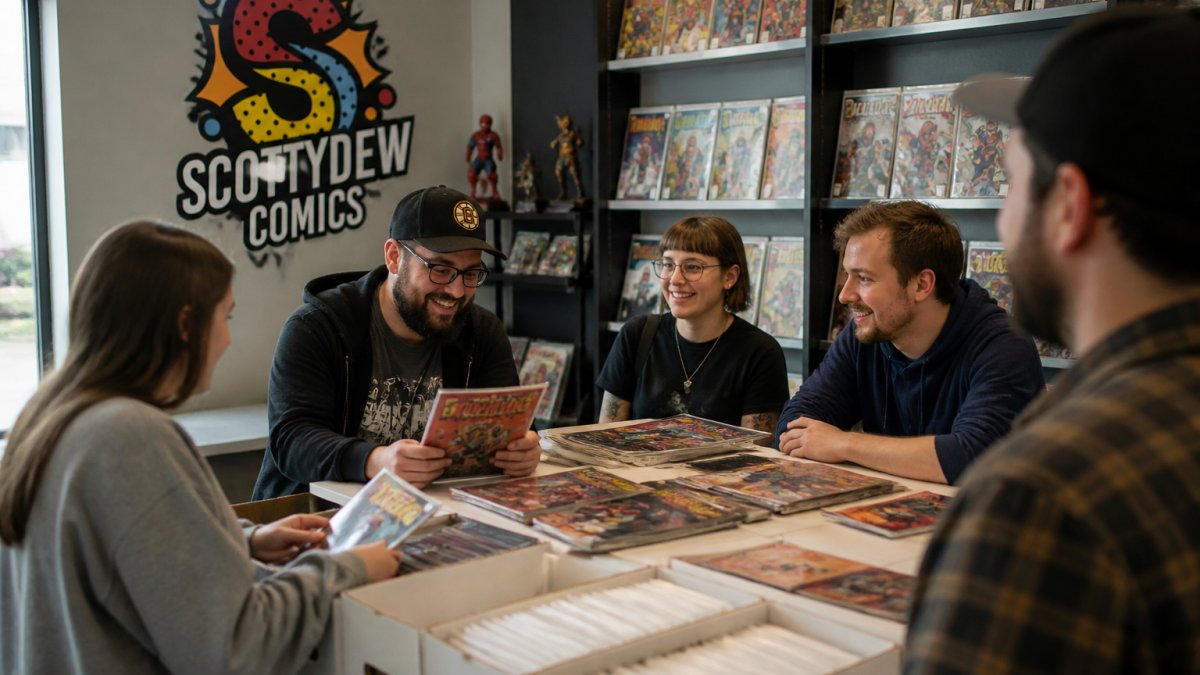
At Scottydew Comics, we've seen beginners thrive when they connect with experienced collectors. You get honest advice on what to collect, where to shop, and how to avoid mistakes, and you learn terms like "variants," "slabs," and "key issues" without feeling lost. Communities also create belonging: comic collecting can feel solitary until you realize thousands share your passion.
Finding the Right Comic Book Collector Groups
The best comic collecting communities for beginners match your interests and comfort level. Options include online forums, local shops, social media groups, and live events.
Online communities are accessible 24/7. Reddit's r/comicbooks has thousands of active members answering beginner questions daily, Facebook groups focus on specific series or characters, and Discord servers offer real-time chat worldwide.
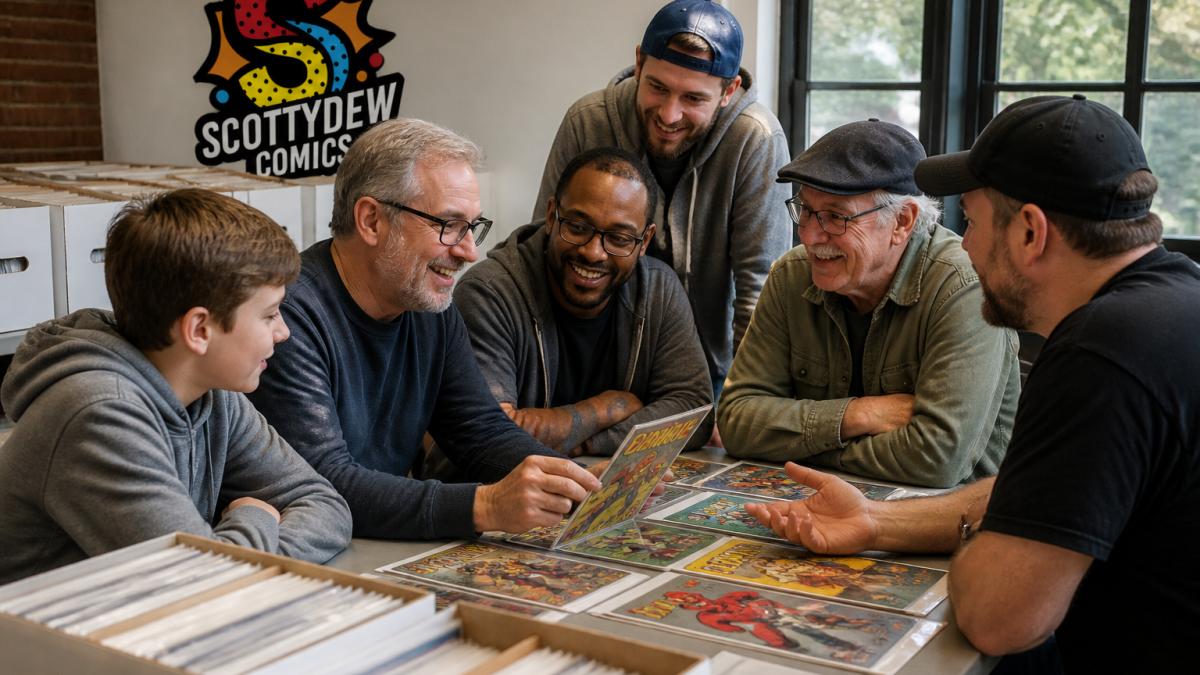
Local comic shops often host community events. Staff are usually passionate collectors who love helping beginners, and you can hold comics, see grading in person, and build local relationships.
Comic conventions bring communities together physically. Smaller regional cons feel more welcoming to beginners, with vendors, artists, and collectors all in one place.
What to look for in a community:
- Welcoming attitude toward beginner questions
- Active moderation that prevents gatekeeping or rudeness
- Mix of casual fans and serious collectors
- Regular activity and engagement
- Clear rules about buying, selling, and trading
Essential Comic Collecting Tips for Beginners
Most beginner guides say "collect what you love" and "set a budget," but not what a realistic budget looks like or how to avoid specific traps.
Understand what you're paying for. A new single issue is typically a few dollars. A trade paperback collecting six issues often costs less than buying them individually.
Separate reading copies from collectible copies. Reading copies are worn and meant to be handled; collectible copies are higher grade and stored, not read.
Don't chase hype you don't care about. When a character appears in a movie or show, related issue prices spike fast, and beginners often buy at the top.
Learn the vocabulary before you negotiate. Terms like "key issue," "variant," "slab," "raw," "NM," and "FN" are used constantly in community marketplaces. Ask what a term means the first time you see it.
Track what you spend and own. A simple spreadsheet entry, title, issue number, price paid, where bought, takes seconds and pays off later. Collectors who track purchases overspend less and trade more confidently.
Understanding Comic Book Grading Basics
Comic book grading measures condition on a scale from 0.5 to 10.
The grading scale: A 10 is perfect and essentially impossible to find. A 9 is near mint with minor imperfections. An 8 is very fine, showing some wear but still collectible. A 6 is fine, with noticeable but attractive wear. A 4 is good, showing significant wear. Below 4 is typically a reading copy. Most beginners should focus on books graded 6-8.
Professional grading companies like CGC and Slab Graders authenticate and grade comics, then seal them in protective cases called "slabs." A slabbed comic has an expert-assigned grade that affects resale value. Ungraded comics are cheaper but harder to resell because buyers can't verify condition. As a beginner, you don't need slabbed comics: buy raw books in good condition and learn to assess condition yourself.
How to Store Comic Books Properly
How you store comics determines how long they last. Poor storage leads to damage, fading, and decreased value. Good storage is simple and inexpensive.
The basics: Keep comics cool, dry, and out of direct sunlight. Heat, humidity, and fluctuating temperatures in basements or attics cause damage; a climate-controlled closet or bedroom shelf is ideal.
Use proper supplies. Acid-free bags and boards protect individual comics; Mylar is premium but expensive, while standard acid-free bags work fine for most collections. Store comics upright like books, never stacked flat, since stacking warps pages.
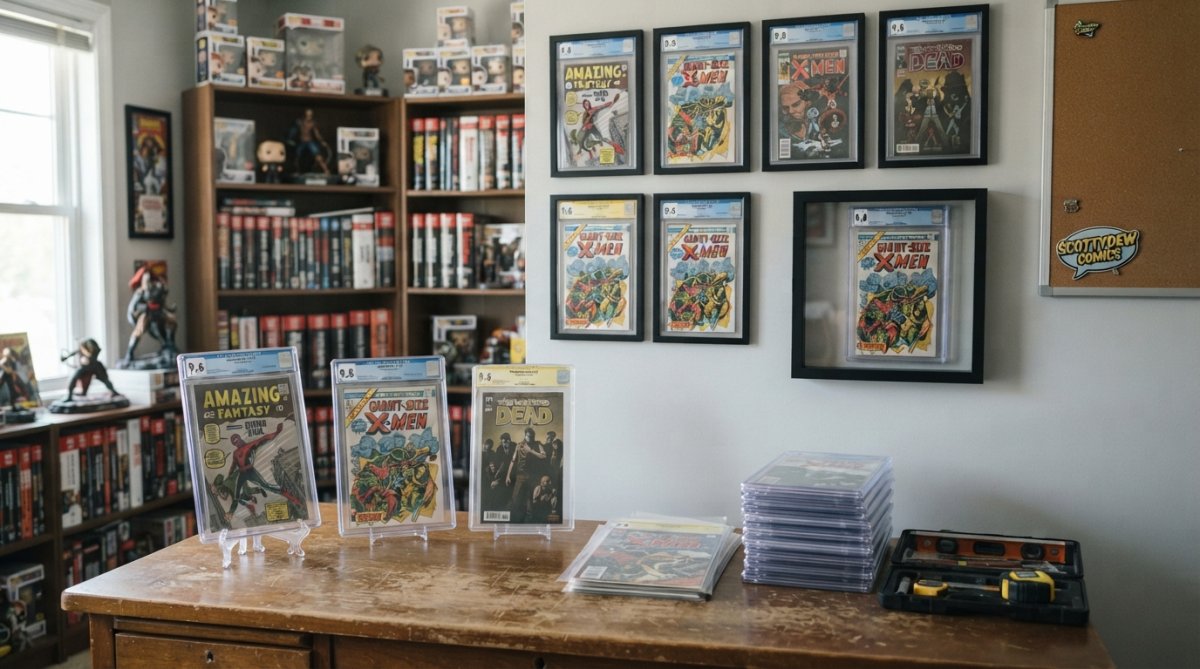
Display: Use UV-protective glass or acrylic cases to prevent fading, and keep displayed comics away from windows and direct light.
For valuable books: Slabbed comics are already protected; store them upright in a climate-controlled space. For high-value raw books, use acid-free, stackable comic storage boxes.
The Wham! Stand from Scottydew Comics offers a stylish way to display your favorite slabs and collectibles.
Community Etiquette and Safety for New Collectors
Most guides say "be respectful" and "avoid scams," but beginners get burned and discouraged in specific, predictable ways.
How to ask beginner questions without getting shut down
Communities are usually welcoming, but the way you ask matters:
- Lead with context. Instead of "Is this worth anything?", try "I'm new and picked this up for a few dollars. Can anyone tell me what grade range this looks like and why?" You'll get a real answer.
- Ask one question at a time. A post with five questions gets one answer, usually to the easiest one. A post with one clear question gets a thread.
- Search first, then ask. Most beginner questions have been answered many times; a quick search shows you the existing answer and what's still unclear.
- Say thank you and report back. Tell helpers what you did with their advice; communities remember beginners who engage.
Etiquette that keeps you welcome
- Don't value-bomb every thread. Constantly asking "what's this worth?" wears people out. Save value questions for the right channel or a dedicated thread.
- Don't gatekeep, and don't tolerate gatekeeping. If someone mocks a beginner question, that's a signal about the community, not about you.
- Be honest in trades and sales. Disclose every defect, spine ticks, creases, color-breaking bends, restoration, trimming. One dishonest trade can end your reputation in a small community.
- Respect different collecting styles. Investment collectors, readers, variant hunters, and slab collectors all coexist.
Safety and scam prevention in community marketplaces
This is where beginners lose the most money, and where most guides go quiet:
Payment methods. The safest option is a platform with buyer protection, such as a major marketplace's checkout or a payment service with purchase protection. No-recourse methods, mailed cash, gift cards, direct transfers to strangers, are what scammers ask for. If a seller insists on one, treat that as your answer.
Condition disputes. Before paying, ask for clear photos of the front cover, back cover, spine, corners, and any specific defect, plus the grade in writing. Keep the conversation on the platform, moving to private messages or email removes your protection.
Counterfeits and reproductions. High-demand books get reprinted and forged. Red flags: a price far below market, a seller who won't show detailed photos, a book that "looks too clean" for its age. For valuable books, ask the community whether the seller is known and whether the book has known reprint issues.
Shipping. Ask how the book will be packed before buying. A comic in a plain envelope arrives damaged; standard practice is a bag and board, rigid backing, and a box or stiff mailer. For valuable books, ask about tracking and insurance.
Red flags to walk away from:
- Pressure to pay immediately or "before someone else does"
- A seller who refuses to provide additional photos
- Prices dramatically below what the same book sells for elsewhere
- Requests to move the deal off the platform
- A brand-new account with no feedback selling high-value books
Protect your personal information. Don't post your home address publicly. Use platform messaging instead of giving out a phone number or personal email. For local trades, meet in public places during daylight.
The etiquette rule and the safety rule are the same rule: be honest, be patient, and keep your transactions where they can be seen and protected. Communities reward that behavior, and scammers avoid it.
Getting Started: Your First Steps in a Comic Collecting Community
Your first steps into a collecting community should feel exciting, not overwhelming.
Step 1: Find a community that fits you. Spend a week browsing groups, forums, local shops, and Discord servers. Where do you see beginner questions asked without judgment?
Step 2: Introduce yourself and listen. Post a simple introduction with the characters or series you like, then observe how experienced collectors talk about comics.
Step 3: Buy your first comic. Visit a local shop or browse online marketplaces, pick a character you love, and buy an affordable issue in decent condition.
Step 4: Ask for recommendations. After your first comic, ask the community: "I loved this series.
Step 5: Attend a local event or convention. Once you've built confidence online, visit a local shop event or small convention. Meet collectors and handle different books.
Step 6: Set your collecting focus. Decide what you want to collect, a character, series, variant covers, or a certain era. A focus makes collecting more manageable.
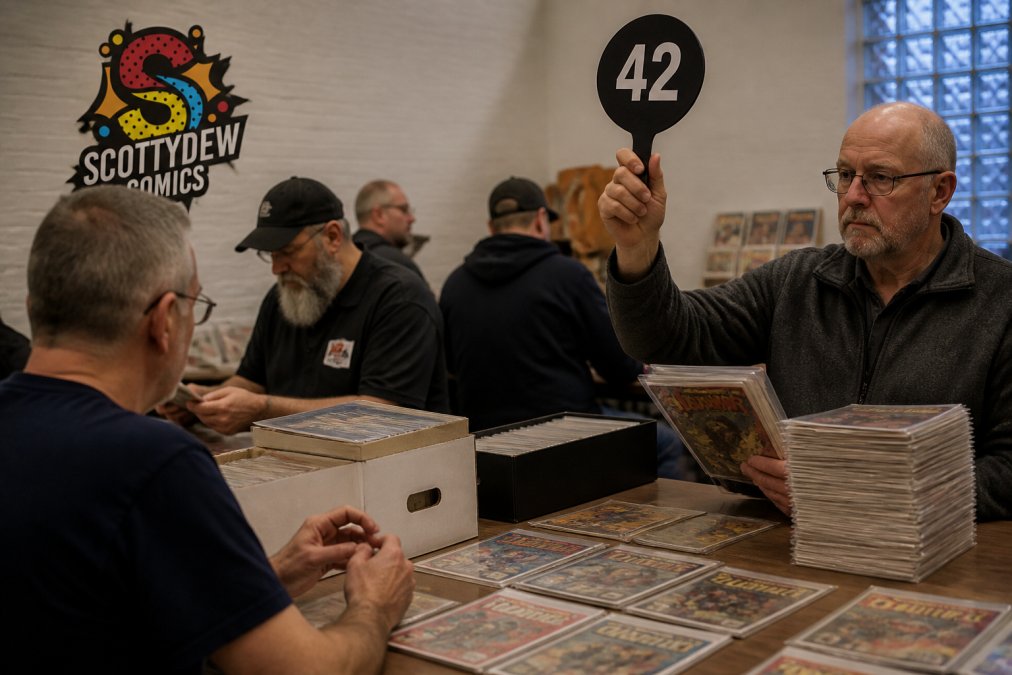
Scottydew Comics hosts themed shows and live auctions where beginners and experienced collectors gather.
Conclusion
Comic collecting communities are genuinely good for beginners, providing knowledge, connection, and belonging that make the hobby more enjoyable and less intimidating. Find a community that matches your interests, start small, ask questions, and connect with people who share your passion. Scottydew Comics brings together collectors of all levels through live auctions, themed events, and a welcoming community focused on discovering rare treasures and building lasting connections. Join us to start your collecting journey with people who want to help you succeed.
Frequently Asked Questions
Are comic collecting communities welcoming to beginners?
Most comic collecting communities actively welcome newcomers and understand that everyone starts somewhere. Many experienced collectors enjoy mentoring beginners and sharing knowledge about character storylines, key issues, and collecting strategies. However, community culture varies, some groups lean heavily toward investment-grade grading and high-value purchases, while others focus on casual reading and nostalgia. Before joining, observe the tone and ask questions to find a community that matches your interests and budget.
What should beginners ask when joining a comic book collector group?
Start by asking about collecting focus, which characters, series, or eras members prioritize. Ask for beginner-friendly recommendations and whether the group discusses affordable entry points or focuses on expensive key issues. Inquire about storage and display methods, grading services, and where members buy and sell. Ask about community events, whether the group meets in person or online, and what the unwritten rules are. These questions help you understand the group's values and whether it aligns with your collecting goals.
How can I avoid scams or pressure to overpay in comic collecting communities?
Research pricing independently before making purchases, use multiple sources to understand fair market value for the comics you're interested in. Be skeptical of pressure to buy quickly or claims that a comic will skyrocket in value. Ask for authentication and grading details on high-value purchases. In online communities, verify seller reputation and use secure payment methods. Don't feel obligated to buy at events or auctions; step away if you're uncertain. Trustworthy communities encourage questions and patience rather than urgency.
Can I participate in comic collecting communities on a tight budget?
Absolutely. Many collectors start with affordable back issues, reprints, and self-contained stories that cost just a few dollars. Communities often discuss budget-friendly ways to build a collection, recommend which classic comics offer the best storytelling without premium pricing, and facilitate trades among members. Local comic shops and online forums frequently feature deals and recommendations for beginners. The key is being honest about your budget and focusing on characters or series you genuinely enjoy rather than chasing investment potential.