 Comparison
Early or Late Bidding: Which Wins Rare Comic Auctions
Table of Contents
- Why Bid Timing Changes the Final Price
- The Case for Bidding Early
- The Case for Bidding Late and Sniping
- How Proxy Bidding and Maximum Bids Set Your Limit
- Soft-Close Rules and Why They Change Timing
- How to Bid on Rare Comics Without Overpaying
- Choosing Your Bidding Approach at Scottydew Comics
- Frequently Asked Questions
Last Updated: November 9, 2026
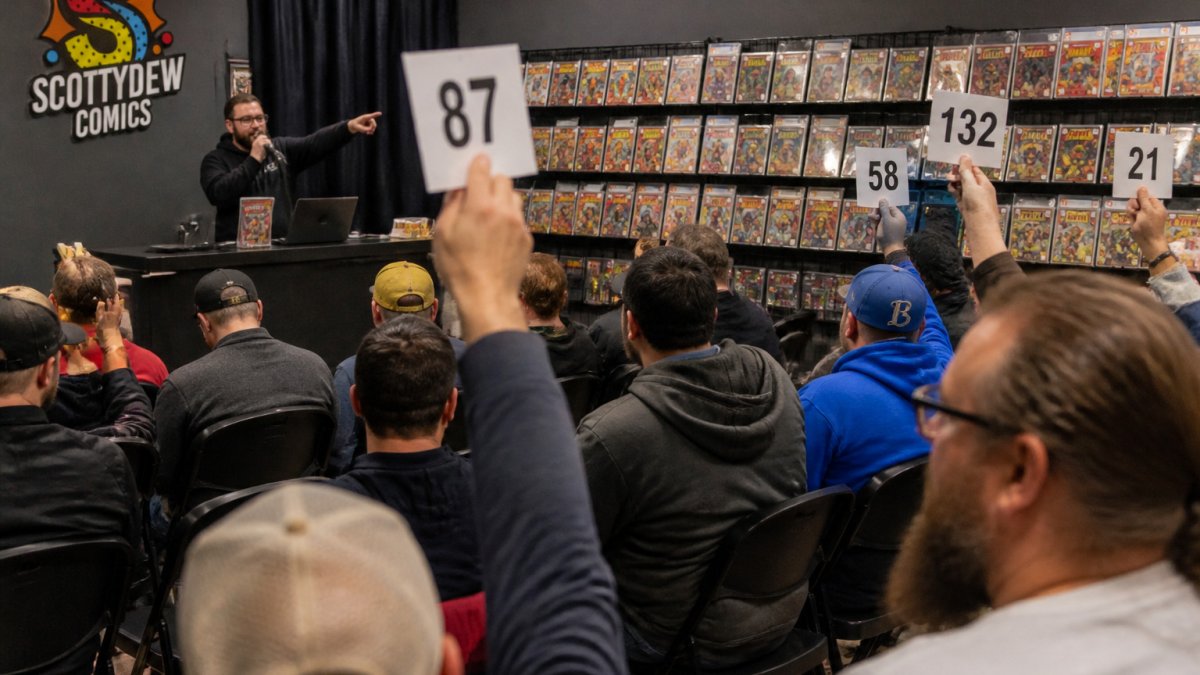
Is it better to bid early or late in auctions? For rare comics, the honest answer is that it depends on the auction format, the lot, and how disciplined you are with your maximum bid, since the choice to bid early or late shapes how much you pay. Live auctions, where timing can matter, are one way collectors bid on rare comics. Early bidding can signal interest, while late bidding can keep your strategy less visible. Below, we break down the trade-offs so you can choose the approach that fits your budget and your collecting goals.
Why Bid Timing Changes the Final Price
Bid timing affects the final price because every bid tells the other buyers something. An early bid publishes your interest, and other bidders respond to it. A late bid gives them less time to react, but it can also create a rush of competition in the final minutes.
Most collectors assume the price is fixed by the lot's value. In practice, the current price is partly a product of who is bidding and when they bid. That is why two identical slabs can close at very different prices on different nights.
The Case for Bidding Early
Bidding early has real advantages. You secure your place in the bid history, you give yourself time to research the lot, and you avoid the stress of a last-minute scramble.
The drawback is that early bids can push the visible price up. Other collectors watch the bid history, and a visible bid can encourage them to counter. If you open high, you may be the one who drives the price higher than necessary.
Pros of early bidding:
- Clear bid history and more time to evaluate the lot
- Less last-minute pressure
- Useful signal of how much demand exists
Cons of early bidding:
- Your visible interest can invite competing bids
- You may reveal your enthusiasm before you have set a firm limit
The Case for Bidding Late and Sniping
Late bidding, sometimes called sniping, places your bid near the end of the auction. The main benefit is that other bidders have less time to respond, which can keep the price lower.
Sniping has risks. If you wait too long, your connection may fail, or the platform may not register your bid in time. Whether sniping is allowed also depends on the platform's rules, so check the terms before you rely on it. Before choosing this approach, review the costs and risks to weigh before bidding live.
Pros of late bidding:
- Fewer opportunities for competitors to react
- Can keep the visible price lower for longer
Cons of late bidding:
- Connectivity or timing errors can cost you the lot
- Some platforms limit or penalize last-second bids
How Proxy Bidding and Maximum Bids Set Your Limit
Proxy bidding is the mechanism that makes bid timing less important than most collectors think. On eBay-style proxy auctions, you enter the highest amount you are willing to pay, and the system bids on your behalf only as much as needed to keep you the high bidder, up to your maximum. If another buyer bids $50 and your maximum is $80, the system may show you at $51, not $80. Your ceiling stays private until someone else pushes past it.
That mechanic cuts both ways. It means an early maximum bid does not automatically inflate the visible price, because the system only increments in small steps. But it also means a competitor can nibble you upward one bid at a time, and each increment resets the clock on platforms with soft-close rules. The practical result: your maximum bid, not your timing, is what protects your budget.
Set that maximum with the full landed cost in mind, not just the hammer price. A repeatable method:
- Find recent sold prices for the same issue and grade, completed sales, not asking prices.
- Add the buyer's premium if the platform charges one (check the specific terms).
- Add shipping and handling for a graded or raw comic, which varies widely by carrier and insurance level.
- Add any applicable sales tax for your state.
- Subtract an allowance for condition risk, a raw book may grade lower than the listing photos suggest.
- Write the final number down before the auction opens and treat it as fixed.
Pricing for any given lot depends on quantity, dates, and delivery, so check the specific terms and current prices on the Scottydew Comics website before you bid.
Watch out: a maximum that looks affordable at the hammer price can exceed your budget once premiums, shipping, and tax are added. Decide the all-in number first, then work backward to the bid you enter.
One more distinction matters for timing. On a true proxy auction, entering your maximum early is usually harmless to the visible price because the system hides your ceiling. On a live or public-bid auction where every bid is visible in full, an early maximum bid does publish your interest and can invite counterbids. Know which format you are bidding in before you decide whether to enter your limit early or hold it until the end.
Soft-Close Rules and Why They Change Timing
Soft-close rules are the single biggest reason the early-versus-late debate has no universal answer. To see how proxy bids and soft closes fit together, read how live comic auctions work. A soft close extends the auction, often by a fixed window such as two or five minutes, whenever a bid arrives inside that window. Each new bid can restart the extension, so a lot that was supposed to end at 8:00 p.m. can keep rolling until bidding genuinely stops.
This is an anti-sniping mechanism, and it changes the math. On a hard-close auction, a bid placed in the final three seconds gives competitors no realistic chance to respond, which is why sniping works. On a soft-close auction, that same last-second bid simply buys everyone else more time. The sniper's advantage disappears, and the auction becomes a test of who has the higher maximum and the discipline to hold it.
Platform rules vary, and the differences matter more than most buyers realize:
- Hard close: the auction ends at a fixed time regardless of late bids. Sniping is viable if the platform permits it.
- Soft close with a fixed extension: each qualifying late bid adds a set window. Repeated bids can extend the auction substantially.
- Soft close with a cap: extensions stop after a set number of rounds or a maximum total time, which reintroduces a late-bidding window near the true end.
- Live-auction formats: the clock is managed by the auctioneer or host, and extensions may be announced verbally rather than automated.
Read the platform's extension policy before you choose a timing strategy, and check whether the policy differs between categories or event types. A tactic that works on one platform can be neutralized on another.
How to adjust your approach:
- If the auction has a hard close and permits late bidding, a bid placed in the final seconds can keep the price lower, but only if your connection and the platform's submission window cooperate.
- If the auction has a soft close, plan to bid your true maximum rather than a snipe. The extension will surface competing bids anyway, so hiding your interest buys you nothing.
- If the extension is capped, treat the final extension window as the real deadline and be present for it.
- On live formats, ask the host or check the listing for how extensions are handled before the lot opens.
Watch out: time-zone confusion is the most common soft-close mistake. A lot listed in one time zone may close in another, and an extension can push the real end past the time you planned around. Confirm the closing time in your own time zone and set a reminder for the extension window, not the listed end time.
Connectivity is the other risk. Bid submission delays, page refreshes, and outages can cost you a lot in the final seconds on any platform, soft close or not. If a lot matters to you, place your maximum bid with enough margin that a failed last-second attempt does not leave you empty-handed, and keep a backup device or connection ready if you plan to bid live at the close.
How to Bid on Rare Comics Without Overpaying
Overpaying usually happens when excitement takes over. A simple process helps you stay disciplined:

- Research recent sold prices for the same issue and grade.
- Set a maximum bid that includes all fees and shipping.
- Decide in advance whether you will bid early, late, or mid-auction.
- Stop bidding when you reach your limit, even if the lot is one you want.
Keep a notepad with your limits nearby. Write each maximum before the auction begins so you are not deciding under pressure.
Overpaying usually happens when excitement takes over, so the article recommends a simple process to stay disciplined. For more practical tactics, read this collector's guide to avoiding overpayment at live auctions. Before committing, you can inspect a lot's condition and details to confirm it is worth your maximum.
| Step | What to do | Timing |
|---|---|---|
| 1 | Research recent sold prices for the same issue and grade | Before the auction |
| 2 | Set a maximum bid that includes all fees and shipping | Before the auction |
| 3 | Decide whether to bid early, late, or mid-auction | Before the auction |
| 4 | Stop bidding when you reach your limit | During the auction |
Choosing Your Bidding Approach at Scottydew Comics
At Scottydew Comics, the best approach depends on the lot and the format. For high-demand key issues, a measured early bid with a firm maximum can work well. For less competitive lots, a late bid may keep the price down.
Our live auctions run on the Whatnot platform, so check how each show handles timing and bid extensions before you bid. Scottydew Comics also offers exclusive comic book releases and bundles. Whichever approach you choose, set your limit first and stick to it. Join our community to discover rare treasures.
Frequently Asked Questions
Is it better to bid early or late in an online auction?
Neither timing wins every time. Bidding early reveals your interest, which can invite competing bids and push the price up. Bidding late keeps your intent hidden but risks connection problems or missing a deadline. Early bids make sense when you are confident in your maximum and the item is scarce; late bids suit buyers who have set a firm limit and can stay available until the close. Decide your maximum before the auction starts, then pick the timing that keeps you under it.
Does bidding early make an auction price go up?
It can. An early bid shows other buyers that someone wants the item, which may attract competitors who otherwise would have waited. Proxy systems also mean an early bid can raise the visible price as others respond. The effect is strongest on popular rare comics with active collectors. If you bid early, keep the bid well below your maximum so the system does not signal more demand than you intend.
What is auction sniping, and does it work?
Sniping means placing a bid in the final seconds of an auction so other bidders have no time to respond. It can work because competitors cannot counter-bid, but it depends on the platform. Some sites extend the clock when a late bid arrives, which removes the advantage. Sniping also carries risk: a slow connection or a missed deadline can cost you the item. Check the platform's rules before relying on it.
How can I avoid overpaying for a rare comic at auction?
Research recent sold prices for the same issue and grade before bidding. Set a maximum bid in writing and do not exceed it, even when the excitement builds. Factor in buyer's premiums, shipping, and any authentication costs, since these raise the real total. Using a proxy bid up to your limit keeps you disciplined. Review the auction rules and current terms on the Scottydew Comics website before you bid.