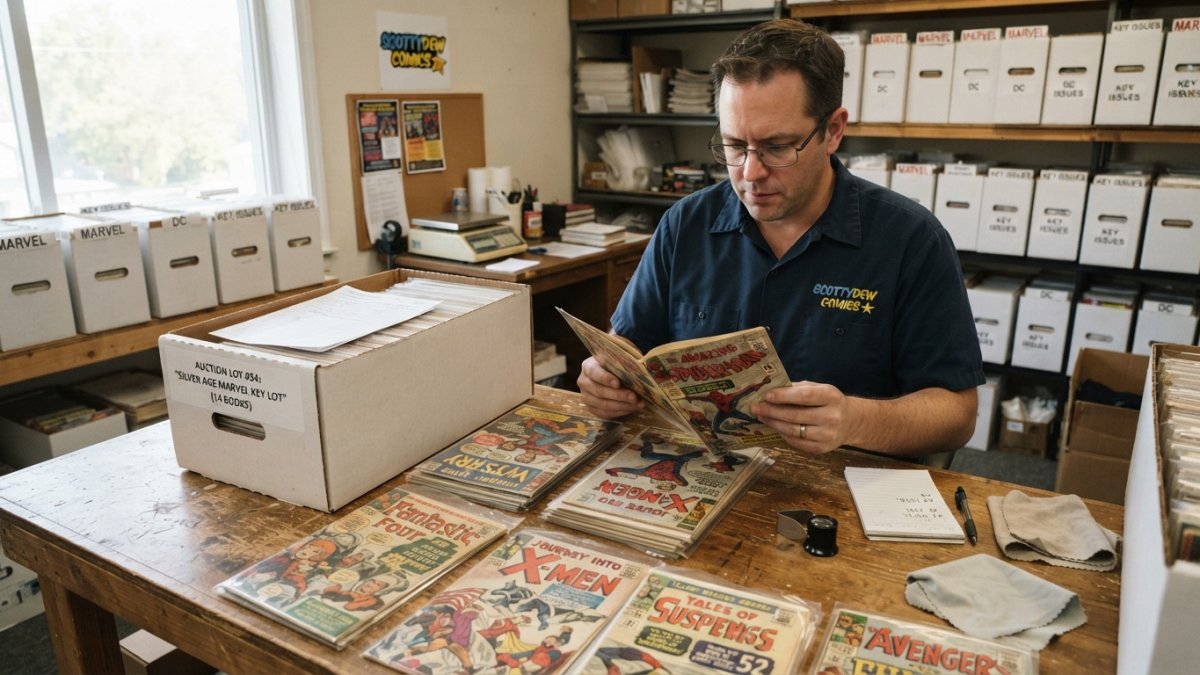
 How-to
How to Preview Comic Lots Before Bidding
Quick Summary
To preview comic lots before bidding, read every catalog description, then check each book's photos for spine stress, corner wear, staple condition, and back-cover flaws. Ask the seller for missing close-ups, estimate each book's value, and set a written maximum bid that includes premium, shipping, and tax.
- Read the full catalog description and treat vague words like "nice" as warnings.
- Check every book in the lot, not just the top one shown in photos.
- Ask the seller for close-ups of spines, corners, and staples when photos are missing.
- Estimate value per book, separating key issues from filler, before totaling the lot.
- Set a maximum bid that includes buyer's premium, shipping, and tax, and stop once you reach it.
Table of Contents
- Why Comic Lot Previews Matter Before You Bid
- Step 1: Read the Lot Catalog and Seller Description
- How to Inspect Comic Books From Photos
- Comic Book Auction Preview Questions to Ask the Seller
- How to Value a Comic Book Lot
- Comic Lot Auction Checklist and Setting Your Maximum Bid
- Booking Your First Lot Preview With Scottydew Comics
- Frequently Asked Questions
Why Comic Lot Previews Matter Before You Bid
Live comic auctions move fast, and the comic lots you want can sell in seconds. Most bidders who regret a purchase did not inspect the lot first.
A preview tells you what you are actually buying. The catalog description is written to sell, not to disclose flaws. Photos reveal spine stress, color breaks, and cover wear that a short write-up may skip.
Many bidders find that the preview stage is where overpaying can start. Before you place any bid, review the full costs and risks of bidding live so you know the total price, not just the hammer price.
Step 1: Read the Lot Catalog and Seller Description
Start with the written listing for each of the comic lots you are considering. Read every line, including the small print about condition, grading, and included items. Pay close attention to how the seller describes each book.
Look for the basics in each description:
- Issue numbers and series titles for every book in the lot
- Whether any books are graded and by which service
- Notes on defects such as tears, creases, or writing
- Whether the lot is sold as-is or with a return policy
If a description is thin, do not assume the lot is fine. Treat missing details as a reason to ask questions before you bid.
How to Inspect Comic Books From Photos
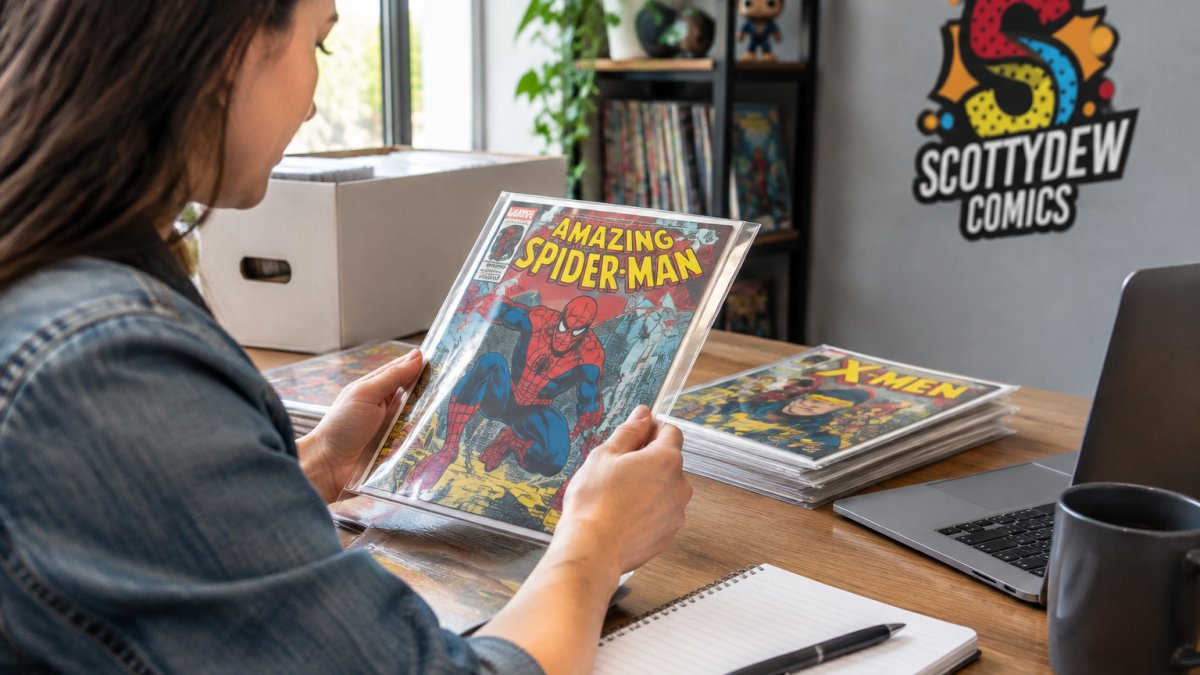
Photos are your main tool when you cannot see the books in person. For a full walkthrough of how to assess condition and grading from images, see how to grade comic books. Use them with care.
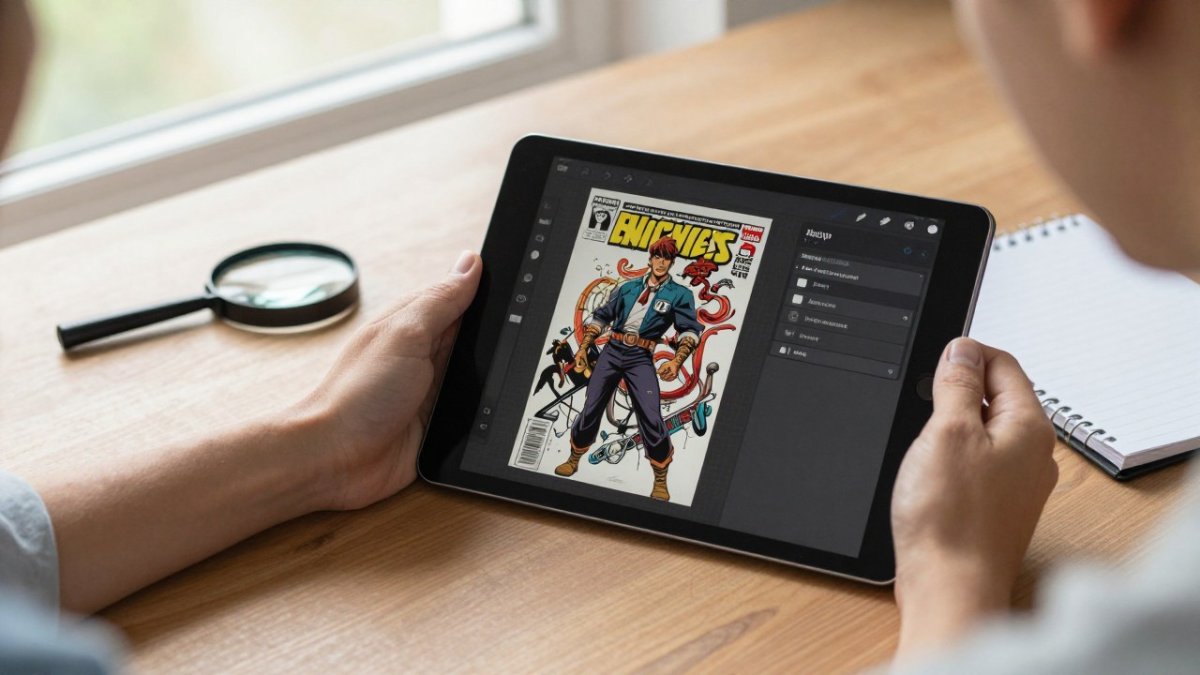
Start by checking whether the photos are sharp and well lit. Blurry or dim images make it hard to judge color and finish. Next, look at each cover from front and back, then check the spine and page edges.
A Repeatable Photo-Inspection Checklist
Use the same checklist for every lot so you do not miss anything. Work through each book in the lot, not just the top one, and note what you see before moving to the next image.
- Front cover: color, gloss, corner wear, and any creases or tears
- Spine: stress lines, splits, and staple condition
- Back cover: stains, writing, or price-tag residue
- Interior pages: yellowing, brittleness, and any marks
Doing this for every book keeps your judgment consistent. It also makes it easier to compare lots side by side.
What to Look For at Each Part of the Book
A checklist only helps if you know what each item means in practice. Here is how to read the details:
- Front cover. Look for color breaks along the spine edge, finger bends near the staples, and gloss loss that suggests handling. A cover that looks flat under direct light may still have a faint crease that only appears at an angle.
- Spine. Stress lines run vertically near the staples. Small stress lines are common on older books; splits that expose the interior or loose staples are more serious. Check whether the staples are rusted or pulled through the cover.
- Corners. Blunted corners are normal wear. Chipped or torn corners reduce grade more. Look at all four corners, not just the top-left.
- Staples. Rust migration, popped staples, and staple tears at the centerfold are easy to miss in a single front-cover photo. Ask for a centerfold or staple close-up if the listing does not show one.
Handling Blurry or Incomplete Photos
Not every listing gives you usable images. When photos are blurry, dim, or missing key angles, do not guess. Ask the seller for specific replacements: a straight-on front cover, a spine shot, a back cover, and a centerfold or staple close-up.
Watch out: a single well-lit hero photo of a multi-book lot tells you almost nothing about the other books. Assume the unphotographed books are in worse condition than the one on display until you see evidence otherwise.
Red Flags in Listings and Image Sets
Some warning signs appear again and again. Watch for these:
- Only one photo of a multi-book lot
- Photos that crop out the spines or back covers
- Heavy glare or filters that hide the true color
- Images that do not match the written description
- Vague phrases such as "as pictured" with no defect notes
If you see these, ask for more images before bidding. A seller who cannot or will not supply basic angles is giving you information through the refusal.
Comic Book Auction Preview Questions to Ask the Seller
When the listing or photos leave you unsure, contact the seller. A short, specific question often gets a clear answer. Keep your questions focused on what you cannot confirm from the images.
Useful questions include:
- Can you send close-up photos of the spines and corners?
- Are there any tears, writing, or repairs on these books?
- Is the lot complete, and are any issues missing?
- Are the graded books in original, unbroken slabs?
- What is the return policy if a book does not match its description?
Pay attention to how the seller responds. Fast, specific answers are a good sign. To confirm that graded slabs and their authenticity are genuine, see ways to verify graded comic authenticity.
How to Value a Comic Book Lot
Value starts with the condition of each book, not the title alone. Compare your estimate against recent sales of the same issue in similar condition. Past auction results and published price guides can help you ground your number in real data.
Remember that grading changes value. A raw book and a graded book of the same issue can sell for very different prices. Factor that difference into your estimate.
Evaluating Mixed Lots and Per-Book Value
Mixed lots are harder to value because one good book can hide weaker ones. To estimate per-book value, do this:
- List each book in the lot with its issue and estimated condition.
- Assign a rough value to each book based on comparable sales.
- Add those values together for a total estimate.
- Divide by the number of books to see the average per-book value.
This method exposes lots where one key book carries the whole price. If the other books add little, you may be paying mostly for one title.
Separating Key Issues From Filler
A mixed lot usually contains a few books that drive most of the value and a larger number that add little. Sort every book into one of three buckets before you total anything:
- Key issues. First appearances, origin stories, death issues, and other recognized milestones. These carry most of the lot's value and deserve the closest condition check.
- Solid runs. Common issues in decent condition. They have modest value on their own but can add up across a long run.
- Filler. Low-demand issues, duplicates, and books in poor condition. Price these near zero unless you have a specific buyer or reader in mind.
A lot with one key issue and twenty filler books is not a twenty-one-book lot in value terms. It is a one-book lot with a stack attached. Bid on the key issue and treat the rest as a bonus, not as value you are paying for.
Building an All-In Maximum Bid
The hammer price is not what you pay. Build your ceiling from the total cost, not the bid number:
- Hammer price. Your estimate of the lot's value to you.
- Buyer's premium. Some auctions add a buyer's premium on top of the hammer price; check the specific terms for the sale.
- Shipping and handling. Multi-book lots are heavy, and shipping can be a meaningful line item.
- Sales tax. Apply the rate that governs your purchase.
- Grading or restoration costs. If a raw book needs grading to realize its value, subtract that cost from your estimate before you bid.
A practical formula is: maximum hammer bid = (your estimated lot value) minus (buyer's premium, shipping, tax, and any grading costs). Set that number before the auction and write it down. Once bidding passes it, stop.
A lot that looks cheap at the hammer can become more expensive once premium, shipping, and tax are added, so run the full formula before you bid.
When Comparable Sales Are Thin
For obscure issues, low-grade copies, or unusual variants, recent sales may be scarce. In that case, widen your comparison to the same title and era in similar condition, and discount for the uncertainty. If you cannot find a reasonable comparison, treat the book as speculative and cap your bid at a level you would be comfortable losing.
Comic Lot Auction Checklist and Setting Your Maximum Bid
Before the auction starts, finish this checklist:
- Every book reviewed in photos or in person
- Questions to the seller answered
- Estimated value calculated, per book and for the whole lot
- Buyer's premium, shipping, and fees added to your estimate
- Maximum bid set and written down
Your maximum bid is your ceiling. It should include all costs, not just the hammer price. Once you reach that number, stop bidding. For more concrete guidance on avoiding overpayment at live auctions, see our collector's guide. Live auctions create pressure to keep going, so a written limit protects you from overpaying in the moment.
Before the auction starts, the article lists the checks to finish and how to set a ceiling on your bid.
| Checklist item | Purpose |
|---|---|
| Books reviewed in photos or in person | Confirms real condition |
| Seller questions answered | Clears up unknowns |
| Value estimated per book and per lot | Sets a baseline |
| Premium, shipping and fees added | Shows the true total cost |
| Maximum bid written down | Limits overpaying in the moment |
Booking Your First Lot Preview With Scottydew Comics
If you are new to live comic auctions, you do not have to figure it out alone. Scottydew Comics hosts themed shows, including Tuesday Night with ScottyDew and Mixed-Up Saturday. Check our current schedule and lot listings on Whatnot for upcoming shows. For current pricing on any lot, check the listing directly or contact Scottydew Comics for a quote.
Join our community to get notified about upcoming shows and new lot drops.
Frequently Asked Questions
What should I look for when previewing a comic lot?
Start with the lot photos and check each book's front cover, back cover, spine, and staples. Look for color breaks, creases, tears, and stains, and note whether the photos show all sides. Compare the number of books listed with the number pictured, and confirm the issue numbers. Any gap in the photos is a reason to ask the seller for more images before you commit to a maximum bid.
Can I request more photos of a comic lot before an auction?
Yes. Many sellers will send additional photos on request. Message the seller with the issue numbers you want to see and ask for clear shots of the cover, back cover, spine, and any defects. Sellers who refuse or ignore reasonable requests are a warning sign, and you should factor that uncertainty into your bid.
How do I check whether a comic in a lot is a key issue?
Confirm the title, issue number, and publication year against a reliable checklist or price guide, then look for the key details that make an issue important, such as first appearances or significant story events. For graded comics, check that the certification number on the slab matches the book's title and issue. Photos can confirm the printed details, but they cannot prove authenticity, so ask the seller about provenance.
How do I set a maximum bid for a comic lot?
Estimate the total value of the books you actually want, then subtract buyer premium, shipping, and any auction fees. Keep a margin for condition risk, since photos may understate defects. Decide your ceiling before bidding starts and stick to it, because live auctions can push bidders past their target. Pricing depends on the platform and the lot, so check current fees on the auction listing or with Scottydew Comics directly.