 Comparison
Alternatives to Traditional Comic Book Boxes for Collectors
Last Updated: November 14, 2026
Quick Summary
Alternatives to traditional comic book boxes include drawer boxes, file cabinets, magazine holders, shelf and display systems, and DIY custom builds. Each option trades cost, protection, accessibility, or floor space, so the right choice depends on your collection size and how you use your books.
- Drawer boxes hold 100 to 200 comics per drawer and offer high protection and access.
- A file cabinet holds 100 to 150 comics per drawer and can be locked and enclosed.
- Magazine holders hold 15 to 25 comics each and work well for collections under a few hundred books.
- Longboxes still win on cost per comic for long runs and bulk back issues.
- Use enclosed storage for keys and slabs, and open shelving for reading copies.
Table of Contents
- Why Collectors Are Rethinking Traditional Comic Book Boxes
- Comparing Storage Options Side by Side
- Building a Comic Book Storage System That Fits Your Space
- Drawer Boxes for Comics: Security and Easy Access
- Comic Book Storage Shelves and Display Options
- DIY Comic Book Storage Box: Build Your Own Solution
- Matching Your Storage Choice to Collection Size and Use Case
- Join the Scottydew Comics Community
- Frequently Asked Questions
Why Collectors Are Rethinking Traditional Comic Book Boxes
The cardboard longbox has been the default home for comic collections for decades, and it still works. But a growing number of collectors are asking whether it works well. Collectors often ask the same questions: the boxes are heavy, they stack awkwardly, they hide your books, and they do nothing for a collection you actually want to look at.
Alternatives to traditional comic book boxes range from drawer boxes and file cabinets to magazine holders, shelf systems, and custom builds. Each trades something: cost, protection, accessibility, or floor space.
The reason collectors are rethinking the longbox comes down to three shifts. Collections have gotten larger and more valuable, so the stakes of poor storage went up. Living spaces have gotten smaller, so a wall of stacked boxes stopped being practical. And display culture changed the hobby: collectors want to see their books, not archive them in a closet. Below, we break down each alternative with honest trade-offs, so you can pick the one that fits your collection instead of the one that fits a forum thread.
Comparing Storage Options Side by Side
Most guides tell you a drawer box is 'better' than a longbox without saying better at what, or by how much. Here is a comparison built on consistent criteria: interior dimensions, capacity, protection, accessibility, and approximate cost per comic stored. Use it to compare options directly instead of stitching together forum opinions.
| Option | Typical Interior Dimensions | Approx. Capacity | Protection | Accessibility | Approx. Cost Per Comic Stored |
|---|---|---|---|---|---|
| Cardboard longbox | About 15 x 7.5 x 10.5 in | 250-300 bagged and boarded comics | Basic: blocks light and dust, no water resistance | Low: must unpack to reach middle issues | Lowest upfront; rises with replacement |
| Cardboard short box | About 15.5 x 7.5 x 10.75 in | 150-175 bagged and boarded comics | Basic | Low to medium | Low upfront; rises with replacement |
| Drawer box | Varies; sized to short-box rows | 100-200 per drawer | High: enclosed, dust- and light-blocking | High: slide out and see spines | Mid to high upfront; low over time |
| File cabinet | Letter-size drawers, roughly 10 x 12 x 24 in usable | 100-150 per drawer depending on orientation | High: locked, enclosed | Medium: pull a drawer, flip through | Mid upfront; very low over time |
| Magazine holders | About 10 x 4 x 11 in each | 15-25 per holder | Low: open to light and dust | High | Low per unit, high per comic |
| Shelf and display | Depends on unit; cube shelves often about 13 x 13 x 15 in | Varies widely | Varies; open shelves expose to light | High | Mid; shelf cost spread across many comics |
| DIY custom build | Built to your space | Built to your space | Varies with materials and sealing | Varies | Low materials, high labor |
A few fit notes matter more than the labels. Measure your storage containers and shelf openings before buying, so bagged and boarded comics fit without pressing against the bag.
Protection and accessibility often pull in opposite directions. A sealed box protects books from light and dust but makes browsing harder, while an open shelf makes every issue reachable but exposes it to the room. Decide which matters more for each part of your collection.
Building a Comic Book Storage System That Fits Your Space
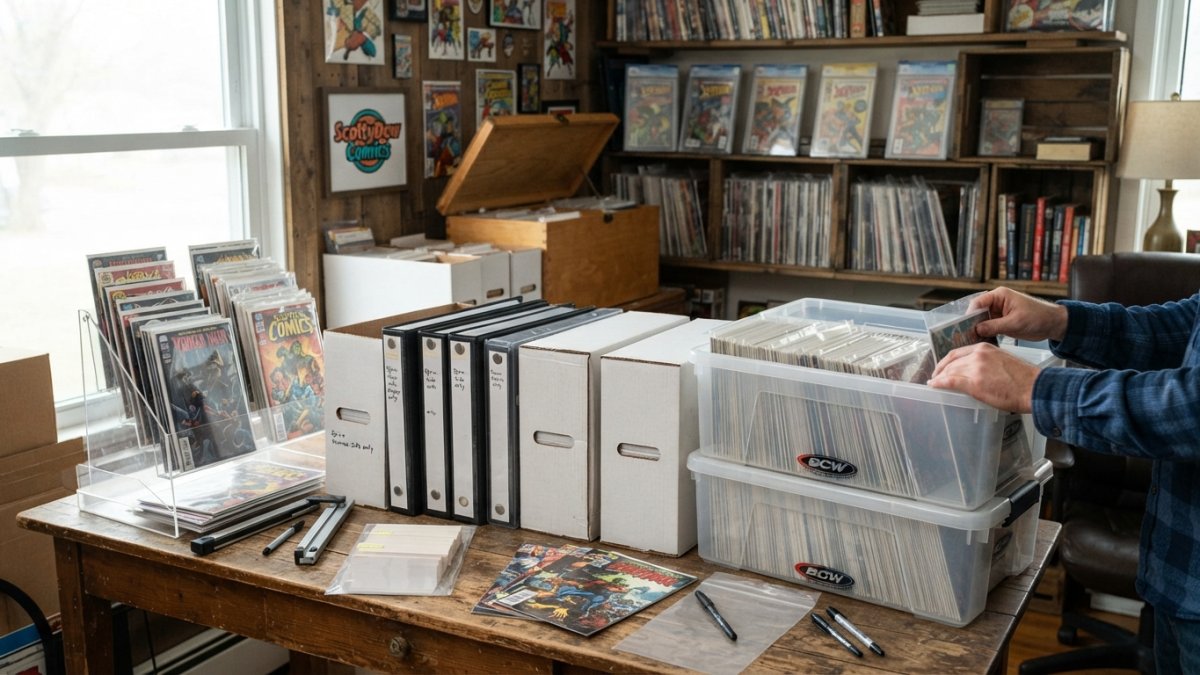
A comic book storage system is a mix of containers and furniture sized to your room, not a single product. The right system separates storage from display and keeps both within reach.
Start with floor space and wall space. Measure the footprint you can give up, then the wall height you can use. Tall shelving multiplies capacity without eating floor. If your space is tight, our guide to displaying comics in small apartments covers rental-friendly mounting and space-saving layouts that do not damage walls.
Then split the collection by value. Enclosed storage for keys, slabs, and anything fragile. Open shelving for reading copies you pull often. Label everything. A system you cannot browse is just a pile with better intentions.
Drawer Boxes for Comics: Security and Easy Access
Drawer boxes comics collectors favor solve the longbox's biggest flaw: getting to the book you want without unpacking half the box. Drawers slide out, so you see a row of spines at a glance and grab one issue without disturbing the rest.
The security angle matters too. Enclosed drawers keep dust off, keep books out of sunlight, and keep casual visitors from flipping through your keys. A drawer box also moves more easily than a stack of longboxes, which matters if you rent or rearrange often.
The trade-off is capacity and cost. Drawer systems hold fewer comics per unit than a longbox and cost more upfront. Use them for the books that deserve it, not for the whole collection.
Comic Book Storage Shelves and Display Options
Comic book storage shelves turn dead storage into a visible collection. A shelf unit holds comics upright in magazine holders or bins, and the top shelf becomes a display for your best slabs.
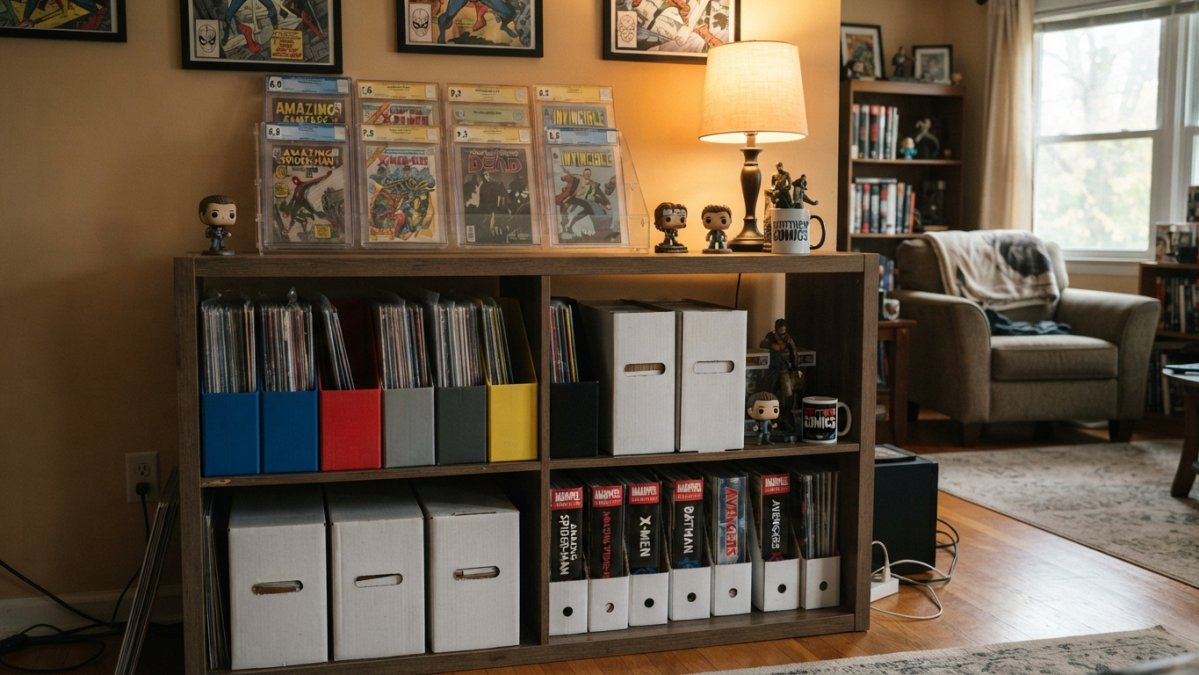
Shelf compatibility is where most plans go wrong. Standard short boxes often do not fit neatly on popular cube shelving, which is why BCW designed its Foldaways to fit better on an IKEA Kallax shelf than its Short Comic Boxes, per BCW Supplies' comic storage guidance. Foldaways hold fewer comics, but they look intentional instead of improvised.
For the display layer, a dedicated stand can be a practical choice over leaning slabs against a wall. The Wham! Stand is designed to showcase slabs, raw issues, and records with some flair. If you are weighing which display route is worth the spend, our breakdown of which comic book display is worth the money walks through the options.
DIY Comic Book Storage Box: Build Your Own Solution
A DIY comic book storage box can suit spaces with unusual dimensions. You can build to the depth and height you need instead of forcing a standard box into a gap.
Here is a simple build plan:
- Measure your shelf depth and the height of a bagged and boarded comic
- Choose rigid board or plywood that will not sag under weight
- Cut side panels to shelf depth, base panel slightly narrower
- Assemble with wood glue and small nails or screws
- Sand edges so bags do not snag
- Line the base with acid-free material
- Label the front for easy browsing
Keep the interior smooth and dry, and avoid sealing a wooden box tight against humidity. A common mistake is building deep boxes that become impossible to reach into. Shallow and wide beats deep and narrow every time.
Matching Your Storage Choice to Collection Size and Use Case
The right alternative depends on how many comics you own and what you do with them. Here is how we would match the options.
- Under a few hundred books: magazine holders on a shelf. Cheap, browsable, and enough.
- A few hundred to a couple thousand: a mix of drawer boxes for keys and shelving for reading copies.
- Long runs and bulk back issues: longboxes still win on cost per comic, even if you upgrade the rest.
- Slabs and investment-grade books: enclosed drawer boxes or a locked file cabinet, displayed selectively.
- Serious display goals: shelving plus a dedicated stand, with rotation to limit light exposure.
If you are still building out your collection, our guide to starting a comic book collection covers grading standards and storage supplies from day one. And if you want concrete box picks to compare against the traditional route, our roundup of the best comic book storage boxes covers cardboard versus plastic and short versus long.
Join the Scottydew Comics Community
Storage is a means to an end: keeping your books safe so you can enjoy them. The harder question is where the next great book comes from.
That is the part we can help with. Scottydew Comics runs live auctions on the Whatnot platform, where you can bid on rare and unique treasures alongside a community of 5.3K+ collectors. Our themed shows, Tuesday Night with ScottyDew and Mixed-Up Saturday, and our exclusive drops bring fresh finds to the community. Whether you are hunting a key issue or just want cool nostalgic books for the shelf you just built, there is a seat for you.
Get started with Scottydew Comics and find your next grail without leaving the house.
Frequently Asked Questions
What are the best alternatives to traditional comic book boxes?
The best alternative depends on your priorities. File cabinets offer security and protection, drawer boxes for comics provide enclosed access, and comic book storage shelves with magazine holders keep a smaller collection visible. Check container dimensions against your shelving before buying. For budget-minded collectors, cardboard magazine holders work well. Each option trades off cost, protection, and accessibility differently, so match the choice to your collection size and room layout.
Are plastic bins safe for storing comic books?
Plastic bins can work, but they are not automatically safe. Comics need stable temperature, low humidity, and protection from dust and light. A sealed plastic bin can trap moisture if comics go in damp, so bag and board books first and avoid storing bins in garages or attics with temperature swings. Plastic offers water resistance but little fire resistance, and heavy loaded bins can be awkward to move. Check weight limits before stacking.
How do I make my own comic book storage box?
A DIY comic book storage box can be built from acid-free cardboard or a sturdy plastic crate. Measure your bagged and boarded comics first, since standard dimensions vary. Cut panels to fit with a little slack, reinforce corners with tape or glue, and add a lid for dust protection. Label the outside for easy browsing. Keep materials acid-free to avoid long-term damage, and test the box with a small stack before committing your whole collection.
Are drawer-style comic storage systems worth it?
Drawer boxes for comics are worth it if you value easy access and enclosed protection. You can pull a drawer open and browse without unpacking a longbox, which matters for collections you revisit often. They typically cost more than basic cardboard boxes and take up floor or shelf space, so measure your room first. For high-value or graded books, a locking drawer or file cabinet adds security that open shelves cannot match.
How can I store comics without long boxes?
You can store comics without long boxes using magazine holders on shelves, file cabinets, drawer systems, or comic book storage shelves. Magazine holders keep a modest collection visible and labeled, while cabinets and drawers enclose books for protection. Comic-specific boxes are available in several sizes, so check dimensions against your shelving. Whichever route you take, bag and board each book, keep the storage area cool and dry, and avoid overloading shelves beyond their weight limits.